
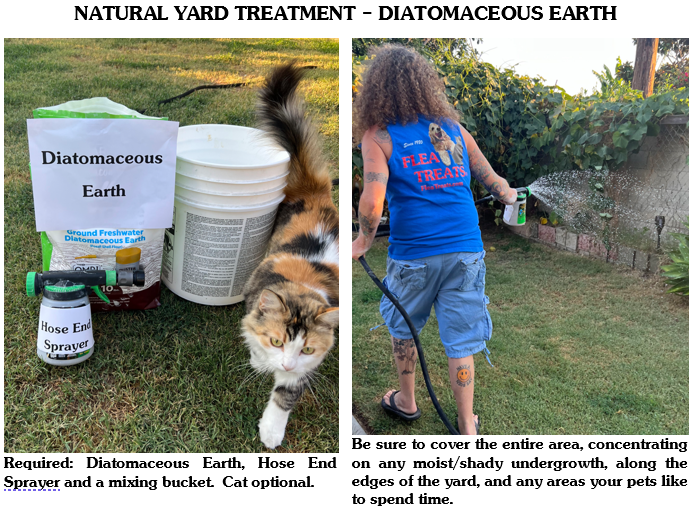
Image Source: fleatreats.com
How To Use Diatomaceous Earth For Fleas In Yard
Yes, you can use diatomaceous earth for fleas in your yard. Diatomaceous earth (DE) is a natural, powdery substance made from fossilized aquatic organisms called diatoms. When used as a diatomaceous earth yard flea treatment, it acts as a mechanical insecticide, meaning it doesn’t poison pests but rather dehydrates them. This makes it an effective and safer alternative for natural flea control yard efforts. For this purpose, it’s crucial to use food grade DE for fleas, as it is safe for humans and pets when handled correctly. This guide will walk you through how to apply DE in yard spaces to combat fleas, including its effectiveness against DE for flea eggs in soil, and strategies for preventing fleas in yard with DE. We’ll also cover choosing safe DE for pets yard, determining the right diatomaceous earth dosage yard fleas, identifying the best DE for outdoor flea control, and how to eliminate yard fleas naturally.
What is Diatomaceous Earth and How Does it Work?
Diatomaceous earth (DE) is a fine, chalky powder derived from the fossilized remains of microscopic aquatic organisms known as diatoms. These ancient organisms possessed hard exoskeletons made of silica. Over millions of years, these exoskeletons accumulated at the bottom of bodies of water, forming sedimentary deposits. When these deposits are mined and processed, they yield diatomaceous earth.
The magic of DE as an insecticide lies in its unique microscopic structure. Under a microscope, the particles of DE look like tiny, sharp shards or porous spheres. When a flea or other insect with an exoskeleton comes into contact with DE, these sharp edges scratch and abrade the insect’s protective outer layer. This damage compromises the insect’s waxy cuticle, which is essential for retaining moisture. As a result, the insect rapidly loses body fluids through dehydration. This process is entirely mechanical and does not involve poisons, which is why it’s considered a safer option compared to many chemical pesticides.
It’s important to distinguish between food-grade DE and pool-grade DE. Pool-grade DE is chemically treated and heated, making it sharp and dangerous to inhale. Food grade DE for fleas is the only type safe for use in and around your home and yard, especially when pets are present. Always ensure the packaging states “food grade” or “for insect control.”
Why Choose Diatomaceous Earth for Yard Flea Control?
Opting for diatomaceous earth for your yard flea problems offers several compelling advantages:
- Natural and Non-Toxic: Unlike chemical pesticides, food-grade DE is a natural product. It doesn’t introduce harmful chemicals into your environment, making it a much safer choice for families, children, and pets that play in the yard.
- Mechanical Action: DE works by physically damaging the flea’s exoskeleton, leading to dehydration. This means fleas are less likely to develop resistance to it compared to chemical treatments that rely on poisoning.
- Effective Against All Life Stages: While DE is most effective against adult fleas and larvae, it can also disrupt the development of DE for flea eggs in soil. By creating a barrier, it can prevent newly hatched larvae from surviving and reduce the overall flea population.
- Cost-Effective: A little DE goes a long way. It’s a relatively inexpensive solution for preventing fleas in yard with DE and managing infestations, especially when compared to ongoing chemical treatments.
- Environmentally Friendly: DE is biodegradable and does not harm beneficial insects like ladybugs or bees, nor does it contaminate soil or water sources.
Comprehending the Flea Life Cycle in Your Yard
To effectively use DE, it’s essential to grasp the flea life cycle. Fleas have four distinct stages: egg, larva, pupa, and adult.
- Eggs: Adult fleas lay eggs, often on the host animal. These eggs are tiny, oval, and whitish. They can easily fall off the host and onto surfaces like carpets, furniture, or directly into the soil in your yard. A single female flea can lay up to 50 eggs per day, leading to rapid population growth.
- Larvae: Hatching from the eggs, larvae are small, worm-like creatures that are blind and avoid light. They feed on organic debris in their environment, including adult flea feces (often called “flea dirt”), which is essentially dried blood. They thrive in warm, humid environments. In your yard, this means shady, moist areas, under decks, or in leaf litter.
- Pupae: Once larvae have fed sufficiently, they spin cocoons and enter the pupal stage. This is a resting stage where they develop into adult fleas. Pupae are incredibly resilient and can remain dormant for weeks or even months, waiting for a suitable host to pass by. They are also resistant to most insecticides, including DE, due to their sticky cocoons.
- Adults: The adult flea emerges from the pupa when it detects vibrations, heat, or carbon dioxide, typically indicating a potential host. Adult fleas are the ones that jump onto pets and humans to feed on blood. They are also the stage most commonly seen.
Understanding this cycle is key to a successful diatomaceous earth yard flea treatment. While DE is excellent at killing adult fleas and larvae it encounters, its impact on eggs and pupae is indirect. The most effective strategy involves consistent application to disrupt the cycle at multiple points.
How to Apply DE in Your Yard for Flea Control
Proper application is crucial for maximizing the effectiveness of DE as a natural flea control yard solution.
Choosing the Right Areas
Fleas thrive in specific microclimates within your yard. Focus your DE application on these areas:
- Shady, Moist Spots: Underneath decks, porches, bushes, dense ground cover, and in areas where water tends to collect.
- Pet Resting Areas: Spots where your pets frequently lie down outdoors.
- Entry Points: Near windows and doors where fleas might try to enter your home.
- Leaf Litter and Debris: Areas where organic matter accumulates, providing food and shelter for flea larvae.
- Along Foundations: The base of your house can also be a breeding ground.
Application Methods
When applying DE, remember that it works through contact. Fleas need to crawl through the dust for it to be effective.
- Light Dusting: The goal is to create a fine, even layer of DE. Too much can create a barrier that fleas might avoid.
- Using a Spreader or Duster: A lawn spreader can be used for larger areas. For more targeted application, a bulb duster or a specialized DE applicator can be very helpful. This allows you to puff the DE into crevices and under dense foliage.
- Applying During Dry Conditions: DE is most effective when dry. Apply it when there is no rain expected for at least 24-48 hours. If it gets wet, it becomes clumpy and loses its abrasive quality. You’ll need to reapply after rain.
- Timing: Apply DE in the early morning or late evening when the air is still, reducing the chance of the dust blowing away.
Diatomaceous Earth Dosage for Yard Fleas
Determining the correct diatomaceous earth dosage yard fleas can be a bit variable depending on the area and the severity of the infestation. However, the general principle is to apply a light, even coating.
- General Coverage: For most yard applications, aim for about 0.5 to 1 pound of food-grade DE per 100 square feet. This translates to a thin, visible dusting.
- Targeted Application: In areas known to harbor fleas (like pet resting spots or shaded corners), you can apply a slightly thicker layer, ensuring it’s still a dust and not a thick mat.
- Frequency: Reapply DE every few days, especially after rain, and continue until you no longer see flea activity. Consistency is key to breaking the life cycle.
Important Note on Dosage: While DE is natural, excessive amounts can be an issue. A very thick layer might be avoided by fleas, or it could potentially dry out beneficial insects too. Aim for a fine dust.
Best DE for Outdoor Flea Control
When looking for the best DE for outdoor flea control, the primary characteristic to seek is food grade DE.
- Food Grade DE: This is the essential qualification. It is safe for pets, people, and the environment. Ensure the label explicitly states “food grade” or is intended for insecticidal purposes.
- Particle Size: While most food-grade DE has a suitable particle size, some brands might be finer or slightly coarser. For yard applications, a slightly coarser grind can sometimes be more effective as it creates more abrasive edges. However, the critical factor remains food grade.
- Avoid Pool Grade: As mentioned, pool grade DE is a different product and is dangerous to inhale and handle. It is not suitable for yard flea control.
Preventing Fleas in Your Yard with DE
Using DE consistently is a proactive approach to preventing fleas in yard with DE.
- Regular Application: Apply DE in your yard periodically, especially during warmer months when fleas are most active. Consider applying it monthly as a preventative measure.
- Treating Pets and Home: For comprehensive control, combine yard treatments with treating your pets and your home. Fleas spend a significant portion of their life cycle indoors. Use a pet-specific flea treatment (consult your veterinarian) and apply DE to carpets, furniture crevices, and pet bedding indoors.
- Yard Maintenance: Keep your lawn mowed and remove leaf litter and debris. This reduces the moist, shady areas where fleas like to hide and breed.
- Managing Wildlife: Wildlife like raccoons, opossums, and stray animals can bring fleas into your yard. Take steps to deter them from nesting or frequently visiting your property.
DE for Flea Eggs in Soil
While DE is most effective against larvae and adult fleas, it can play a role in controlling DE for flea eggs in soil.
- Larval Food Source: Flea larvae hatch from eggs and feed on flea dirt, which contains dried blood. This flea dirt is often found in the soil in areas where pets frequent. Applying DE to these areas helps kill the larvae that consume it.
- Physical Barrier: The DE dust can create a physical barrier in the soil that emerging flea larvae or even newly hatched fleas might encounter, leading to dehydration.
- Disrupting Hatching: While not its primary function, the presence of DE in the soil might, in some instances, disrupt the delicate environment required for eggs to hatch successfully or for larvae to survive their initial development. However, this is less certain than its direct impact on larvae and adults.
It’s crucial to remember that flea eggs are resilient, and pupae are even more so. DE is part of a multi-pronged strategy. It’s excellent for killing what it contacts, but the pupal stage is the hardest to crack. Consistent treatment is needed to catch fleas as they emerge from pupae.
Safe DE for Pets Yard
Using safe DE for pets yard is paramount. Food-grade DE is considered safe for pets when used correctly.
- Application Time: Apply DE when your pets are not in the yard. Allow the dust to settle before letting them back out.
- Avoid Inhalation: While food-grade DE is non-toxic, inhaling any fine dust can be irritating to the lungs for both pets and humans. Apply in a way that minimizes airborne dust.
- Limit Ingestion: Pets might try to lick up the dust. While small amounts are unlikely to cause harm, it’s best to discourage this.
- Direct Application to Pets: Do not apply DE directly to your pet’s fur or skin unless specifically instructed by a veterinarian for certain pest control. The abrasion that kills fleas can also irritate a pet’s skin. Use pet-specific flea treatments recommended by your vet.
- Monitor Pets: After application, keep an eye on your pets for any signs of irritation. If you notice any issues, wash the DE off their fur and consult your veterinarian.
Eliminating Yard Fleas Naturally with DE
To eliminate yard fleas naturally using DE, consider these advanced strategies:
- Integrated Pest Management (IPM): DE is a powerful tool in an IPM approach. Combine it with other natural methods.
- Beneficial Nematodes: These microscopic worms can be introduced to your yard. They actively hunt and kill flea larvae and other soil-dwelling pests without harming pets or humans.
- Yard Sanitation: Regularly remove pet waste, fallen leaves, and other organic debris.
- Sunlight Exposure: Trim dense shrubbery to allow more sunlight into shady areas. Fleas prefer dark, cool environments.
- Persistence: Natural methods often require more patience and consistency than chemical treatments. Continue applying DE and maintaining your yard for several weeks to ensure you break the flea life cycle effectively.
- Targeted Watering: While fleas like moisture, water is also essential for healthy plants. Aim to water your lawn and garden in the early morning so plants can dry out during the day, making the environment less hospitable for fleas.
- Consider Nematodes for Soil: While DE helps, beneficial nematodes are particularly effective at targeting flea larvae within the soil itself, offering a complementary approach.
How to Use Diatomaceous Earth for Fleas in Yard: A Step-by-Step Guide
- Identify Infested Areas: Walk around your yard and note the spots where you’ve seen fleas or where your pets spend the most time. Look for shady, damp areas.
- Gather Your Supplies: You’ll need food-grade diatomaceous earth, a spreader or puffer bottle for application, and potentially gloves and a mask for your own comfort and safety.
- Check the Weather: Ensure there’s no rain forecasted for at least 24-48 hours.
- Apply the DE:
- Using a spreader, apply a light, even dusting of food-grade DE over the affected areas. Aim for 0.5 to 1 pound per 100 square feet.
- For more targeted areas like under bushes, decks, or in cracks, use a puffer bottle or duster to puff the DE directly into these spaces. Ensure it forms a fine dust layer.
- Avoid Direct Pet Contact: Do not apply DE to your pets. Make sure your pets are not in the yard during application and wait until the dust has settled before allowing them access.
- Reapply as Needed: Reapply DE every few days, or after rain, for at least 2-3 weeks to disrupt the flea life cycle. Continue preventative applications as needed.
- Combine with Indoor Treatments: For best results, treat your home and pets as well.
- Maintain Your Yard: Keep up with regular lawn mowing and debris removal.
Table: Diatomaceous Earth Application Summary
| Area to Treat | Application Method | Amount Per 100 sq ft | Frequency |
|---|---|---|---|
| Open Lawn Areas | Lawn spreader for a light dusting | 0.5 – 1 lb | Every 7-14 days; reapply after rain |
| Shady, Moist Spots | Spreader or puffer bottle for a fine dust layer | 0.5 – 1 lb | Every 3-5 days; reapply after rain |
| Under Decks/Porches | Puffer bottle to get into crevices | Targeted dusting | Every 3-5 days; reapply after rain |
| Pet Resting Areas | Light dusting with a spreader or puffer bottle | 0.5 – 1 lb | Every 3-5 days; reapply after rain |
| Near House Foundation | Spreader or puffer bottle along the base of the house | 0.5 – 1 lb | Every 7-14 days; reapply after rain |
| Leaf Litter/Debris | Sprinkle lightly over the top layers | Light dusting | Every 3-5 days; reapply after rain |
Frequently Asked Questions (FAQ)
Q1: How long does it take for diatomaceous earth to kill fleas in the yard?
A1: Diatomaceous earth works by dehydrating fleas, which can take anywhere from 24 to 72 hours after contact. However, to effectively eliminate an infestation, you need to break the flea life cycle, which requires consistent application over several weeks to catch fleas as they emerge from pupae.
Q2: Can I use diatomaceous earth on my vegetable garden?
A2: Yes, food grade DE for fleas is safe to use on vegetable gardens for pest control. It’s effective against many garden pests like slugs, ants, and some beetles. Just make sure it’s food grade, and apply it to the soil around plants rather than directly on the edible parts of the plant, though it is generally considered safe if consumed in small amounts.
Q3: Will diatomaceous earth harm beneficial insects in my yard?
A3: While DE can kill any insect it comes into contact with, it is generally considered less harmful to beneficial insects than chemical pesticides because it works mechanically. Beneficial insects that don’t crawl through the DE dust are less likely to be affected. However, applying it broadly and heavily might still impact some beneficials. Targeted application in flea-heavy areas is recommended.
Q4: How often should I reapply diatomaceous earth if it rains?
A4: Diatomaceous earth loses its effectiveness when it becomes wet. If it rains shortly after application, you will need to reapply it once the affected areas have dried out. For consistent control, reapplication after rain is essential.
Q5: Is diatomaceous earth safe for birds and other wildlife in my yard?
A5: Food-grade diatomaceous earth is generally considered safe for most wildlife, including birds, when ingested in small quantities. However, as with pets, excessive inhalation of the dust can be irritating. It’s best to apply it when wildlife is not present and allow the dust to settle.
Q6: Can I use DE in combination with other natural flea treatments?
A6: Yes, combining DE with other natural methods like beneficial nematodes or proper yard sanitation can significantly improve your chances of eliminating yard fleas naturally. This integrated approach tackles fleas at different life stages and in different environments.
Q7: What if my pet eats diatomaceous earth from the yard?
A7: If your pet eats a small amount of food-grade diatomaceous earth from the yard, it is generally considered safe and may even act as a dewormer. However, if they consume a large quantity, it could cause digestive upset, such as constipation or irritation. If you notice any adverse effects, contact your veterinarian. It’s always best to discourage pets from eating DE.
Q8: How can I tell if the DE is working?
A8: You might notice a decrease in the number of adult fleas you see hopping around your yard. Because DE works over time by dehydrating fleas, it’s not an instant kill. Look for a gradual reduction in flea activity over several days to weeks of consistent application.