
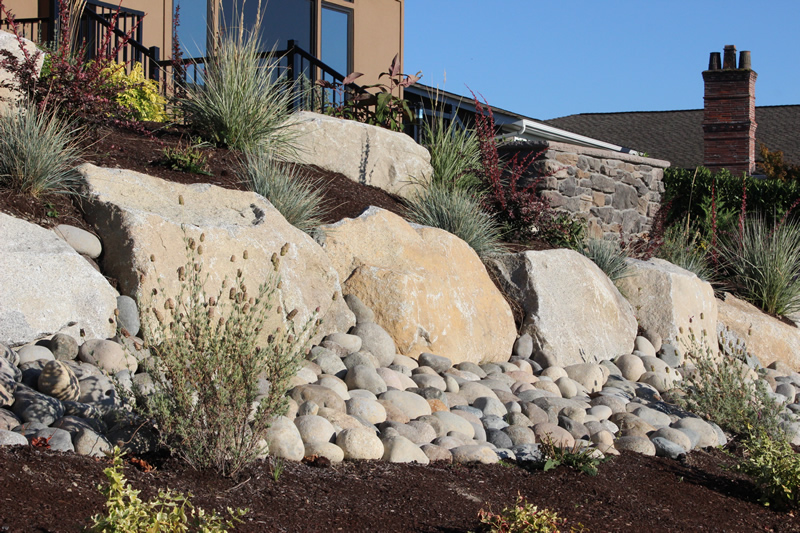
Image Source: www.earthhaulers.com
How Much Does A Yard Of Rocks Weigh? Find Out!
The weight of a yard of rocks can vary significantly, typically ranging from 1,500 pounds to over 3,000 pounds, depending on the type of rock and its density. Knowing this crucial piece of information is essential for planning landscaping projects, ensuring accurate material orders for bulk rock delivery, and safely handling and transporting these materials. This article will delve into the factors influencing rock weight, provide estimations for common types of rocks, and offer practical advice for calculating your needs.
Deciphering the Factors Behind Rock Weight
When you’re planning a project that involves ordering rocks by the yard, like for a driveway, garden path, or decorative landscaping, the question of “how much does a yard of rocks weigh?” is paramount. It’s not a simple, one-size-fits-all answer. Several factors come into play, and grasping these will help you make informed decisions and avoid costly mistakes.
Aggregate Density: The Cornerstone of Calculation
The primary driver of how much a yard of rocks weighs is the aggregate density of the material. Density, in simple terms, is how much “stuff” is packed into a certain space. For rocks, this means how tightly the mineral particles are bound together.
- Mineral Composition: Different types of rocks are made of different minerals. For example, granite is known for its high density due to its composition of minerals like quartz, feldspar, and mica. Limestone, on the other hand, is generally less dense.
- Porosity: Rocks aren’t perfectly solid blocks. They often have tiny pores or air pockets within them. The more porous a rock is, the less it will weigh for the same volume, as air is much lighter than rock.
- Moisture Content: Wet rocks weigh more than dry rocks. Water fills the pores and adds weight. The amount of moisture in the rocks when they are weighed or measured can significantly impact the final weight.
Stone Density Per Yard: Common Variations
To help you visualize the variability, let’s look at some common examples. These are approximations, as even within a single rock type, there can be variations.
Landscaping Rock Weight: Common Types
When people talk about landscaping rocks, they often refer to a range of materials. Understanding the typical landscaping rock weight is key for estimating delivery needs and planning for the physical effort involved in placement.
- Gravel: This is a broad category. Pea gravel, which is small and rounded, will have a different weight per yard than larger, angular crushed gravel.
- Crushed Stone: This is produced by breaking down larger rocks. The angular shape of crushed stone means it often packs more tightly than rounded gravel, potentially increasing its weight per cubic yard. This is often referred to as crushed stone weight.
- Decorative Rocks: These can include river rock, lava rock, or specific types of quarried stone. Their weight depends heavily on their origin and processing. Lava rock, for instance, is notoriously light due to its porous, vesicular structure.
Granite Weight Per Yard: A Dense Example
Granite is a popular choice for countertops, pavers, and decorative landscaping elements. Because of its inherent density, granite weight per yard is on the higher end of the spectrum.
- Why Granite is Heavy: The minerals that make up granite are naturally dense. When you compact it, you get a lot of mass in a small space. This makes it a durable and substantial material.
Decorative Rock Weight: Aesthetics and Mass
The term “decorative rock” can encompass a wide variety of materials, from small pebbles to large boulders. The decorative rock weight will fluctuate dramatically based on the specific type chosen.
- River Rock: Typically smooth and rounded, river rock’s weight will depend on its size and the type of stone it’s made from.
- Lava Rock: As mentioned, lava rock’s porous nature makes it significantly lighter than most other types of rock. This can be an advantage if you’re concerned about weight load, but it might also mean you need more volume for a similar visual effect.
Fathoming the Cubic Yard: What Exactly Is It?
Before we dive deeper into weights, it’s important to clarify what “a yard” means in this context. When ordering rocks, a yard usually refers to a cubic yard.
- Dimensions of a Cubic Yard: A cubic yard is a volume of space that is 3 feet long, 3 feet wide, and 3 feet high (3ft x 3ft x 3ft = 27 cubic feet).
Imagine a cube the size of a standard washing machine – that’s roughly one cubic yard of space. When you order bulk rock delivery, you’re ordering this volume of material.
Calculating Rock Weight Per Cubic Yard: The Numbers Game
To provide a more concrete answer to “how much does a yard of rocks weigh?”, we can look at typical weight ranges for common rock types. These figures are estimates and can vary.
Approximate Rock Weight Per Cubic Yard
Here’s a table showing the estimated rock weight per cubic yard for several common landscaping and construction materials. Remember, these are averages.
| Rock Type | Typical Weight Per Cubic Yard (lbs) | Approximate Density (lbs/ft³) | Notes |
|---|---|---|---|
| Crushed Granite | 2,500 – 2,800 | 110 – 125 | Dense, angular, good for base layers. |
| Crushed Limestone | 2,400 – 2,700 | 105 – 120 | Slightly less dense than granite, commonly used in road construction. |
| Pea Gravel | 2,500 – 2,700 | 110 – 120 | Rounded stones, can have more air space between them. |
| River Rock | 2,500 – 2,700 | 110 – 120 | Varies based on stone type and size; generally packs well. |
| Decomposed Granite | 1,800 – 2,200 | 80 – 95 | Finer particles, can be dusty, less dense than crushed forms. |
| Lava Rock | 1,000 – 1,500 | 45 – 65 | Very porous and lightweight, often used for mulch or drainage. |
| Flagstone | 2,800 – 3,200+ | 125 – 140+ | Can be heavier due to dense, flat slabs. |
| Sandstone | 2,200 – 2,500 | 95 – 110 | Varies based on the type of sandstone. |
| Cobblestones | 2,600 – 3,000 | 115 – 130 | Dense, rounded to irregular shapes. |
Important Note: These weights are for the rocks themselves, dry. Moisture can add anywhere from 5-15% to these weights.
The Impact of Rock Size and Shape
Beyond the inherent density of the rock type, the size and shape of the individual stones can also influence the weight of a cubic yard.
- Smaller Rocks: Smaller rocks, like pea gravel, tend to fill in the gaps more effectively than larger, irregularly shaped rocks. This can lead to a denser pack and a higher weight per cubic yard.
- Angular vs. Rounded: Angular crushed stone generally interlocks better, creating a denser material with less void space, thus increasing the weight. Rounded gravel, while aesthetically pleasing, may leave more air pockets between the stones.
Using a Gravel Weight Calculator and Material Weight Calculation
When you need to order a specific amount of material, using a gravel weight calculator or understanding material weight calculation principles is incredibly helpful.
How Calculators Work
Online calculators often ask for:
- Type of Material: (e.g., crushed gravel, sand, mulch)
- Volume Needed: (e.g., cubic yards, cubic feet)
- Depth of Coverage: (This is used to calculate volume if you know the area.)
Based on these inputs, and using pre-programmed average densities, the calculator will estimate the total weight. This is particularly useful when dealing with bulk rock delivery weight, as you might be charged based on weight or volume, and knowing both helps in budgeting and logistics.
Manual Material Weight Calculation
If you don’t have access to a calculator, you can perform a basic material weight calculation:
Weight = Volume × Density
For example, if you need 5 cubic yards of crushed granite that weighs an average of 2,600 pounds per cubic yard:
Total Weight = 5 cubic yards × 2,600 pounds/cubic yard = 13,000 pounds
You’ll need to know the density of the specific material you’re ordering. Most reputable suppliers can provide this information.
Practical Applications: Why Knowing the Weight Matters
So, why is it so important to know how much a yard of rocks weighs? It impacts several aspects of your project.
Landscaping Project Planning
For any substantial landscaping endeavor, accurate weight estimations are crucial:
- Budgeting: Rocks are often sold by the cubic yard, but understanding the weight helps you anticipate delivery costs (some delivery fees are based on weight) and the physical labor involved.
- Delivery Logistics: Knowing the weight of your order is essential for ensuring your contractor or delivery service has the right equipment. A trailer loaded with 5 cubic yards of granite is significantly heavier than 5 cubic yards of lava rock.
- Structural Considerations: If you’re building retaining walls or a driveway base, the weight and compaction of the aggregate are vital for stability and longevity.
Bulk Rock Delivery Weight
When ordering bulk rock delivery, the weight is a critical factor.
- Truck Capacity: Delivery trucks have weight limits. Knowing the weight of the material you’re ordering ensures you won’t exceed the truck’s capacity, which could lead to delays or additional charges.
- Site Accessibility: Very heavy loads might require specific types of trucks or delivery arrangements, especially if your site has weight restrictions or challenging access.
Stone Density Per Yard: Supplier Information
The best way to get precise figures for stone density per yard is to ask your supplier. They work with these materials daily and should have accurate data for their specific products.
- Requesting Data: When you call to order, ask for the approximate weight per cubic yard for the specific rock you’re interested in. For instance, if you’re looking at crushed stone for a base, ask them about the crushed stone weight per cubic yard. If you’re choosing decorative stones, inquire about the decorative rock weight.
Can I Use a Gravel Weight Calculator for All Rocks?
Yes, generally, you can use a gravel weight calculator as a starting point for most types of rocks, provided you input the correct material type and its corresponding density. However, always double-check the specific density for the exact product you are ordering, as variations exist.
Who Is Most Affected by Rock Weight?
- Homeowners undertaking DIY projects: Need to estimate quantities for delivery and potential manual labor.
- Landscapers and Contractors: Require precise calculations for project proposals, delivery logistics, and material sourcing.
- Construction Companies: Rely on accurate weight data for road bases, foundations, and other structural applications.
Frequently Asked Questions (FAQ)
Here are some common questions related to the weight of rocks per cubic yard:
Q1: Does the moisture content of rocks affect their weight?
A1: Yes, absolutely. Wet rocks will weigh more than dry rocks because water adds significant mass. The weight estimates provided are typically for dry materials.
Q2: How do I convert cubic feet to cubic yards for weight calculations?
A2: There are 27 cubic feet in 1 cubic yard. So, if you have a weight per cubic foot, multiply it by 27 to get the weight per cubic yard, or divide your total cubic feet by 27 to find the number of cubic yards.
Q3: Will different sizes of the same rock type weigh differently per cubic yard?
A3: While the material’s inherent density is the same, the way different sizes pack can influence the overall weight of a cubic yard. Smaller, angular pieces often pack more densely than larger, rounded ones, potentially leading to a higher weight per cubic yard due to less void space.
Q4: Is it better to order rocks by weight or by volume?
A4: It depends on the supplier and the material. Most are sold by the cubic yard (volume). However, some suppliers might offer pricing by ton (weight), especially for construction aggregates like crushed stone. If you need a precise amount for a structural application, ordering by weight can sometimes be more accurate.
Q5: What is the heaviest type of rock per cubic yard?
A5: Densely packed, fine-grained rocks like granite, basalt, or certain types of dense sandstone will typically be among the heaviest per cubic yard. Flagstone, due to its dense composition and tendency to form solid, flat pieces, can also be quite heavy.
By carefully considering the type of rock, its density, and the factors that influence it, you can accurately answer “how much does a yard of rocks weigh?” for your specific needs, ensuring your projects are well-planned and executed.