
A yard of masonry sand typically weighs between 2,200 and 2,700 pounds. This weight can vary based on moisture content and the specific type of sand.
When you’re planning a construction or landscaping project, knowing the masonry sand weight per cubic yard is crucial. This knowledge helps you accurately order materials, estimate costs, and plan the logistics of your project. Whether you’re building a patio, laying a foundation, or creating a garden bed, understanding the bulk sand weight yard can save you time and money. Let’s dive into the details of how much does a yard of masonry sand weigh.
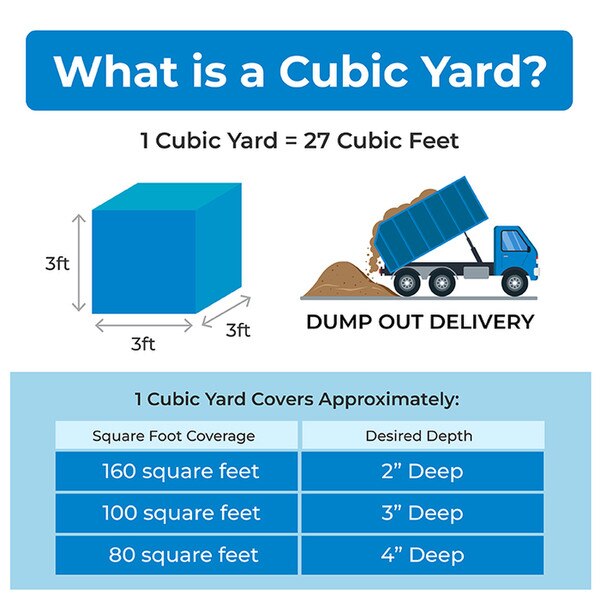
Image Source: www.cumminlandscapesupply.com
Deciphering Sand Weight for Projects
The weight of sand isn’t a fixed number. Several factors influence the typical sand weight cubic yard. Understanding these factors will help you get a more precise estimate for your needs.
What is Masonry Sand?
Masonry sand, also known as mortar sand, is a fine-grained sand used primarily in the creation of mortar for laying bricks, blocks, and stones. It’s processed and screened to a specific particle size, typically ranging from 0.05 to 2 millimeters. This consistency is vital for creating strong, workable mortar. Unlike play sand or construction sand, masonry sand has a more uniform grain size and fewer impurities, making it ideal for structural applications. Its fine texture allows it to mix smoothly with cement and lime, creating a pliable mortar that holds building materials together effectively.
Factors Influencing Sand Weight
Several elements contribute to the variation in sand density for construction:
- Moisture Content: This is perhaps the most significant factor. Dry sand is significantly lighter than wet sand. When sand absorbs water, the water fills the spaces between the grains, adding considerable weight. The wetter the sand, the heavier it will be. For example, a cubic yard of dry sand will weigh less than a cubic yard of sand that has been exposed to rain or is freshly excavated.
- Compaction: How tightly the sand is packed in the yard also plays a role. Tightly packed sand will have less air space between grains, leading to a higher density and therefore a greater weight per cubic yard. When sand is delivered in bulk, it might be less compacted than sand that has been processed and bagged.
- Grain Size and Shape: While masonry sand has a controlled particle size, slight variations can still occur. Finer sands might pack more densely than coarser sands. The shape of the sand grains also influences how they settle and pack together.
- Mineral Composition: The specific minerals that make up the sand can affect its density. For instance, sands with a higher percentage of denser minerals will weigh more than those composed primarily of lighter minerals.
The Weight of Masonry Sand: A Closer Look
To answer the question directly: how much does a yard of masonry sand weigh? you can generally expect a cubic yard of masonry sand to weigh between 2,200 and 2,700 pounds.
This range accounts for the variables mentioned above. For most construction purposes, it’s wise to use an average figure or err on the side of caution by assuming the higher end of the weight range when calculating the load capacity of your vehicles or the required strength of your foundations.
Typical Sand Weight Cubic Yard Breakdown
Let’s break down these figures and look at the weight of sand per cubic foot:
- Dry Sand: Dry masonry sand typically weighs around 100 to 110 pounds per cubic foot.
- Wet Sand: As moisture content increases, so does the weight. Wet masonry sand can weigh anywhere from 115 to 130 pounds per cubic foot or even more if it’s saturated.
Given that there are 27 cubic feet in a cubic yard (3 feet x 3 feet x 3 feet), we can calculate the cubic yard weight:
- Dry Sand (100 lbs/cu ft x 27 cu ft): 2,700 pounds per cubic yard
- Wet Sand (120 lbs/cu ft x 27 cu ft): 3,240 pounds per cubic yard
This shows why the range of 2,200 to 2,700 pounds per cubic yard is a common estimate, often referring to sand that is relatively dry but not bone dry. If you are dealing with freshly dug or very wet sand, the weight could be considerably higher.
Estimating Sand Weight for Bulk Orders
When ordering sand in bulk, such as from a local landscape supply yard, you’ll likely be purchasing it by the cubic yard. This is where estimating sand weight for projects becomes essential.
- Small Projects: For a small patio or walkway, you might only need a few cubic yards. Knowing the weight helps you determine if your truck or trailer can handle the load safely.
- Large Projects: For larger construction jobs, bulk orders can be significant. Accurate weight estimations prevent under-ordering (which leads to delays and extra delivery fees) or over-ordering (which wastes material and money).
Consider this: if your project requires 10 cubic yards of masonry sand, and you estimate each yard at 2,500 pounds, you’re looking at a total weight of 25,000 pounds. This is crucial information for planning transportation and ensuring your equipment is adequate.
The Role of Sand Density in Construction
Sand density for construction is a critical parameter that affects the performance of various building materials, most notably concrete and mortar.
- Concrete Mixes: The density of sand affects the volumetric proportions of a concrete mix. Using sand with a higher density means you’ll need less volume to achieve the same weight, impacting the strength and workability of the concrete.
- Mortar Strength: For masonry, the consistent particle size and density of masonry sand contribute to the strength and durability of the mortar bond. A well-proportioned mortar mix, using sand of known density, ensures that bricks and blocks are held together securely.
Sand Density for Construction: A Deeper Dive
The specific gravity of sand grains can range from 2.5 to 2.7. This refers to the density of the solid mineral particles themselves, excluding air voids.
- Bulk Density vs. Specific Gravity: It’s important to distinguish between bulk density (the weight of sand in a given volume, including air voids) and specific gravity (the density of the sand particles themselves). For practical project planning, bulk density is what you need.
How Much Does a Ton of Sand Cover?
This is a common question, often asked in the context of landscaping or covering areas with a layer of sand. To answer how much does a ton of sand cover, we first need to convert tons to pounds and then work backward with the weight per cubic yard.
One ton is equal to 2,000 pounds.
Let’s assume an average masonry sand weight per cubic yard of 2,500 pounds.
- Cubic Yards per Ton: 2,000 pounds / 2,500 pounds/cubic yard = 0.8 cubic yards per ton.
So, one ton of masonry sand covers approximately 0.8 cubic yards. This is useful if you’re calculating the volume of material needed for a specific depth and area.
- Example Calculation: If you need a 3-inch (0.25 feet) layer of sand over an area of 100 square feet:
- Volume = Area x Depth
- Volume = 100 sq ft x 0.25 ft = 25 cubic feet
- Convert to cubic yards: 25 cubic feet / 27 cubic feet/cubic yard ≈ 0.93 cubic yards
In this example, you would need slightly more than one ton of sand. If you used the higher end of the weight estimate (2,700 lbs/cu yd), you might need closer to one ton for this project. Always factor in potential moisture and compaction.
Covering Areas with Sand
The actual area covered by a ton of sand depends on the desired depth of the sand layer.
- Shallow Layers: For a thin layer, like a base for pavers or a decorative topping, one ton will cover a larger area.
- Deeper Layers: For deeper applications, like creating a sand pit or a base for a foundation, one ton will cover a smaller area.
If you’re working with bulk landscaping sand weight, the principle remains the same. Knowing the weight per cubic yard will allow you to determine the coverage area for a given depth.
Calculating Sand Weight for Projects: A Practical Guide
Calculating sand weight for projects involves a few straightforward steps.
-
Determine the Volume Needed:
- Measure the length, width, and desired depth of the area you need to fill with sand.
- Ensure all measurements are in the same units (e.g., feet).
- Volume = Length x Width x Depth
- Convert the volume to cubic yards by dividing by 27.
-
Estimate the Weight per Cubic Yard:
- Use the typical range of 2,200 to 2,700 pounds per cubic yard for masonry sand.
- Consider the moisture content: if the sand is likely to be wet, use the higher end of the range.
-
Calculate Total Weight:
- Total Weight = Volume (in cubic yards) x Estimated Weight per Cubic Yard
Example: Calculating for a Patio Base
Let’s say you’re building a patio that is 10 feet long by 12 feet wide, and you need a 4-inch sand base.
-
Volume Calculation:
- Length = 10 ft
- Width = 12 ft
- Depth = 4 inches = 4/12 feet = 0.333 feet
- Volume = 10 ft x 12 ft x 0.333 ft = 40 cubic feet
-
Convert to Cubic Yards:
- Volume (cu yd) = 40 cu ft / 27 cu ft/cu yd ≈ 1.48 cubic yards
-
Estimate Weight:
- Assuming the sand is relatively dry, let’s use an average of 2,500 pounds per cubic yard.
-
Calculate Total Weight:
- Total Weight = 1.48 cu yd x 2,500 lbs/cu yd ≈ 3,700 pounds
This means you’ll need approximately 3,700 pounds of sand. If your truck has a payload capacity of 2,000 pounds, you’d need to make at least two trips, or consider a larger truck or trailer.
Bulk Sand Weight Yard Considerations
When ordering sand in bulk, you’re often buying it by the cubic yard. Suppliers typically have their own standard weights they use for calculations. It’s always a good idea to confirm their estimated bulk sand weight yard with them.
Types of Bulk Sand and Their Weights
While we’re focusing on masonry sand, it’s helpful to be aware of other types:
- Play Sand: Generally lighter, often around 2,000-2,200 pounds per cubic yard, as it’s usually very dry and has a finer, more uniform grain.
- Concrete Sand: Coarser than masonry sand, can also fall in the 2,200-2,700 pounds per cubic yard range, but might be slightly heavier due to coarser grains packing differently.
- Pea Gravel: Significantly heavier, often weighing 2,500-3,000 pounds per cubic yard due to the denser nature of the stone.
For bulk landscaping sand weight, the same principles apply. Whether it’s for decorative purposes, soil amendment, or creating drainage layers, the volume-to-weight conversion is key.
Average Weight of Masonry Sand: A Reliable Figure
To solidify your planning, the average weight of masonry sand is often cited around 2,500 pounds per cubic yard. This figure represents a good balance between dry and slightly damp conditions and is a reliable starting point for most calculations.
When in doubt, it’s always best to:
- Ask your supplier: They have specific data for the sand they sell.
- Factor in moisture: If there’s a chance the sand will be wet, add a buffer to your weight estimate.
Weighing Your Options: Accuracy is Key
Accuracy in estimating sand weight prevents costly mistakes and project delays. Whether you’re a DIY enthusiast or a professional contractor, having this information at your fingertips is invaluable.
Frequently Asked Questions (FAQ)
Q1: How much does a cubic yard of wet masonry sand weigh?
A cubic yard of wet masonry sand can weigh anywhere from 2,700 to over 3,000 pounds, depending on how saturated it is.
Q2: Can I use a standard pickup truck to haul a cubic yard of masonry sand?
Most standard pickup trucks have a payload capacity of around 1,500 to 2,000 pounds. Since a cubic yard of masonry sand can weigh 2,200 to 2,700 pounds or more, you would likely need to make multiple trips or use a trailer. Always check your truck’s specific payload capacity.
Q3: Does the type of truck affect how much sand it can carry?
Yes. Larger trucks, dump trucks, and commercial vehicles have much higher payload capacities and are designed to haul larger quantities of heavy materials like sand.
Q4: How do I calculate the weight of sand for a 3-inch layer in a 10×10 foot area?
First, calculate the volume: 10 ft x 10 ft x 0.25 ft (3 inches) = 25 cubic feet. Convert to cubic yards: 25 cu ft / 27 cu ft/cu yd ≈ 0.93 cubic yards. Then, multiply by the estimated weight per cubic yard (e.g., 2,500 lbs/cu yd): 0.93 cu yd x 2,500 lbs/cu yd ≈ 2,325 pounds.
Q5: Is the weight of masonry sand the same as construction sand?
While both fall into similar weight ranges, masonry sand is typically finer and more uniform, which can affect its packing density slightly compared to coarser construction sand. However, for most general estimations, the weight per cubic yard can be considered comparable.
Q6: Why is it important to know the weight of sand?
Knowing the weight of sand is crucial for transportation safety (not overloading vehicles), ordering the correct amount of material, calculating the load on structural elements, and estimating project costs accurately.
By paying attention to the weight and volume of materials like masonry sand, you ensure your projects are built safely, efficiently, and within budget.