
Can you have a yard sale without a permit? Generally, yes, for a single, informal event, but it’s wise to check your local rules. How much is a yard sale permit? Permit costs vary widely, from free to around $50 or more, depending on your city or town.
Thinking about decluttering and making some extra cash? A yard sale, garage sale, or household sale can be a great way to do it. Before you start pricing those pre-loved items, it’s essential to know if you need a permit and what it might cost. The garage sale permit cost isn’t a fixed national rate; it’s determined by your local government. This blog post will guide you through the ins and outs of yard sale permits, helping you navigate local regulations for yard sales and understand the cost of a household sale permit.
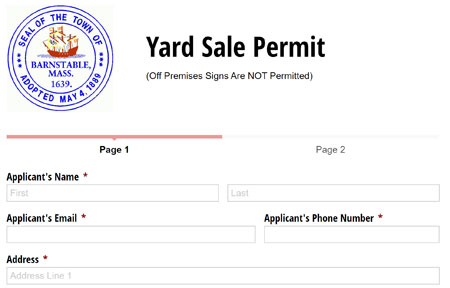
Image Source: town.barnstable.ma.us
Why Do Some Places Require a Permit?
Local governments often implement rules and require permits for various activities to manage public spaces, ensure safety, and sometimes generate revenue. For yard sales, these reasons can include:
- Traffic Control: To prevent excessive traffic congestion on residential streets, especially if a sale is expected to be very popular.
- Noise and Nuisance Control: To address potential complaints from neighbors regarding noise or prolonged activity.
- ** Zoning and Land Use:** To ensure that commercial-like activities are not taking place in areas zoned exclusively for residential use without proper oversight.
- Fairness: To create a level playing field, preventing some residents from benefiting from continuous sales while others follow the rules.
- Record Keeping: To have a record of who is conducting sales, especially if there are frequent or large-scale events.
- Homeowners Association (HOA) Rules: Many HOAs have their own specific rules about when and how you can hold sales, often in addition to city or town ordinances.
The Price of a Permit: What to Expect
The yard sale license fee can range significantly. Many smaller towns or rural areas might not require a permit at all, or they might offer them for free. However, in more populated cities or suburban areas, you’re more likely to encounter a fee.
Here’s a breakdown of potential costs:
- Free: Some municipalities recognize yard sales as a community activity and don’t charge for a basic permit.
- $5 – $15: This is a common range for many towns and smaller cities. It’s a nominal fee to cover administrative costs.
- $15 – $30: Larger cities or areas with more stringent regulations might charge in this range.
- $30 – $50+: Very large cities or those with strict rules about frequency, signage, or duration might have higher fees.
It’s important to remember that these are just estimates. The only way to know the exact cost of a household sale permit is to check with your local government.
Factors Influencing Permit Costs
Several factors can influence how much a yard sale permit costs:
- Duration of the Sale: Some permits might be for a single day, while others cover a weekend. Longer sales might incur higher fees.
- Frequency of Sales: If your town limits how many yard sales you can have per year, the permit fee might be tied to that allowance. Some places allow one or two per year without a fee, while subsequent sales might require one.
- Location: Sales in areas with high traffic or specific zoning considerations might have different fee structures.
- Community or Neighborhood Sales: If you’re organizing a neighborhood sale permit costs might be different, perhaps a single permit for the organizer or individual permits for each household.
- Administrative Costs: The fee often reflects the cost of processing the application, issuing the permit, and any enforcement or inspection involved.
How to Get a Permit for a Yard Sale
The process for obtaining a permit for a yard sale is generally straightforward. Here’s a typical approach:
- Identify Your Local Authority: This is usually your city hall, town clerk’s office, or municipal licensing department. If you live in an unincorporated area, you might need to check with your county government.
- Check Online: Most local government websites have a section for business licenses or permits. Search for “yard sale permit,” “garage sale permit,” or “temporary sales permit.” You can often download the residential sale permit application or find instructions online.
- Visit the Office: If you can’t find information online, visit your local government office in person. They can provide you with the necessary forms and information.
- Complete the Application: The residential sale permit application will typically ask for:
- Your name and contact information.
- The address where the sale will be held.
- The dates and times of the sale.
- A brief description of the items being sold (usually just “household goods” or “personal items”).
- Sometimes, proof of residency or property ownership.
- Pay the Fee: Be prepared to pay the applicable home sale permit fees at the time of application. Most offices accept cash, checks, or credit cards.
- Receive Your Permit: Once approved, you’ll receive your permit. It’s a good idea to keep a copy of the permit with you during the sale. Some jurisdictions might require you to display it visibly.
Navigating Local Regulations for Yard Sales
Beyond permits, there are other local regulations for yard sales you should be aware of:
- Signage Rules: Many towns have specific rules about where you can place signs, how large they can be, and when they must be removed. Improperly placed signs can lead to fines.
- Duration Limits: Some areas limit how many days in a row a yard sale can run (e.g., a maximum of three consecutive days).
- Frequency Limits: As mentioned, there might be a limit on how many yard sales you can hold per calendar year.
- Prohibited Items: While rare, some regulations might prohibit the sale of certain items, like alcohol or firearms.
- Zoning Restrictions: In some cases, zoning laws might dictate where sales can occur, especially if you live in a neighborhood with strict HOA rules.
Table 1: Common Permit Information Sources
| Government Level | Department to Contact | Information Available Online |
|---|---|---|
| City/Town | City Clerk’s Office, Town Hall, Licensing Department | Permit applications, fee schedules, local ordinances, signage rules, frequency limits. |
| County | County Clerk’s Office, County Treasurer | If you live in an unincorporated area. Similar information as city/town. |
| Homeowners Association (HOA) | HOA Board, Property Management Company | Specific HOA rules regarding sales, which may be stricter than city ordinances. Often available through resident portals. |
Permit Requirements for Selling Outdoors
The permit requirements for selling outdoors can extend beyond casual yard sales. If you plan on selling items regularly or in a more organized fashion, the requirements will likely be more stringent and involve different types of permits, such as a general business license or a vendor permit. However, for a typical one-off or twice-a-year household sale, the focus is usually on the specific yard sale license fee and associated regulations.
What If I Don’t Get a Permit?
Failing to obtain a required permit can lead to penalties. These can include:
- Fines: The most common penalty is a monetary fine. The amount can vary based on the local ordinance.
- Forced Closure: You might be asked to close your sale immediately if you are found to be operating without a permit.
- Future Restrictions: In some cases, repeated violations could lead to restrictions on holding future sales.
It’s always better to check the rules and comply. The garage sale permit cost is usually much less than the potential fines for non-compliance.
Examples of Local Costs and Regulations
To give you a clearer picture, let’s look at hypothetical examples of what you might find:
Example 1: Small Town (Green Acres)
- Permit Required: Yes, for any sale exceeding one day.
- Garage Sale Permit Cost: $5 for a two-day permit.
- How to Get a Permit: Visit the Town Clerk’s office with a completed residential sale permit application.
- Regulations: Signs allowed only on the day of the sale, placed on private property with owner’s permission. Maximum of 3 sales per household per year.
Example 2: Mid-Sized City (River City)
- Permit Required: Yes, for all yard sales.
- Yard Sale License Fee: $15 for a three-day permit.
- How to Get a Permit: Apply online through the city’s licensing portal or at City Hall. The home sale permit fees are payable by credit card online or check/cash in person.
- Regulations: Signs must be removed within 24 hours after the sale ends. Sales are limited to two consecutive days. City ordinance for garage sales prohibits selling new merchandise or items acquired for resale.
Example 3: Large Metropolitan Area (Metropolis)
- Permit Required: Yes, a “Temporary Sales Permit” is needed.
- Cost of a Household Sale Permit: $30 for a permit valid for one weekend (Saturday-Sunday).
- How to Get a Permit: Submit a residential sale permit application online, including a site plan showing sign placement if applicable.
- Regulations: Strict rules on signage—size, placement, and removal within 12 hours post-sale. Maximum of 4 sales per year. Sales cannot extend beyond 7 PM. Some neighborhoods might have additional restrictions via HOAs. Neighborhood sale permit costs for a large community event might be bundled for organizers.
Table 2: Hypothetical Permit Costs by City Size
| City Size | Typical Permit Cost | Permit Duration | Common Additional Regulations |
|---|---|---|---|
| Small Town | $0 – $10 | 1-2 Days | Signage restrictions, frequency limits (e.g., 2/year). |
| Mid-Sized City | $10 – $25 | 2-3 Days | Sign removal deadlines, limits on new goods, noise ordinances. |
| Large City | $25 – $50+ | 1-3 Days | Detailed signage rules, time restrictions, potential zoning checks. |
Can HOAs Have Stricter Rules?
Yes, absolutely. Homeowners Associations (HOAs) can and often do have their own set of rules that are in addition to or stricter than local government ordinances. These can include:
- Lower Frequency Limits: An HOA might allow only one sale per year, even if the city allows more.
- Stricter Signage Rules: HOAs might prohibit any signs, or only allow approved signs to be placed in designated community areas.
- Approved Sale Days/Times: Some HOAs designate specific weekends for community-wide sales.
- Prohibition of Sales Altogether: In rare cases, some HOAs might ban yard sales entirely.
If you live in a community with an HOA, it is crucial to consult your HOA’s Covenants, Conditions & Restrictions (CC&Rs) or contact your HOA board or property manager to learn about their specific local regulations for yard sales.
Making the Most of Your Yard Sale
Beyond permits, a successful yard sale involves good planning.
What to Sell
- Clothing (clean and in good condition)
- Books, CDs, DVDs
- Toys and games
- Furniture
- Home decor
- Kitchenware
- Electronics (if working)
- Tools
Pricing Your Items
- Be Realistic: Price items at a fraction of their original cost (often 10-30%).
- Bundle Deals: Offer “3 for $5” deals on smaller items.
- Clearance Section: Have a box of items priced at $0.25 or $0.50.
- Consider Offers: Be open to negotiation, especially towards the end of the day.
Advertising Your Sale
- Signs: Clear, large, easy-to-read signs with arrows pointing the way. Use neon poster board.
- Online: Post on local Facebook groups, Craigslist, and dedicated yard sale websites. Include dates, times, address, and highlight any desirable items.
- Community Boards: Post flyers at local grocery stores, community centers, or libraries (if permitted).
Day-Of Tips
- Start Early: Many dedicated yard sale shoppers arrive before the official start time.
- Have Change: Keep plenty of small bills and coins in a secure place.
- Bags and Boxes: Have bags or boxes ready for customers.
- Pricing Clearly: Make sure items are priced, or have a system so customers know.
- Organize: Group similar items together for easy browsing.
Frequently Asked Questions About Yard Sale Permits
Q1: Do I need a permit for a garage sale if it’s on my private property?
A1: Even if it’s on your private property, many cities and towns still require a permit. This is to regulate the activity, traffic, and duration, as outlined in their city ordinance for garage sales. Always check your local rules.
Q2: What happens if I have a yard sale without a permit and get caught?
A2: You could face fines or be asked to shut down your sale. It’s best to follow the local regulations for yard sales to avoid these issues.
Q3: How long are yard sale permits usually valid?
A3: Typically, a permit is valid for a specific number of days, most commonly one to three consecutive days, covering a single sale event. The duration is usually stated on the permit itself.
Q4: Can I sell items I bought specifically to resell at my yard sale?
A4: Most permit requirements for selling outdoors for yard sales are intended for the sale of personal, used household goods. Selling items acquired for resale might require a different type of business license or vendor permit, depending on your local laws.
Q5: What if my HOA has different rules than the city?
A5: You must comply with both. If the HOA rules are stricter (e.g., no sales allowed, or fewer sales per year), you must adhere to those. Always check with both your city/town and your HOA.
Q6: Is there a difference between a yard sale permit and a garage sale permit?
A6: No, these terms are generally used interchangeably. The garage sale permit cost is the same as the yard sale license fee.
Q7: How do I find out if my specific town requires a permit?
A7: The best way is to check your town or city’s official website. Look for sections on licensing, permits, or special events. Alternatively, call your town clerk’s office directly.
Q8: Are there specific rules about what I can put on my yard sale signs?
A8: Yes, many places have rules about the size, color, and content of signs. Some prohibit advertising specific items, focusing only on the event itself. Always review local regulations for yard sales for signage.
By doing a little research upfront and obtaining the necessary permit, you can ensure your yard sale is a successful and hassle-free event. Happy selling!