
So, how much does one cubic yard of sand weigh? The answer hinges on a few key factors, but a general ballpark figure for the weight of sand per cubic yard is between 2,500 and 3,500 pounds. This range is primarily determined by the specific type of sand and its moisture content.
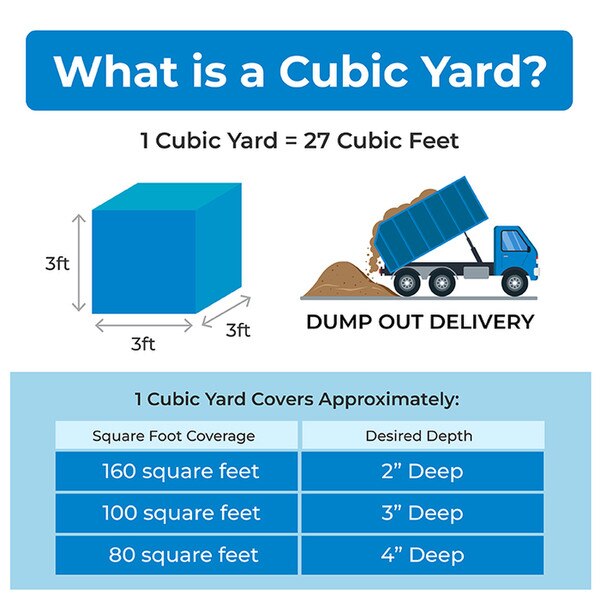
Image Source: www.cumminlandscapesupply.com
Determining the Weight of Sand: Key Factors
When you’re trying to figure out the sand weight per cubic yard, it’s not as simple as picking up a pre-measured bag. The weight can vary quite a bit. Think of it like asking how much a bag of apples weighs – it depends on the size and type of apples, right? Sand is similar. Several elements influence its heft, with sand density being the most crucial.
The Role of Sand Density
Sand density refers to how much mass is packed into a certain volume. Denser sand will naturally weigh more than less dense sand. This density is influenced by the composition of the sand grains themselves.
- Grain Size: Finer sands tend to pack more closely than coarser sands, potentially leading to a higher density.
- Grain Shape: Rounded grains might pack differently than angular grains.
- Mineral Composition: Different minerals have different inherent densities. Quartz, a common component of sand, has a specific density. Other minerals present can alter the overall bulk density of sand.
Moisture Content: The Silent Weight Gainer
Perhaps the most significant variable affecting the cubic yard of sand weight is its moisture content. Dry sand is considerably lighter than wet sand. Water adds a substantial amount of weight because water itself has a density of about 62.4 pounds per cubic foot. When sand absorbs water, the pores between the grains fill up, adding to the overall mass.
- Dry Sand: Will be at the lower end of the weight spectrum.
- Damp Sand: Will weigh more.
- Saturated Sand: Will be at the heaviest end, as the pore spaces are completely filled with water.
This is why getting a precise figure for how heavy is a cubic yard of sand requires knowing these details.
Average Weights for Different Sand Types
To give you a more concrete idea, let’s look at the average weight of sand for some common types. These figures are approximate and assume typical moisture levels.
Concrete Sand
Concrete sand, also known as sharp sand or builder’s sand, typically has a mix of grain sizes, from fine to coarse. It’s a popular choice for mixing concrete, mortar, and for general leveling.
- Dry Concrete Sand Weight: Approximately 2,700 to 3,000 pounds per cubic yard.
- Wet Concrete Sand Weight: Can range from 3,000 to 3,500 pounds per cubic yard, depending on saturation.
This makes it a good middle-ground option when you’re looking at sand volume to weight conversion.
Play Sand
Play sand is usually a finer, washed sand. Because it’s often processed to remove larger particles and impurities, it can have a slightly different bulk density of sand compared to construction sand.
- Dry Play Sand Weight: Around 2,500 to 2,800 pounds per cubic yard.
- Wet Play Sand Weight: May reach up to 3,200 pounds per cubic yard.
Mason Sand
Mason sand is very fine-grained and is commonly used for bricklaying and mortar. Its fine texture can lead to a higher degree of compaction.
- Dry Mason Sand Weight: Typically between 2,600 and 2,900 pounds per cubic yard.
- Wet Mason Sand Weight: Can be expected to weigh between 2,900 and 3,300 pounds per cubic yard.
River Sand
River sand, naturally, can vary greatly depending on the river and its geological history. It often has rounded grains.
- Dry River Sand Weight: Can fall within the 2,600 to 3,100 pounds per cubic yard range.
- Wet River Sand Weight: Might push towards 3,000 to 3,500 pounds per cubic yard.
Understanding Cubic Yards
Before we delve deeper into the weight, it’s essential to grasp what a cubic yard actually is. A cubic yard is a unit of volume in the imperial and U.S. customary systems. It represents a cube that is three feet long, three feet wide, and three feet high.
- Length: 3 feet
- Width: 3 feet
- Height: 3 feet
- Volume: 3 ft × 3 ft × 3 ft = 27 cubic feet
So, when we talk about a cubic yard of sand weight, we are referring to the weight of sand that would fill a space of 27 cubic feet.
Factors Affecting Sand Weight in Detail
Let’s break down the influencing factors further to ensure a comprehensive grasp of the topic.
1. Sand Composition and Mineralogy
The Earth’s crust is made up of countless minerals, and sand is essentially a granular material composed of finely divided rock and mineral particles. The most common constituent of sand, globally, is silicon dioxide (SiO₂), usually in the form of quartz. However, other minerals can be present, affecting the overall sand density.
- Quartz: Has a specific gravity of about 2.65.
- Feldspar: Another common mineral, with a specific gravity around 2.55 to 2.76.
- Heavy Minerals: Such as magnetite, garnet, or zircon, have higher specific gravities and, if present in significant amounts, can increase the weight of sand per cubic yard.
The geological origin of the sand will determine its mineral composition. For instance, sand from weathered granite will have a different mineral makeup than sand from a coral reef.
2. Grain Size Distribution
The range of particle sizes within a sample of sand is known as its grain size distribution. This impacts how the sand packs together.
- Well-Graded Sand: Contains a wide range of particle sizes. This allows the smaller particles to fill the voids between the larger ones, resulting in a denser, more compact material.
- Poorly-Graded Sand: Consists mostly of particles of similar size. This leads to larger void spaces between grains, making it less dense and lighter.
The bulk density of sand is directly related to how well-graded it is.
3. Compaction
The degree to which sand is compacted significantly affects its density and, consequently, its weight. Loose sand will have more air pockets than compacted sand.
- Loose Sand: Imagine pouring sand into a container. It will likely have a lower density.
- Compacted Sand: If you vibrate or press down on the sand, you can reduce the void spaces and increase its density. This is often done in construction to create stable foundations.
A sand volume to weight conversion will yield different results depending on the compaction state.
4. Moisture Content Revisited
As mentioned, moisture is a critical factor. The weight added by water can be substantial.
- Gravimetric Water Content: This is the mass of water in the sand divided by the mass of the dry solids.
- Volumetric Water Content: This is the volume of water in the sand divided by the total volume of the sand.
Even a small percentage of water by weight can significantly increase the cubic yard of sand weight. For example, if dry sand weighs 2,800 pounds per cubic yard and becomes saturated, adding water can increase the weight by several hundred pounds.
How to Calculate Sand Weight
While the provided figures offer a good estimate, you might need a more precise calculation for a specific project. This is where a weight of sand calculator can be useful, or you can perform a simple calculation yourself.
To estimate the weight of a cubic yard of sand, you can use the following approach:
- Find the Density: Determine the sand density in pounds per cubic foot (lb/ft³). You can often find this information from the sand supplier or by looking up typical values for the type of sand you are using.
- Convert Cubic Feet to Cubic Yards: Remember that 1 cubic yard = 27 cubic feet.
- Calculate the Weight: Multiply the density (lb/ft³) by the number of cubic feet in a yard (27 ft³).
Formula:
Weight per cubic yard (lbs) = Density (lb/ft³) × 27 ft³/yd³
Example:
If you have concrete sand with a density of 100 lb/ft³ (this is a hypothetical density for illustration, actual sand densities are usually higher for dry sand):
Weight per cubic yard = 100 lb/ft³ × 27 ft³ = 2,700 lbs
However, it’s more common to work with bulk density of sand directly in pounds per cubic yard. If you know the approximate dry sand weight per cubic yard, you can use that as a base and add an estimated weight for moisture if necessary.
Using a Weight of Sand Calculator
Many online resources offer a weight of sand calculator. These tools typically ask for the type of sand and its moisture content (often as a percentage or simply “dry,” “damp,” or “wet”) and then provide an estimated weight per cubic yard. These are incredibly helpful for landscaping, construction, and DIY projects where precise material quantities are important.
Why Knowing the Weight Matters
Accurate knowledge of how much does sand weigh is crucial for several reasons:
1. Ordering Materials
- Truck Capacity: Knowing the weight helps determine how much sand you can legally and practically transport in a truck or trailer. A standard pickup truck bed might hold about half a cubic yard, but its payload capacity is a critical factor.
- Delivery Costs: Some suppliers charge based on weight, especially for bulk deliveries.
2. Project Planning and Budgeting
- Material Costs: Sand is often sold by the cubic yard, but understanding its weight is important for comparing prices and estimating total project costs, especially if you’re buying by the ton.
- Structural Load: In construction, knowing the weight of materials is vital for engineering and ensuring that structures can bear the load. For example, the weight of sand used as backfill.
3. Landscaping and DIY Projects
- Equipment Rental: If you’re renting a trailer or a small truck, you need to know the weight of the sand to ensure you don’t overload the vehicle.
- Workability: While not directly about weight, the moisture content that affects weight also influences how easy the sand is to work with.
Common Misconceptions About Sand Weight
One common misconception is that all sand weighs the same. As we’ve discussed, this simply isn’t true. The variability in sand density and moisture means a cubic yard of dry, fine sand will weigh differently than a cubic yard of wet, coarse sand.
Another mistake is assuming that a “cubic yard” is always a fixed weight, regardless of how it’s delivered or handled. Loose, fluffy sand will occupy more space initially but might settle more when compacted, changing its effective weight per volume.
Practical Application: Estimating a Load
Let’s say you need to fill a landscaping trailer with concrete sand for a patio project. You know your trailer has a maximum payload capacity of 2,000 pounds.
- You look up the estimated dry sand weight per cubic yard for concrete sand, which is around 2,800 pounds.
- You realize that even a full cubic yard would be too heavy for your trailer.
- You decide to aim for about 2,000 lbs / 2,800 lbs/yd³ ≈ 0.71 cubic yards.
This calculation helps you order the right amount and avoid overloading your trailer. If the sand supplier mentions it’s particularly wet, you might want to reduce your estimate slightly more to be safe.
Frequently Asked Questions (FAQ)
Q1: What is the typical weight of a cubic yard of dry sand?
A1: The typical dry sand weight per cubic yard ranges from about 2,500 to 3,000 pounds, depending on the type of sand and its grain composition.
Q2: How much does wet sand weigh per cubic yard?
A2: Wet sand is heavier. A cubic yard of sand weight when wet can be anywhere from 2,800 to 3,500 pounds, or even more if it’s fully saturated.
Q3: Can I use a simple weight of sand calculator for any type of sand?
A3: Yes, most online calculators are designed to estimate based on general sand types. For highly specialized sands, you might need to consult the supplier for precise density data.
Q4: Does the color of the sand affect its weight?
A4: While color can sometimes indicate mineral composition, it’s not a direct determinant of weight. The actual mineral content and density are the primary factors.
Q5: How much does a truckload of sand weigh?
A5: This depends entirely on the size of the truck and the sand weight per cubic yard. A standard dump truck might carry anywhere from 10 to 25 cubic yards, so the weight could range from 25,000 to over 87,500 pounds. Always check the truck’s payload capacity.
Q6: What is the average weight of sand in the desert?
A6: Desert sand, often composed of quartz and other minerals weathered over long periods, will have varying densities. A good estimate would still fall within the general range of 2,500 to 3,000 pounds per cubic yard for dry conditions.
Q7: How do I convert sand volume to weight if I know the density in kg/m³?
A7: First, convert kilograms to pounds (1 kg ≈ 2.20462 lbs) and cubic meters to cubic yards (1 m³ ≈ 1.30794 yd³). Then, multiply your density in kg/m³ by the conversion factor for kg to lbs, and then by the volume of a cubic yard in cubic meters. Or, simply find the density in lb/ft³ and use the formula: Weight (lbs) = Density (lb/ft³) × 27.
By now, you should have a clear answer to how much does one cubic yard of sand weigh, along with a solid appreciation for the factors that influence this crucial measurement.