
If you’re wondering how much a yard of rock weighs, the general answer is that it can range from 1,500 to 3,000 pounds (680 to 1,360 kilograms). This wide range exists because the weight depends heavily on the type of rock and its density. Knowing this helps you plan landscaping projects, ensure you have the right equipment for hauling, and even calculate material costs accurately.
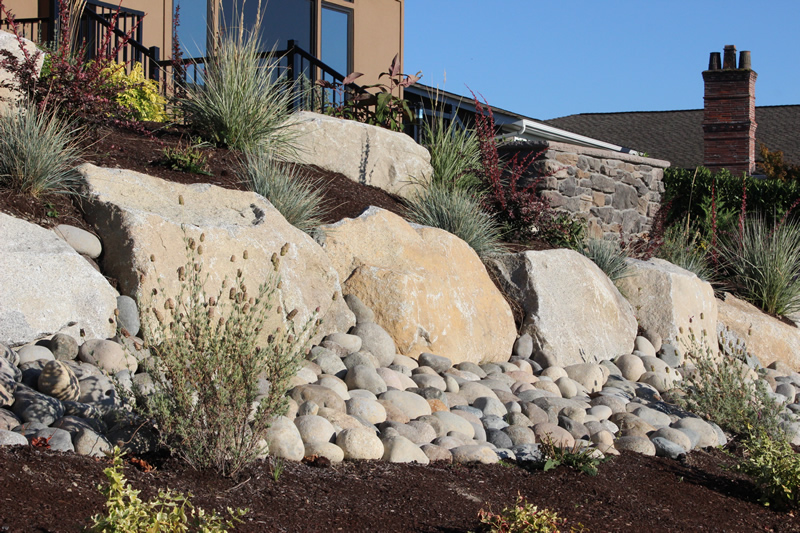
Image Source: www.earthhaulers.com
Deciphering the Weight of a Cubic Yard of Rock
When you’re planning a landscaping project, a garden renovation, or even a construction job, you’ll often hear about materials being measured in cubic yards. One of the most common materials is rock, whether it’s for driveways, decorative features, or drainage. But how much does a yard of rock weigh? This is a crucial question for anyone ordering or moving these heavy materials. The weight of a cubic yard of rock isn’t a single, fixed number; it varies significantly based on several key factors. Let’s dive deep into what influences this weight and how you can get a precise estimate for your needs.
The Core Factor: Rock Density
The primary driver behind the weight of any material is its rock density. Density is a measure of mass per unit of volume. For rocks, this means how tightly packed the mineral particles are within the stone itself. Different types of rocks are formed from different minerals and under different geological conditions, leading to variations in their density.
For example, lighter rocks like pumice, which is volcanic and full of air bubbles, will weigh significantly less per cubic yard than denser rocks like granite or basalt. Conversely, materials like sand or soil, while also aggregate materials, will have their own density values.
Factors Influencing Aggregate Weight by Volume
Beyond the intrinsic density of the rock itself, several other factors affect the aggregate weight by volume:
- Type of Rock: As mentioned, granite, limestone, sandstone, lava rock, river rock, and crushed stone all have different densities.
- Size and Shape of the Rocks: Smaller, uniformly sized crushed stone will pack more tightly than larger, irregularly shaped river rocks. Tighter packing means less air space and therefore more weight per cubic yard.
- Moisture Content: Rocks, especially porous ones, can absorb water. Wet rocks are heavier than dry rocks. If your rock is delivered after a rainstorm or has been sitting in a wet environment, it will weigh more.
- Compaction: How the rock is handled and transported can also play a role. Loose rock will occupy more volume with more air pockets than compacted rock.
Common Rocks and Their Approximate Weights
To give you a clearer picture, let’s look at the approximate gravel weight per cubic yard for some common types of landscaping rocks:
Table 1: Approximate Weight of Different Rock Types per Cubic Yard
| Rock Type | Approximate Weight per Cubic Yard (lbs) | Approximate Weight per Cubic Yard (kg) | Typical Uses |
|---|---|---|---|
| Crushed Stone | 2,500 – 2,800 | 1,134 – 1,270 | Driveways, pathways, drainage, base material |
| Gravel | 2,400 – 2,700 | 1,089 – 1,225 | Driveways, pathways, decorative landscaping |
| River Rock | 2,000 – 2,500 | 907 – 1,134 | Landscaping beds, decorative features, drainage |
| Lava Rock | 1,200 – 1,500 | 544 – 680 | Landscaping, mulch, drainage, fire pits |
| Granite Chips | 2,700 – 3,000 | 1,225 – 1,360 | Landscaping, decorative accents |
| Limestone Chips | 2,400 – 2,700 | 1,089 – 1,225 | Landscaping, pathways |
| Sandstone Chips | 2,300 – 2,600 | 1,043 – 1,179 | Landscaping, pathways |
Note: These are average figures. Actual weights can vary based on the specific quarry, moisture content, and particle size distribution.
Fathoming the Cubic Yard to Pound Conversion
A cubic yard is a unit of volume. A pound is a unit of weight. To convert between them, we need to know the bulk density of rocks. This is essentially the weight of a certain volume of the material in its natural, uncompressed state.
The conversion from cubic yards to pounds is not a direct mathematical formula but relies on empirical data and averages for different materials. When you purchase rock by the cubic yard, the supplier has a good estimate of the weight per cubic yard for the specific type of rock they are selling. This allows them to calculate pricing based on weight for delivery trucks, as it’s often more efficient to weigh materials than to measure their volume precisely at the point of sale.
How to Calculate Rock Weight for Your Project
If you need to calculate rock weight for your specific needs, you can use a stone weight calculator or perform a simple calculation yourself.
Steps to Calculate Rock Weight:
- Determine the Volume Needed: Measure the area you need to cover (length x width) and the desired depth. Convert all measurements to feet.
- Volume in cubic feet = Length (ft) × Width (ft) × Depth (ft)
- Convert Cubic Feet to Cubic Yards: Since there are 27 cubic feet in 1 cubic yard (3 ft × 3 ft × 3 ft = 27 cu ft), divide your volume in cubic feet by 27.
- Volume in cubic yards = Volume (cu ft) / 27
- Find the Weight per Cubic Yard: Refer to a reliable source (like the table above or your supplier) for the average weight per cubic yard of the specific rock you are using.
- Calculate the Total Weight: Multiply the volume in cubic yards by the weight per cubic yard.
- Total Weight (lbs) = Volume (cu yards) × Weight per Cubic Yard (lbs/cu yard)
Example:
Let’s say you need to cover a 10 ft by 12 ft area with 4 inches of gravel.
- Convert Depth to Feet: 4 inches = 4/12 feet = 0.33 feet.
- Calculate Volume in Cubic Feet: 10 ft × 12 ft × 0.33 ft = 39.6 cubic feet.
- Convert to Cubic Yards: 39.6 cu ft / 27 cu ft/cu yard ≈ 1.47 cubic yards.
- Estimate Weight: Assuming an average gravel weight per cubic yard of 2,600 lbs:
- Total Weight = 1.47 cu yards × 2,600 lbs/cu yard ≈ 3,822 lbs.
The Weight of Landscaping Rock: Beyond the Basics
The weight of landscaping rock is often underestimated. When you see a pile of decorative gravel or larger river rocks, it’s easy to think of it as just “stone.” However, the sheer volume of material required for a substantial landscaping project can translate into thousands of pounds.
- Driveways and Paths: A typical driveway might require several cubic yards of crushed stone for a base layer, followed by a top layer of gravel. The cumulative weight can easily exceed a ton, meaning you’ll need appropriate vehicles for transport and spreading.
- Decorative Beds: Even for garden beds, if you’re using a 3-4 inch layer of decorative stone over a large area, the weight adds up. For instance, a 100 sq ft bed with 0.33 ft of stone would require roughly 3.7 cu yards (100 sq ft * 0.33 ft / 27 cu ft/cu yard). If using river rock at 2,200 lbs/cu yard, that’s over 8,000 lbs!
Comprehending Stone Weight Calculator Functionality
A stone weight calculator is a useful online tool that simplifies the how to calculate rock weight process. These calculators typically ask for:
- Dimensions: Length, width, and depth of the area to be covered.
- Material Type: A dropdown or selection of common rock types (gravel, crushed stone, river rock, etc.).
- Units: Whether you’re inputting measurements in feet or inches, and whether you want the result in pounds or kilograms.
The calculator then performs the volume calculation and applies a pre-programmed density factor for the selected rock type to provide an estimated weight. These are invaluable for quick estimates when planning your material purchases.
Specific Gravity of Stone and Its Role
While density is the direct measure of mass per volume, the specific gravity of stone is also a relevant concept. Specific gravity is the ratio of the density of a substance to the density of a reference substance, usually water. For many common rocks, their specific gravity is greater than 2.5.
For example, if granite has a specific gravity of 2.7, it means it is 2.7 times denser than water. Since water has a density of approximately 62.4 pounds per cubic foot, granite’s density would be around 2.7 * 62.4 = 168.5 lbs/cu ft.
To get the weight per cubic yard:
168.5 lbs/cu ft × 27 cu ft/cu yard ≈ 4,549.5 lbs/cu yard.
However, this calculation is for solid, non-porous granite. When we talk about crushed stone weight or gravel, we are referring to the bulk density, which accounts for the air spaces between the individual pieces. This is why the previously cited figures for crushed stone are significantly lower than calculations based solely on the specific gravity of solid rock.
Tips for Ordering and Handling Rock
- Always Get a Specific Estimate: When ordering from a landscape supplier, ask them for their estimated weight per cubic yard for the specific rock you’re interested in. They deal with these materials daily and have the most accurate data.
- Consider Delivery: Trucks that deliver bulk landscaping materials have weight limits. Knowing the total weight of your order is crucial to ensure it can be delivered in the fewest trips possible and within legal limits.
- Equipment Capacity: If you plan to transport the rock yourself using a trailer or a small truck, check the payload capacity of your vehicle. A single cubic yard of dense rock can easily overload a small trailer.
- Account for Waste and Spillage: It’s always wise to order a little extra material to account for settling, compaction, and potential spillage during the moving process.
The Weight of Rocks: A Deeper Dive into Bulk Density
The term bulk density of rocks is what we’re most concerned with when ordering in volume. It’s a measure of the mass of the material, including the voids between the particles, divided by the total volume occupied. This is why the weight of a cubic yard of gravel is less than the weight of a cubic yard of solid granite. The gravel has air pockets.
The cubic yard to pound conversion hinges on this bulk density. Suppliers use established figures for the bulk density of their products. For instance, they might know that their typical crushed limestone product has a bulk density of, say, 105 pounds per cubic foot.
To calculate the weight of one cubic yard:
105 lbs/cu ft × 27 cu ft/cu yard = 2,835 lbs/cu yard.
This aligns with the higher end of our previously listed range for crushed stone.
FAQ: Frequently Asked Questions About Rock Weight
Q: How much does a cubic yard of mulch weigh?
A: Mulch is much lighter than rock. A cubic yard of wood mulch typically weighs between 300 to 700 pounds, depending on the type of wood and its moisture content.
Q: Can I calculate the weight of rock if I know its specific gravity?
A: You can estimate it, but it’s more complex than a direct calculation due to the air spaces. The specific gravity tells you the density of the solid rock. You’d need to know the void content (porosity) to accurately determine the bulk density and then convert to weight per cubic yard. It’s usually easier to rely on known bulk density figures for the material type.
Q: Why do suppliers often sell rock by the ton if I order it by the yard?
A: While you might order by the cubic yard for convenience and visual estimation, many suppliers weigh the material on truck scales before delivery. This provides a more accurate measure of the actual quantity you receive, as volume can be affected by how tightly the material is packed.
Q: Is there a simple rule of thumb for the weight of a yard of rock?
A: A very rough rule of thumb for many common landscaping stones like gravel or crushed stone is around 2,500 pounds per cubic yard. However, this is a broad average and can be significantly off for lighter materials like lava rock or heavier, denser stones.
Q: How does moisture affect the weight of a yard of rock?
A: Moisture significantly increases the weight. Porous rocks can absorb a considerable amount of water, adding hundreds of pounds per cubic yard. If ordering, try to get your rock from a supplier whose material is stored in a way that minimizes excessive moisture.
By grasping these details about rock density, the weight of landscaping rock, and the factors that influence aggregate weight by volume, you can confidently plan your projects and ensure you have the right materials and equipment for the job. Remember to always consult with your supplier for the most accurate weight estimates for the specific products they offer.