
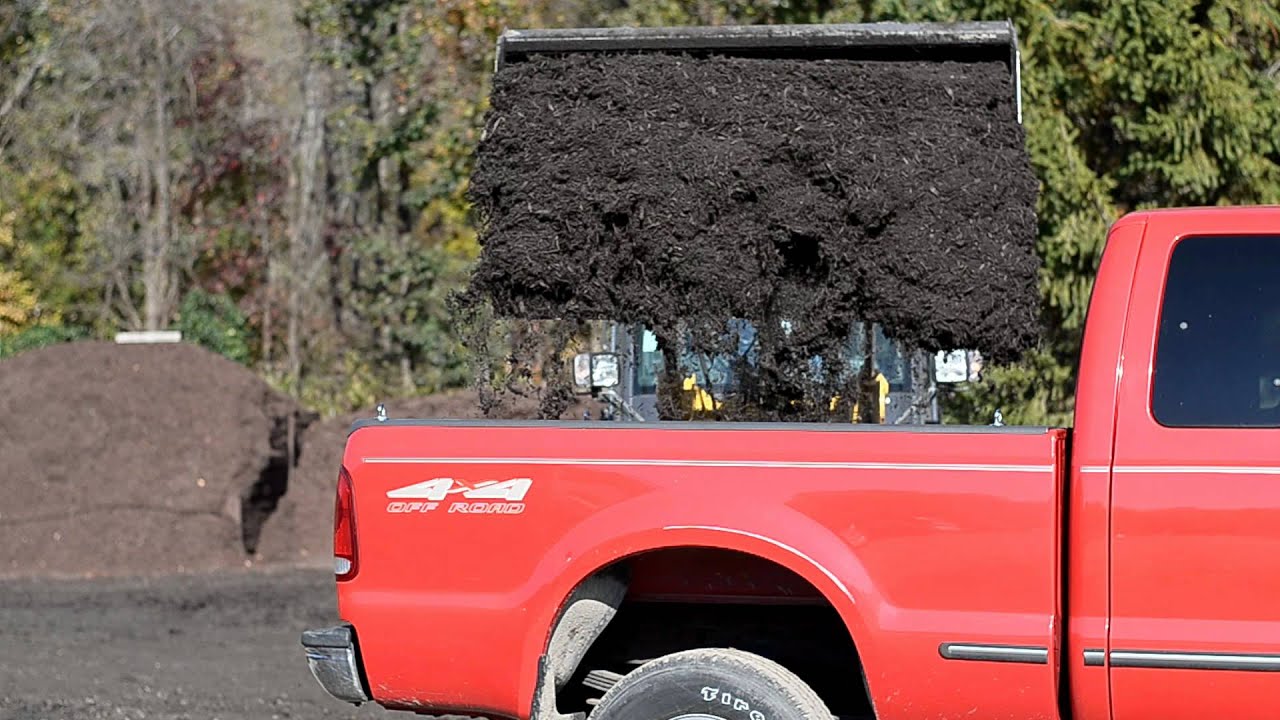
Image Source: i.ytimg.com
How Much Does a Yard of Mulch Weigh Unpacked?
A yard of mulch typically weighs between 400 and 1,500 pounds when unpacked, but this can vary significantly based on the type of mulch and its moisture content.
Deciphering Mulch Weight: A Comprehensive Guide
When you’re planning a landscaping project, knowing the mulch weight per cubic yard is crucial. Whether you’re ordering a bulk delivery, calculating how much you can haul in your truck, or simply trying to estimate the effort involved, the weight of mulch is a key factor. It’s not as simple as one number fits all, as different materials have different mulch density, and moisture plays a significant role. This guide will help you navigate the complexities of mulch bulk density and provide practical ways to estimate the weight.
Why Mulch Weight Matters
Several reasons make knowing the weight of mulch important:
- Transportation: If you’re picking up mulch yourself, your vehicle’s payload capacity is a major concern. Overloading your vehicle can be dangerous and damaging.
- Delivery Costs: Bulk mulch suppliers may charge based on weight or volume, and knowing the approximate weight can help you budget.
- Estimating Effort: Bags of mulch can be heavy, and knowing the weight per cubic yard gives you a better idea of the physical effort required for spreading.
- Soil Health and Structure: While not directly related to weight, understanding the material itself helps in choosing the right mulch for your garden’s needs.
Factors Influencing Mulch Weight
The weight of wood mulch, for instance, will differ from that of other organic materials. Several key factors contribute to this variation:
Type of Mulch Material
Different organic materials have inherent differences in density. For example:
- Wood Mulches: These are very common and include shredded bark, wood chips, and sawdust. The type of wood significantly impacts density.
- Bark Mulches: Often derived from pine, cedar, or fir, bark mulches have varying textures and densities.
- Other Organic Mulches: Materials like straw, compost, and shredded leaves also have their own weight characteristics.
Moisture Content
This is perhaps the most significant variable. Dry mulch weighs considerably less than wet mulch.
- Dry Mulch Weight: When mulch is freshly processed and dry, it’s at its lightest.
- Wet Mulch Weight: Mulch readily absorbs water, especially after rain or if it’s been stored uncovered. This can easily double or even triple the weight. Think about how much heavier a sponge feels after it’s soaked up water. Mulch acts similarly.
Particle Size and Compaction
- Particle Size: Finer materials generally pack more tightly than larger, chunkier materials, potentially increasing density and thus weight.
- Compaction: How the mulch is packed into a truck bed or bag also affects its density. A loosely piled yard will weigh less than a tightly compacted one.
Estimating Mulch Weight: Key Concepts
To get a handle on how much does a yard of mulch weight unpacked, we need to look at mulch density. Density is essentially how much “stuff” is packed into a given space. For mulch, we often talk about mulch bulk density, which refers to the weight of the material, including the air pockets between particles, per unit of volume.
The standard unit for bulk mulch is the cubic yard. A cubic yard is a volume measuring 3 feet by 3 feet by 3 feet.
Mulch Cubic Yard to Pound Conversion
To convert volume (cubic yards) to weight (pounds), we need the density, typically expressed in pounds per cubic yard.
Typical Weights for Common Mulch Types
Let’s delve into the specific weights of popular mulch varieties, keeping in mind that these are averages and can fluctuate:
Weight of Wood Mulch
Wood mulches are diverse, and their weights vary.
- Shredded Wood Mulch: This can range from 400 to 800 pounds per cubic yard when dry. The type of wood (hardwood vs. softwood) and the shredding process influence this.
- Wood Chips: Larger wood chips might be slightly lighter per cubic yard than finely shredded wood because of more air space. Expect a range of 350 to 700 pounds per cubic yard when dry.
- Sawdust: This is a finer material and can be quite dense, especially when wet. Dry sawdust can weigh from 500 to 900 pounds per cubic yard.
Weight of Pine Bark Mulch
Pine bark mulch is a popular choice, known for its attractive reddish-brown color and pleasant aroma.
- Dry Pine Bark Mulch: Typically weighs between 450 and 750 pounds per cubic yard. The size of the bark pieces (fine, medium, or shredded) can affect this. Larger pieces might mean more air space and thus a lower weight per cubic yard.
- Wet Pine Bark Mulch: When saturated, pine bark can absorb a significant amount of water, pushing its weight up to 800 to 1,200 pounds per cubic yard.
Weight of Cedar Mulch
Cedar mulch is prized for its natural insect-repelling properties and distinctive scent.
- Dry Cedar Mulch: Generally falls in the range of 500 to 800 pounds per cubic yard. Cedar is a moderately dense wood.
- Wet Cedar Mulch: Similar to pine bark, wet cedar mulch can weigh between 700 and 1,100 pounds per cubic yard after absorbing moisture.
Other Mulch Materials
- Straw Mulch: This is one of the lighter options. Dry straw can weigh around 100 to 200 pounds per cubic yard. However, it’s very prone to becoming waterlogged and compacted, which can increase its weight significantly.
- Compost: The weight of compost depends heavily on its composition and moisture. A well-finished, relatively dry compost might be around 600 to 1,000 pounds per cubic yard. Wetter, less finished compost can be much heavier.
Tables for Quick Reference
To make this information easier to digest, here are some tables summarizing typical weights. Remember these are estimates:
Table 1: Estimated Dry Mulch Weights Per Cubic Yard
| Mulch Type | Estimated Weight (lbs/cubic yard) | Notes |
|---|---|---|
| Shredded Wood | 400 – 800 | Varies by wood type and shred size |
| Wood Chips | 350 – 700 | Larger chips tend to be lighter |
| Sawdust | 500 – 900 | Denser due to fine particle size |
| Pine Bark (Medium) | 450 – 750 | Can vary with bark chip size |
| Cedar Mulch | 500 – 800 | Moderately dense wood |
| Straw Mulch | 100 – 200 | Very light when dry, absorbs moisture easily |
| Compost | 600 – 1000 | Depends heavily on composition and moisture |
Table 2: Impact of Moisture on Mulch Weight (General Estimates)
| Mulch Type | Dry Weight (lbs/cubic yard) | Wet Weight (lbs/cubic yard) | Potential Increase (%) |
|---|---|---|---|
| Shredded Wood | 400 – 800 | 800 – 1600+ | 100% or more |
| Pine Bark | 450 – 750 | 800 – 1200 | 75% – 160% |
| Cedar Mulch | 500 – 800 | 700 – 1100 | 40% – 137% |
| Sawdust | 500 – 900 | 1000 – 1800+ | 100% or more |
Note: Wet weights are highly variable and depend on how saturated the mulch becomes.
How to Calculate Mulch Weight
If you need a precise calculation or want to figure out the weight of a specific batch of mulch, here’s how to calculate mulch weight:
-
Determine the Volume: Measure the dimensions of the mulch you have. If it’s in a pile, estimate its length, width, and height, then calculate the volume in cubic feet. Convert cubic feet to cubic yards by dividing by 27 (since there are 27 cubic feet in one cubic yard).
- Volume (cubic feet) = Length (ft) × Width (ft) × Height (ft)
- Volume (cubic yards) = Volume (cubic feet) / 27
-
Find the Mulch Density: This is the trickiest part.
- Check with the Supplier: If you bought mulch from a supplier, ask them for the average mulch bulk density for the product you purchased. They often have this information.
- Look for Data: Search online for the mulch density of the specific type of mulch. Reputable landscaping or university extension websites are good sources. Remember to look for weights of unpacked or loose mulch.
- Conduct a Small Test: For a more accurate, albeit small-scale, measurement:
- Get a container with a known volume (e.g., a 1-cubic-foot bin).
- Fill the bin with the mulch you want to weigh, leveling it off.
- Weigh the full bin using a reliable scale.
- Subtract the weight of the empty bin. This gives you the weight of that volume of mulch.
- Extrapolate to a cubic yard. If your bin was 1 cubic foot, and it weighed ‘X’ pounds, then a cubic yard (27 cubic feet) would weigh approximately 27 * X pounds.
-
Calculate the Weight:
- Weight (pounds) = Volume (cubic yards) × Density (pounds per cubic yard)
Example Calculation:
Let’s say you have a truck bed filled with wood chips. You estimate the pile is 4 feet long, 3 feet wide, and 2 feet high.
- Volume (cubic feet) = 4 ft × 3 ft × 2 ft = 24 cubic feet
- Volume (cubic yards) = 24 cubic feet / 27 = 0.89 cubic yards
You find online that dry wood chips have an average density of 600 pounds per cubic yard.
- Weight (pounds) = 0.89 cubic yards × 600 lbs/cubic yard = 534 pounds
This would be the estimated dry weight. If it rained heavily before you measured, the weight could be significantly higher.
Mulch Cubic Yard to Pound Conversion Factors
Here are some general mulch cubic yard to pound conversion factors that can be helpful:
- Lightweight Mulch (e.g., dry straw): ~150 lbs/cubic yard
- Medium Weight Mulch (e.g., dry wood chips, pine bark): ~500 – 700 lbs/cubic yard
- Heavyweight Mulch (e.g., wet wood, dense compost): ~900 – 1500+ lbs/cubic yard
Practical Considerations for Your Project
Ordering Mulch
When ordering bulk mulch, suppliers typically sell by the cubic yard. Ask them about the mulch weight per cubic yard for their specific products, especially if you are concerned about delivery truck weight limits or fitting it into your vehicle.
Hauling Mulch
- Truck Payload: Check your truck’s owner’s manual for its Gross Vehicle Weight Rating (GVWR) and curb weight to determine its payload capacity. A typical half-ton pickup truck might have a payload capacity of around 1,500 to 2,000 pounds.
- Multiple Trips: You may need to make multiple trips to haul a full cubic yard or more, especially if the mulch is wet. It’s always better to err on the side of caution.
Spreading Mulch
- Bagged Mulch: Most bagged mulch is sold in 2 cubic foot bags. A cubic yard is 27 cubic feet, so you’ll need approximately 13.5 bags for one cubic yard (27 / 2 = 13.5). The weight of a bag of mulch can vary from 20 to 50 pounds, depending on moisture content and material. This gives you an idea of the lifting involved.
The Crucial Role of Moisture Content
We can’t stress this enough: wet mulch weight is a game-changer. A cubic yard of dry wood chips might weigh 600 pounds, but that same cubic yard after a good soaking rain could easily push 1,200 pounds or more.
- Water Absorption: Organic materials are porous and act like sponges. The more surface area and smaller the particles, the more water they can hold.
- Seasonal Impact: Mulch delivered in the spring after a wet winter will be heavier than mulch delivered in late summer after a long dry spell.
- Storage: If you buy mulch and store it uncovered outdoors, expect it to absorb moisture from rain and dew.
When estimating, if you’re unsure about the moisture content, it’s always safest to assume it’s on the heavier side, especially if it feels damp or has been exposed to weather.
Frequently Asked Questions (FAQ)
Q1: How much does a yard of mulch weigh if it’s dry?
A yard of dry mulch can weigh anywhere from about 350 pounds for lighter wood chips to 900 pounds for denser sawdust. Wood mulches and bark mulches typically fall in the 400-800 pound range when dry.
Q2: What is the average weight of a cubic yard of wet mulch?
Wet mulch can be significantly heavier, often doubling or even tripling its dry weight. A cubic yard of wet wood mulch could easily weigh 800 to 1,600 pounds or more, depending on how saturated it is.
Q3: Can I calculate the mulch weight per cubic yard myself?
Yes, you can estimate mulch weight per cubic yard by finding its density (pounds per cubic foot or cubic yard) and multiplying it by the volume. You can also conduct a small-scale test with a known volume and a scale for a more accurate personal measurement.
Q4: How does the type of wood affect the weight of wood mulch?
Hardwood mulches are generally denser and therefore heavier than softwood mulches. For example, oak mulch will typically weigh more per cubic yard than pine mulch, all other factors being equal.
Q5: What is the mulch cubic yard to pound conversion for cedar mulch?
Dry cedar mulch typically weighs between 500 and 800 pounds per cubic yard. When wet, this can increase to 700 to 1,100 pounds per cubic yard.
Q6: Is it better to buy mulch by weight or by volume?
Mulch is almost always sold by volume (cubic yards) because volume is a more consistent measure than weight, which is heavily influenced by moisture. Suppliers use cubic yards to standardize their product.
Q7: How can I reduce the weight of mulch if I need to transport it?
The only way to significantly reduce mulch weight is to ensure it is as dry as possible. If you are purchasing it, ask if they have a drier batch available, or allow it to air out if you have it stored. However, this is often impractical.
Q8: What is mulch bulk density?
Mulch bulk density refers to the weight of the mulch material, including air pockets, per unit of volume. It’s a key factor in determining how much a cubic yard of mulch will weigh.
By grasping these factors, you can better estimate the weight of your mulch, plan your projects more effectively, and avoid any transportation surprises. Happy gardening!