
The weight of a cubic yard of sand can vary, but a common estimate is around 2,500 to 3,000 pounds. This weight is influenced by several factors, including the type of sand, its moisture content, and how compacted it is.
If you’re planning a construction project, landscaping endeavor, or even a simple backyard improvement, knowing the weight of materials like sand is crucial. It helps with ordering the right quantities, ensuring your vehicle can transport it, and understanding the load-bearing requirements for various applications. This guide will delve into the specifics of sand weight, exploring the variables that affect it and providing you with the knowledge to make informed decisions. We’ll also touch upon how much does a cubic yard of gravel weigh and how much does a cubic yard of soil weigh, as these are often used in conjunction with sand.
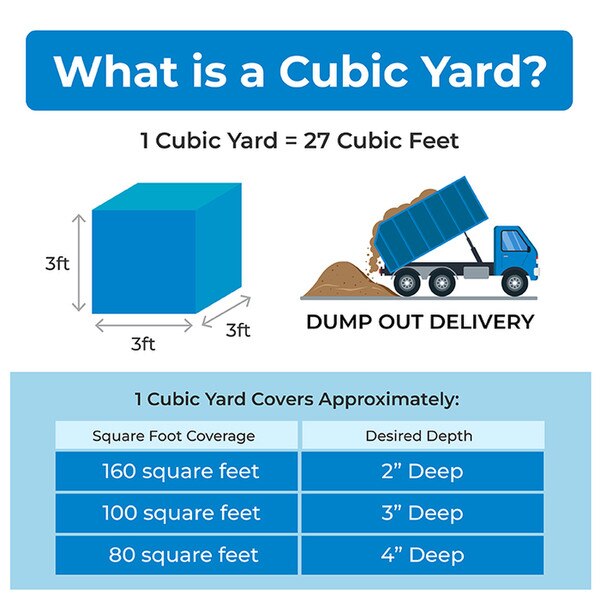
Image Source: www.cumminlandscapesupply.com
Deciphering the Density of Sand
The core factor determining the weight of sand is its density of sand. Density refers to how much mass is packed into a given volume. For sand, this isn’t a single, fixed number. Instead, it’s a range, and several things can shift that range.
Factors Influencing Sand’s Weight
Several elements contribute to the variability in sand’s weight:
- Type of Sand: Different types of sand have different grain sizes and compositions.
- Coarse Sand: Grains are larger and have more air pockets between them. This generally means it’s less dense than fine sand.
- Fine Sand: Grains are smaller and pack more closely together. This usually results in a higher density.
- Play Sand: Often washed and screened for consistency, it can be quite uniform.
- Construction Sand (Mason Sand): This is typically a finer sand used for mortar and concrete. Its consistent grain size often leads to a more predictable bulk density of sand.
- Bank Run Sand: This is sand directly from a pit, often containing a mix of sand, silt, and small stones. Its density can vary significantly.
- Moisture Content: Water is heavy! Wet sand will always weigh more than dry sand because you’re adding the weight of the water to the weight of the sand grains. The more water present, the heavier the cubic yard will be.
- Compaction: How tightly the sand is packed also affects its density. Loose, uncompacted sand will have more air space, making it lighter per cubic yard than sand that has been compressed or vibrated.
The Weight of Sand Per Cubic Yard: A Closer Look
To provide a more concrete answer to “how much does a cubic yard of sand weigh?”, we need to consider averages and typical scenarios. When people refer to a cubic yard of sand in a project context, they are often thinking about readily available construction or landscape sand.
Typical Sand Weight Estimates
Based on industry averages, here’s a general breakdown:
- Dry, Uncompacted Sand: You can expect a cubic yard of dry, loose sand to weigh approximately 2,500 to 2,800 pounds.
- Moist or Damp Sand: Once sand becomes damp, its weight can increase by 10% to 15%. So, a cubic yard of damp sand might weigh between 2,750 and 3,200 pounds.
- Wet or Saturated Sand: Saturated sand, meaning it’s holding as much water as it can, will be significantly heavier. This can push the weight to 3,000 to 3,500 pounds or even more per cubic yard.
It’s important to remember these are estimates. For precise sand calculations for projects, especially those involving structural integrity or large quantities, consulting with a supplier or using more specific density data is recommended.
Sand Volume to Weight Conversion: Making the Calculations
Converting volume (cubic yards) to weight requires knowing the bulk density of sand. This value tells you how much a specific volume of that material weighs.
Formula for Conversion
The basic formula for converting volume to weight is:
Weight = Volume × Density
Where:
* Volume is measured in cubic yards.
* Density is measured in pounds per cubic yard (lbs/yd³).
Since the density of sand varies, you’ll need to use an appropriate density value for your calculation.
Practical Application: How to Estimate Sand Weight
Let’s say you need to order 5 cubic yards of sand for a patio project. You know that typical dry sand weighs around 2,700 pounds per cubic yard.
- Total Weight = 5 cubic yards × 2,700 lbs/cubic yard
- Total Weight = 13,500 pounds
This gives you a good idea of the total weight you’ll be dealing with. If you’re picking it up with a trailer, you’ll need to ensure your trailer and vehicle can handle that load.
Comparing Sand to Other Bulk Materials
It’s often helpful to compare the weight of construction sand to other common landscaping and building materials. This provides context for its relative heaviness.
How Much Does a Cubic Yard of Gravel Weigh?
Gravel, being made of larger, irregularly shaped stones, generally has more air space between the individual pieces. This makes it less dense than sand.
- Typical weight of a cubic yard of gravel: 2,500 to 2,700 pounds.
As you can see, gravel is often slightly lighter than sand when comparing equal volumes. The type of gravel (crushed vs. rounded, size of stones) will also influence its weight.
How Much Does a Cubic Yard of Soil Weigh?
Soil is a much more variable material. Its composition (clay, silt, sand, organic matter) and moisture content play huge roles in its weight.
- Typical weight of a cubic yard of topsoil: Can range widely from 1,800 to 2,700 pounds.
- Compacted, wet clay soil: Could easily exceed 3,000 pounds per cubic yard.
Generally, loose topsoil with good organic content tends to be lighter than dense, clay-heavy soil.
Common Sand Types and Their Weights
Different applications call for different types of sand, and each has its own weight characteristics.
Construction Sand Weights
Construction sand, also known as mason sand, is a popular choice for many projects due to its fine grain size and consistency.
- Weight of a cubic yard of dry construction sand: Approximately 2,700 to 2,800 pounds.
- Weight of a cubic yard of damp construction sand: Can be around 3,000 to 3,100 pounds.
Its relatively consistent particle size leads to a predictable bulk density of sand, making sand calculations for projects more straightforward.
Play Sand Weights
Play sand is designed to be safe and clean for children’s use. It’s typically silica sand that has been washed and screened.
- Weight of a cubic yard of dry play sand: Similar to construction sand, often in the 2,600 to 2,800 pounds range.
The washing process can remove finer particles and debris, which might slightly alter its packing density compared to unwashed sand.
Decorative Sand Weights
Decorative sands come in various colors and grain sizes, from fine to coarse.
- Weight of a cubic yard of decorative sand: This can vary significantly depending on the grain size and any additives. Finer decorative sands will be heavier, while coarser or mixed-grain decorative sands might be lighter. A general estimate could be anywhere from 2,400 to 2,900 pounds.
Pool Filter Sand Weights
Pool filter sand is a specific type of washed and graded sand designed for swimming pool filters.
- Weight of a cubic yard of pool filter sand: Typically around 2,700 to 2,900 pounds when dry.
The consistent grading ensures good flow through the filter system.
Tables for Quick Reference
To help you quickly find the information you need, here are some summary tables.
Table 1: Estimated Weight of a Cubic Yard of Sand (Pounds)
| Sand Type | Dry Weight (lbs/yd³) | Damp Weight (lbs/yd³) |
|---|---|---|
| General Construction | 2,500 – 2,800 | 2,750 – 3,200 |
| Fine/Mason Sand | 2,700 – 2,900 | 3,000 – 3,300 |
| Coarse Sand | 2,400 – 2,600 | 2,600 – 2,900 |
| Play Sand | 2,600 – 2,800 | 2,800 – 3,100 |
| Decorative Sand | 2,400 – 2,900 | 2,600 – 3,100 |
| Pool Filter Sand | 2,700 – 2,900 | 2,900 – 3,200 |
Note: These are approximate ranges. Actual weights can vary.
Table 2: Comparing Sand to Other Materials (Pounds per Cubic Yard)
| Material | Typical Dry Weight (lbs/yd³) |
|---|---|
| Sand | 2,500 – 2,900 |
| Gravel | 2,500 – 2,700 |
| Topsoil | 1,800 – 2,700 |
| Clay Soil | 2,400 – 3,000+ |
| Crushed Stone | 2,500 – 2,800 |
Sand Calculations for Projects: Practical Tips
When you’re planning a project, accurate sand calculations for projects are essential for budgeting and logistics.
Ordering the Right Amount
- Measure Your Area: Determine the length, width, and desired depth of the sand layer.
- Length (ft) × Width (ft) × Depth (ft) = Volume in Cubic Feet
- Convert to Cubic Yards: Since there are 27 cubic feet in a cubic yard (3 ft × 3 ft × 3 ft = 27 cu ft), divide your cubic feet volume by 27.
- Volume (cu ft) / 27 = Volume (cu yd)
- Add a Buffer: It’s always a good idea to add 5-10% extra to account for settling and potential errors in measurement or supplier estimates.
Transportation Considerations
Knowing the weight of sand per cubic yard is vital if you plan to transport it yourself.
- Vehicle Capacity: Check your truck bed capacity or trailer weight limit (Gross Vehicle Weight Rating – GVWR).
- Axle Weight Limits: Be mindful of how weight is distributed. Overloading axles can be dangerous and illegal.
- Example: If your truck has a payload capacity of 3,000 pounds and you need 2 cubic yards of sand, and each cubic yard weighs 2,700 pounds:
- Total weight needed: 2 yd³ × 2,700 lbs/yd³ = 5,400 lbs.
- Your truck cannot carry this much in one trip. You’d need at least two trips or a larger vehicle.
Working with Suppliers
- Ask for Specifics: When ordering, ask your sand supplier about the bulk density of sand they are providing. They often have this information readily available for their specific products.
- Delivery Costs: Understand how delivery charges are calculated. Sometimes ordering a slightly larger quantity to reduce trips can be more cost-effective.
Fathoming the Variables: A Deeper Dive
Let’s reiterate why sand’s weight isn’t a single number. Fathoming these variables ensures you have the most accurate picture.
Grain Size and Shape
- Round Grains: Tend to roll over each other easily, leading to more air pockets and lower density.
- Angular Grains: Interlock more effectively, resulting in fewer air spaces and higher density.
Particle Sorting
- Well-sorted sand: Consists of grains of very similar size. This can lead to more efficient packing.
- Poorly-sorted sand: Has a wide range of grain sizes. Smaller grains can fill the gaps between larger grains, potentially increasing density.
Organic Content and Impurities
While pure sand is silica (SiO₂), natural sand deposits often contain other materials.
- Silt and Clay: Finer particles can fill voids and increase weight.
- Organic Matter: Decomposed plant and animal material is less dense than sand particles.
Frequently Asked Questions (FAQs)
Here are some common questions related to the weight of sand.
Q1: What is the average weight of a cubic yard of sand?
A1: The average weight of a cubic yard of dry sand is typically between 2,500 and 2,900 pounds. This can increase significantly if the sand is wet.
Q2: Does the type of sand change its weight?
A2: Yes, the type of sand (e.g., coarse, fine, construction, play sand) affects its weight due to differences in grain size, shape, and packing efficiency, which influence its density.
Q3: How does moisture affect the weight of sand?
A3: Moisture adds weight to sand. Damp sand can weigh 10-15% more than dry sand, and saturated sand can weigh considerably more due to the added mass of the water.
Q4: Can I use a calculator for sand weight?
A4: Yes, many online calculators and conversion tools are available. You typically input the volume in cubic yards and the estimated density (lbs/yd³) to get the total weight.
Q5: What is the typical weight of construction sand per cubic yard?
A5: Typically, a cubic yard of dry construction sand weighs around 2,700 to 2,800 pounds.
Q6: How do I calculate how much sand I need for a project?
A6: Measure the length, width, and depth of the area you need to fill with sand. Convert these measurements to cubic yards (length x width x depth in feet, then divide by 27). Always add a buffer of 5-10% for settling.
Q7: Why is it important to know the weight of sand?
A7: Knowing the weight of sand is crucial for project planning, ordering the correct quantities, determining transportation needs (vehicle capacity), and understanding load-bearing requirements.
Conclusion
Navigating the world of bulk materials like sand requires a solid grasp of their physical properties. The weight of sand per cubic yard is not a fixed figure but rather a range influenced by the density of sand, moisture content, and particle characteristics. By employing sand calculations for projects that account for these variables, and by comparing to materials like gravel and soil, you can confidently plan, order, and execute your projects with precision. Whether you’re a seasoned contractor or a DIY enthusiast, this knowledge empowers you to avoid costly mistakes and ensure successful outcomes. Always remember to ask suppliers for the specific density of the sand you are purchasing to refine your sand calculations for projects and ensure you have the right amount of material for your needs.