
A yard of rock, when spread to a depth of 1 inch, typically covers approximately 324 square feet. This is the most common answer when discussing how many sq ft does a yard of rock cover, but the actual coverage per cubic yard can vary significantly based on the desired depth and the type of rock.
Whether you’re planning a new garden bed, a walkway, or a decorative landscape feature, knowing your rock yard coverage is crucial for accurate purchasing and successful project completion. This comprehensive guide will delve into the specifics, helping you accurately estimate how much rock for my yard you’ll need. We’ll explore the calculations involved, factors influencing coverage, and provide practical advice to ensure your project is a success.
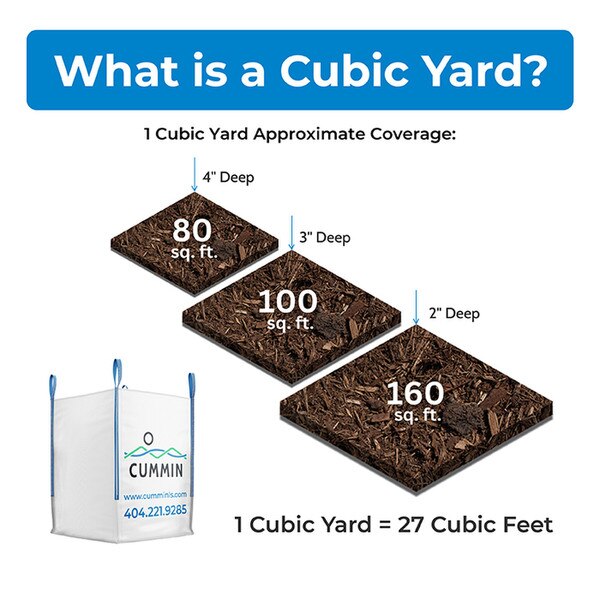
Image Source: www.cumminlandscapesupply.com
Fathoming Rock Coverage: The Cubic Yard to Square Foot Conversion
The fundamental unit of measurement for bulk landscaping materials like rock and gravel is the cubic yard. A cubic yard represents a volume of 3 feet long, 3 feet wide, and 3 feet high. To determine how much area this volume covers, we need to consider the desired depth of the rock layer.
The Standard Calculation: A 1-Inch Depth
The most frequently cited figure for area covered by a yard of rock assumes a 1-inch depth. Let’s break down how this is calculated:
- One cubic yard: This is equal to 27 cubic feet (3 ft x 3 ft x 3 ft).
- Converting depth to feet: A 1-inch depth needs to be converted to feet. Since there are 12 inches in a foot, 1 inch is equal to 1/12 of a foot, or approximately 0.0833 feet.
- Calculating area: To find the area, we divide the volume by the depth:
- 27 cubic feet / 0.0833 feet (for 1 inch depth) = approximately 324 square feet.
This is why you’ll often hear that a yard of rock covers about 324 square feet when laid at a 1-inch depth. This is a vital piece of information for calculating rock coverage.
Factors Affecting Your Rock Yard Coverage
While 324 sq ft per cubic yard at 1-inch depth is a good starting point, several factors can influence the actual landscaping rock coverage you achieve:
Desired Depth: The Primary Influencer
The most significant factor determining how many sq ft does a yard of rock cover is the depth at which you intend to spread it. Deeper layers mean less square footage covered per cubic yard.
Depth Chart: Visualizing Coverage Differences
Here’s a table illustrating how different depths impact coverage:
| Desired Depth | Calculation (27 cubic ft / Depth in ft) | Approximate Square Feet Covered (per cubic yard) |
|---|---|---|
| 1 inch | 27 / (1/12) | 324 sq ft |
| 2 inches | 27 / (2/12) | 162 sq ft |
| 3 inches | 27 / (3/12) | 108 sq ft |
| 4 inches | 27 / (4/12) | 81 sq ft |
| 6 inches | 27 / (6/12) | 54 sq ft |
As you can see, doubling the depth halves the coverage area. This is fundamental to square footage rock calculation.
Rock Size and Shape: Interstitial Spaces
The size and shape of the rocks themselves play a role. Larger, more irregularly shaped rocks will have more air pockets between them than smaller, rounded stones.
- Larger rocks: May require slightly more volume to achieve the same visual density as smaller rocks. This can sometimes lead to slightly less gravel yard coverage for a given weight, though the volumetric calculation remains the same.
- Smaller gravel/pea gravel: Tends to pack more densely, potentially offering slightly more consistent coverage.
- Crushed stone: The angular nature of crushed stone allows it to interlock, creating a stable base and a more uniform surface, which can influence the visual area covered by a yard of rock.
Compaction: Settling Over Time
Most types of rock and gravel will settle and compact over time, especially after rain or foot traffic. This means that an area initially covered to your desired depth might settle slightly, reducing the effective coverage. It’s often wise to account for this by slightly overestimating your needs or being prepared to top up. This is an important consideration for landscaping rock coverage.
Base Preparation: The Foundation Matters
The surface you are applying the rock to can also influence how much you use.
- Smooth, level surfaces: Will require less rock to achieve an even layer.
- Uneven or sloped surfaces: Might require more rock in certain areas to create a consistent depth and prevent erosion. Proper base preparation, like using landscape fabric to suppress weeds, is crucial before laying any decorative rock coverage.
Calculating Rock Coverage for Your Yard
To accurately determine how much rock for my yard you need, you’ll need to measure your project area and decide on your desired depth.
Step 1: Measure Your Area
- Rectangular or Square Areas: Multiply the length by the width.
- Example: A garden bed is 10 feet long and 5 feet wide. Area = 10 ft x 5 ft = 50 sq ft.
- Circular Areas: Use the formula πr² (pi times the radius squared). The radius is half the diameter.
- Example: A circular feature has a diameter of 8 feet. The radius is 4 feet. Area = π * (4 ft)² = π * 16 sq ft ≈ 50.27 sq ft.
- Irregular Shapes: Break down the area into simpler shapes (rectangles, squares, triangles, circles), calculate the area of each, and add them together.
Step 2: Determine Your Desired Depth
Decide how deep you want the rock layer to be. Common depths include:
- 1-2 inches: For decorative ground cover and weed suppression.
- 3-4 inches: For pathways and areas with moderate foot traffic.
- 4-6 inches or more: For driveways or areas requiring significant structural support.
Remember that deeper layers will use more material.
Step 3: Calculate Cubic Yards Needed
Once you have your area in square feet and your desired depth in inches, you can use a simple formula to calculate the cubic yards needed:
Cubic Yards = (Area in sq ft × Depth in inches) / 324
Let’s use the examples from Step 1:
-
Example 1 (Rectangular Garden Bed):
- Area: 50 sq ft
- Desired Depth: 2 inches
- Cubic Yards = (50 sq ft × 2 inches) / 324 = 100 / 324 ≈ 0.31 cubic yards.
Since you can’t typically buy fractions of a cubic yard, you’d round up to 0.5 cubic yards or 1 cubic yard to be safe.
-
Example 2 (Circular Feature):
- Area: 50.27 sq ft
- Desired Depth: 3 inches
- Cubic Yards = (50.27 sq ft × 3 inches) / 324 = 150.81 / 324 ≈ 0.47 cubic yards.
Again, round up to 0.5 or 1 cubic yard.
This calculation is the core of calculating rock coverage effectively. It helps answer the question, how many sq ft does a yard of rock cover? by working backward from your project needs.
Common Rock Types and Their Coverage Implications
The term “rock” can encompass a wide variety of materials, each with its own characteristics that influence its use and appearance in landscaping. Understanding the type of gravel yard coverage you need is as important as the quantity.
Decorative Gravels and Pebbles
These are often used for their aesthetic appeal in garden beds, around plants, and on pathways.
- Pea Gravel: Small, smooth, rounded stones, typically ½ inch or less in diameter. It offers good landscaping rock coverage and is comfortable to walk on.
- River Rock: Larger, smooth, rounded stones that come in various sizes and colors. Excellent for creating visual interest and natural-looking features.
- Crushed Granite/Limestone: Angular, crushed stones that interlock well, providing a stable base for patios and walkways. The angularity means they pack densely.
For decorative rock coverage, the 324 sq ft per cubic yard at 1-inch depth is a solid benchmark.
Larger Rocks and Boulders
While not typically measured in cubic yards for coverage in the same way, larger rocks are used as focal points or structural elements. Their coverage is more about their individual footprint.
Mulch vs. Rock Coverage
It’s important to distinguish between rock mulch and organic mulch. While both serve to suppress weeds and retain moisture, the way they cover an area differs. Rock doesn’t break down like organic mulch, so its coverage remains consistent over time, making yard of stone coverage calculations straightforward once depth is decided.
Tips for Purchasing and Applying Rock
To ensure you get the most from your purchase and achieve the desired look, consider these practical tips:
Always Buy a Little Extra
It’s almost always better to have a little too much rock than not enough. Factors like uneven ground, accidental spills, and the desire for a slightly deeper layer can quickly use up your estimated supply. A common recommendation is to add 10-15% extra to your calculated amount.
Consider Bulk Delivery vs. Bagged Rock
- Bulk Delivery: For larger projects, buying rock by the cubic yard in bulk from a local landscape supplier is usually more cost-effective. They deliver directly to your home.
- Bagged Rock: Available at garden centers and hardware stores, bagged rock is convenient for smaller projects but can be significantly more expensive per cubic yard. It’s easier to transport and handle for small jobs.
Proper Application Techniques
- Weed Barrier: Laying down landscape fabric or a good quality weed barrier before applying the rock is highly recommended. This prevents weeds from growing through the rock layer, which is especially important for decorative rock coverage.
- Edging: Install edging along garden beds or pathways to contain the rock and give your project a clean, finished look.
- Even Spreading: Use a rake to spread the rock evenly across your prepared area. A shovel is useful for initial placement.
Calculating Rock Coverage for Different Depths
Let’s revisit the square footage rock calculation with practical examples:
Scenario 1: A New Garden Bed
- Area: 100 sq ft (e.g., 10 ft x 10 ft)
- Desired Depth: 3 inches (for good weed suppression and a substantial look)
- Cubic Yards Needed: (100 sq ft × 3 inches) / 324 = 300 / 324 ≈ 0.93 cubic yards.
- Recommendation: Purchase 1 cubic yard. This will give you excellent landscaping rock coverage at your desired depth.
Scenario 2: A Small Pathway
- Area: 50 sq ft (e.g., 5 ft x 10 ft)
- Desired Depth: 4 inches (for durability and comfortable walking)
- Cubic Yards Needed: (50 sq ft × 4 inches) / 324 = 200 / 324 ≈ 0.62 cubic yards.
- Recommendation: Purchase 0.75 to 1 cubic yard to account for settling and ensure adequate depth. This is essential for gravel yard coverage on walkways.
Scenario 3: A Large Patio Area
- Area: 200 sq ft (e.g., 10 ft x 20 ft)
- Desired Depth: 2 inches (for a decorative stone base)
- Cubic Yards Needed: (200 sq ft × 2 inches) / 324 = 400 / 324 ≈ 1.23 cubic yards.
- Recommendation: Purchase 1.5 cubic yards to ensure complete rock yard coverage and account for any unevenness. This also helps determine your yard of stone coverage.
Frequently Asked Questions (FAQ)
Q1: How many square feet does one cubic yard of gravel cover at 2 inches deep?
A1: One cubic yard of gravel will cover approximately 162 square feet when spread at a depth of 2 inches. This is calculated by dividing the total cubic feet in a yard (27) by the depth in feet (2/12 or 0.167).
Q2: What is the most common depth for landscaping rock?
A2: The most common depth for landscaping rock, especially for decorative purposes and weed suppression, is between 1 and 3 inches. For pathways and high-traffic areas, 3 to 4 inches is often recommended.
Q3: Does rock settle? If so, how much should I account for?
A3: Yes, rock and gravel will settle over time due to rain, compaction from walking, and natural settling of the ground beneath. You should account for about a 10-15% increase in your material needs to ensure adequate landscaping rock coverage and to account for this settling.
Q4: Can I calculate rock coverage based on weight instead of volume?
A4: While rocks are sold by weight or volume, coverage is best calculated by volume (cubic yards). The weight per cubic yard can vary significantly based on rock type, density, and moisture content. Using volume ensures a more accurate square footage rock calculation.
Q5: How do I calculate how much rock I need for a circular area?
A5: To calculate gravel yard coverage for a circular area, first find the radius (half the diameter). Then, use the formula for the area of a circle: Area = π × radius². Once you have the area in square feet, use the cubic yard calculation: (Area in sq ft × Depth in inches) / 324.
Q6: What is the coverage of decorative rock per cubic yard?
A6: The coverage of decorative rock coverage is typically around 324 square feet per cubic yard when spread at a depth of 1 inch. This figure can change if you opt for a different depth.
Q7: How do I determine how much rock for my yard I need for a driveway?
A7: For driveways, a deeper layer of rock is usually required, typically 4 to 6 inches or more, depending on the intended use (light traffic vs. heavy vehicle traffic). Calculate your driveway’s square footage and multiply by the desired depth in inches, then divide by 324 to find the cubic yards needed for your rock yard coverage. It’s advisable to use a professional for driveway calculations due to the structural requirements.
By following these guidelines and using the provided calculations, you can confidently determine how many sq ft does a yard of rock cover for your specific landscaping project, ensuring you purchase the right amount of material and achieve the beautiful, functional outcome you desire.