
A standard yard of quilting fabric yields four fat quarters. This is a fundamental piece of information for quilters and sewers when planning projects and purchasing sewing fabric yardage. Knowing how to convert fabric yard to fat quarters is essential for efficient fabric cutting and accurate quilting yardage calculations.
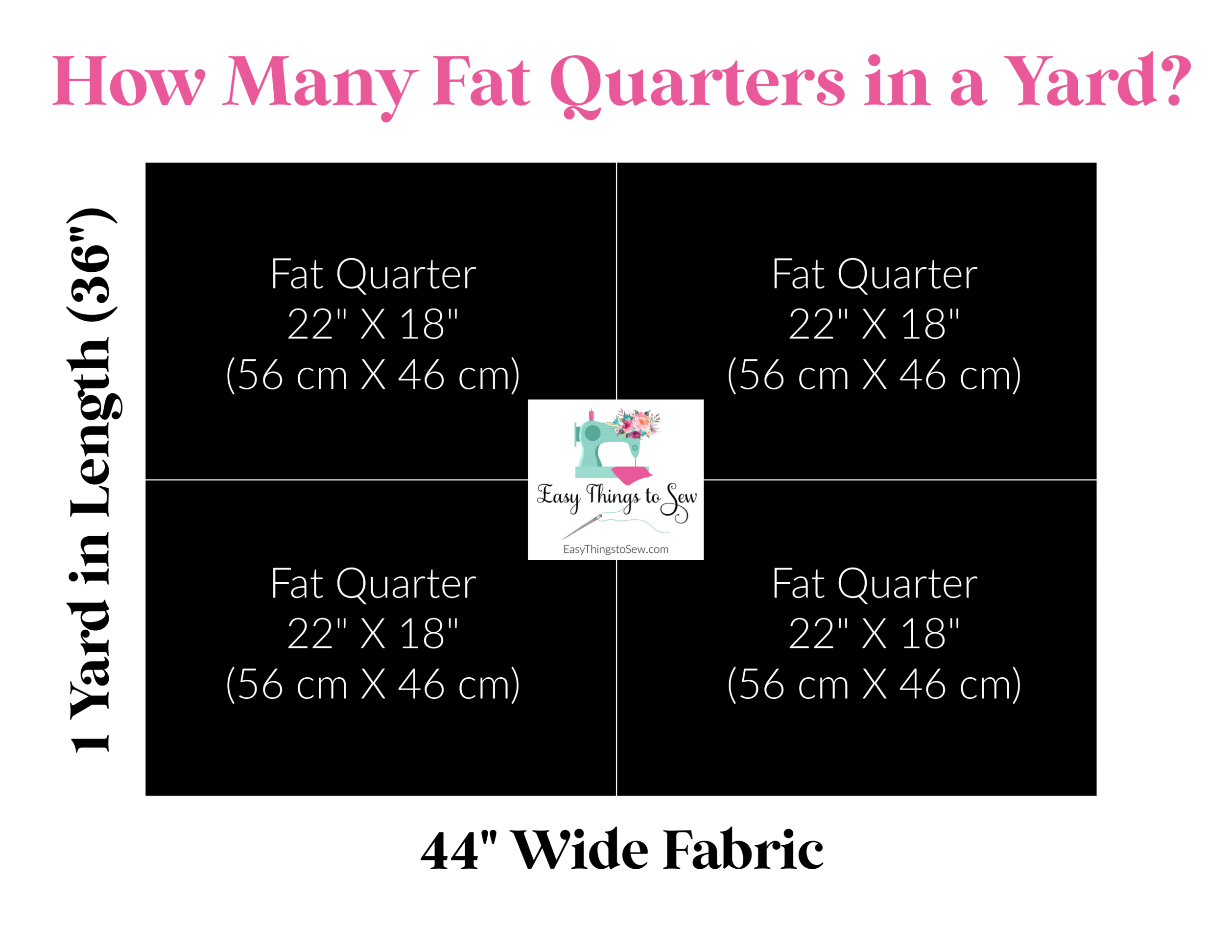
Image Source: easythingstosew.com
Deciphering the Fat Quarter
Let’s dive into what a fat quarter actually is and why it’s such a popular cut in the quilting world.
The Anatomy of a Fat Quarter
A fat quarter is a specific cut of fabric. Instead of a long, narrow strip, a fat quarter is cut from a yard of fabric.
- Standard Quarter Yard: If you buy a quarter yard of fabric off the bolt, it’s typically cut as a long strip that is 9 inches by the full width of the fabric (which can vary, but is often 44-45 inches or 56-60 inches for wider fabrics).
- The “Fat” Difference: A fat quarter, however, is created by cutting a half yard of fabric in half lengthwise. So, if you buy a half yard of fabric (which is 18 inches long by the full width), and then cut that in half across the width, you end up with two “fat quarters.” Each fat quarter measures 18 inches by approximately 22 inches (half the width of the fabric). This makes the area of a fat quarter much larger and more usable for various quilting and sewing projects than a traditional narrow quarter yard cut.
Why Are Fat Quarters So Loved?
Fat quarters offer a fantastic way to build a diverse fabric stash without buying large quantities of each print. They are perfect for:
- Scrappy Quilts: When you want a quilt with many different fabrics, fat quarters allow you to collect a wide variety.
- Small Projects: Items like mug rugs, coasters, pincushions, and small pouches are ideal for fat quarter usage.
- Sampler Blocks: Many quilt blocks require smaller pieces of fabric, making fat quarters a convenient source.
- Experimentation: Trying out a new designer or fabric line? Fat quarters are a low-commitment way to see if you like it.
The Math: Converting Yards to Fat Quarters
Now, let’s get down to the numbers and make sure our fat quarter calculations are spot on.
The Basic Calculation
When you purchase one yard of fabric, it’s 36 inches long by the full width of the fabric. Imagine this yard laid out flat. To get fat quarters from this yard, you’ll cut it in half lengthwise, and then cut each of those halves in half again.
Think of it this way:
- You have one yard of fabric (36 inches by the width, let’s assume 44 inches).
- You cut this yard in half across its length. This gives you two pieces, each measuring 18 inches by 44 inches. These are your half yard fat quarters.
- Now, you take each of those 18-inch by 44-inch pieces and cut them in half across their width.
- The first 18″ x 44″ piece becomes two 18″ x 22″ pieces.
- The second 18″ x 44″ piece becomes two more 18″ x 22″ pieces.
Voila! From one yard of fabric, you get four pieces that are 18 inches by 22 inches. These are your four fat quarters.
Therefore, there are 4 fat quarters in 1 yard of fabric.
This is a key piece of quilting yardage knowledge.
Fat Quarter Measurements in Detail
The standard fat quarter dimensions are crucial for project planning.
- Length: 18 inches
- Width: Approximately 22 inches (half of a standard 44-45 inch fabric width)
It’s important to note that fabric widths can vary. While 44-45 inches is common for quilting cottons, some fabrics might be 54 inches or 60 inches wide. When calculating fat quarters from wider fabrics, the “width” of your fat quarter will be half of that wider width. For example, from a 60-inch wide fabric, you’d get fat quarters measuring 18 inches by 30 inches. This is often referred to as a “wide back” fat quarter or simply a larger fat quarter.
Fat Quarter Calculations for Different Yardage
Let’s break down how many fat quarters you can get from different amounts of fabric:
- 1 Yard: 4 fat quarters (as established)
- 1/2 Yard: 2 fat quarters (this is how fat quarters are often cut by manufacturers or sold as “half yard bundles” which are then cut into fat quarters)
- 1/4 Yard: 1 fat quarter (This is where the confusion sometimes arises. A traditional quarter yard cut is 9″ x width, but a fat quarter is 18″ x width/2. So, one yard is cut into four fat quarters. You cannot get a true fat quarter from a traditional 9″ x width quarter yard cut without additional fabric.)
Table: Fabric Yardage to Fat Quarter Conversion
| Fabric Yardage Purchased | Number of Fat Quarters |
|---|---|
| 1 Yard | 4 |
| 1.5 Yards | 6 |
| 2 Yards | 8 |
| 1/2 Yard | 2 |
| 1/4 Yard | 1 (cut from a half yard) |
This table helps visualize the fabric yard to fat quarters relationship.
Why the “Fat” Matters for Fabric Cutting
The generous width of a fat quarter, compared to a traditional quarter yard cut, is what makes it so useful.
- Traditional Quarter Yard: 9 inches (length) x 44 inches (width)
- Fat Quarter: 18 inches (length) x 22 inches (width)
With a fat quarter, you have a larger usable piece. For example, if you need a 10-inch square for a quilt block, you can easily cut that from a fat quarter. A traditional quarter yard would also yield a 10-inch square, but it would be 10 inches long by 10 inches wide cut from the 44-inch width, leaving a long, narrow scrap. A fat quarter allows you to cut that 10-inch square from the 18-inch dimension, leaving you with an 8-inch by 22-inch piece remaining, which can often be used for other elements or smaller pieces. This efficiency in fabric cutting is a significant advantage.
Optimizing Your Fabric Stash and Purchasing
Knowing how many fat quarters per yard you get is also a smart way to manage your fabric buying and your existing stash.
Buying Fabric for Fat Quarters
When a pattern calls for fat quarters, or you plan to make your own, buying fabric by the yard is often the most economical way to acquire them.
- Example: If a pattern requires 12 fat quarters, you’ll need to purchase 3 yards of fabric (12 fat quarters / 4 fat quarters per yard = 3 yards).
This is a common method for quilting yardage planning.
Storing and Organizing Fat Quarters
Many quilters love fat quarters because they are easy to store and organize.
- Folding: Fold them neatly, perhaps in half or thirds, so the print is visible.
- Filing: You can “file” them vertically in bins or drawers.
- Color Coding: Organize by color or by designer for easy selection.
- Labeling: If you’ve cut them yourself, labeling the designer or collection can be helpful.
Having a well-organized stash of fat quarters means you can quickly find what you need for your next project, saving time and frustration.
Dealing with Different Fabric Widths
While the 4-fat-quarters-per-yard rule applies to standard quilting cottons (44-45 inches wide), it’s worth noting how wider fabrics affect your fat quarter cuts.
Wide Backing Fabrics
Many quilters use wider fabrics, often called “wide backs,” for the back of their quilts. These can be 90 inches, 108 inches, or even wider. When you cut fat quarters from these, the dimensions will be different.
- From a 108-inch wide fabric:
- One yard is 36 inches long x 108 inches wide.
- Cutting this in half lengthwise gives two pieces: 18 inches x 108 inches.
- Cutting these in half across the width gives four pieces: 18 inches x 54 inches.
So, from a yard of 108-inch wide fabric, you get four larger fat quarters, each measuring 18 inches by 54 inches. This can be very advantageous if your project requires larger pieces.
Other Fabric Types
While we often associate fat quarters with quilting cottons, you can cut fat quarters from other fabrics like linen, flannel, or even some knits. The principle remains the same: take a yard, cut it in half lengthwise, then cut each half in half again. The resulting dimensions will depend on the original width of the fabric.
Practical Applications and Tips
Knowing the fat quarter dimensions and how they relate to yardage opens up many possibilities in your sewing projects.
Project Planning
When you see a pattern that calls for a specific number of fat quarters, you can easily calculate how much yardage of each fabric you need to buy. Conversely, if you have a yard of a beautiful fabric you love, you know you can cut it into four usable fat quarters for future projects. This is a fundamental aspect of sewing fabric yardage management.
Avoiding Waste
Understanding converting yards to fat quarters helps minimize fabric waste. By making efficient cuts, you ensure that you’re maximizing the usable portions of your fabric. The fat quarter cut itself is designed for this purpose, providing larger, more versatile pieces than a traditional quarter yard cut.
Bundles and Kits
Many fabric companies sell “fat quarter bundles” where you get a collection of pre-cut fat quarters from a specific collection. These are fantastic for getting a variety of prints without having to cut them yourself. When purchasing a fat quarter bundle that contains, say, 20 fat quarters, you can estimate that it’s equivalent to 5 yards of fabric (20 fat quarters / 4 fat quarters per yard).
Half Yard Fat Quarters
It’s also worth reiterating the concept of half yard fat quarters. When you cut a half yard of fabric (18 inches by the full width), and then cut that in half across the width, you get two fat quarters. So, a half yard piece is essentially the source material for two fat quarters. This is a common way fabric stores will cut larger pieces for customers who request them, or how manufacturers prepare their bundles.
Frequently Asked Questions (FAQ)
Here are some common questions related to fat quarters and yardage.
Q1: What is the difference between a quarter yard and a fat quarter?
A: A traditional quarter yard cut from the bolt is typically 9 inches long by the full width of the fabric (e.g., 44 inches). A fat quarter is cut from a half yard, resulting in a piece that is 18 inches long by approximately half the width of the fabric (e.g., 22 inches). The fat quarter has a larger surface area and is more versatile for many quilting and sewing projects.
Q2: Can I get fat quarters from a 1/4 yard cut of fabric?
A: No, you cannot get a standard fat quarter from a traditional 1/4 yard cut. A fat quarter requires a minimum of an 18-inch length cut from the fabric. You would need a half yard of fabric to cut two fat quarters, and one full yard to cut four fat quarters.
Q3: How do I calculate the yardage needed for a project calling for fat quarters?
A: Divide the total number of fat quarters required by four (since there are four fat quarters in a yard). For example, if a pattern needs 12 fat quarters, you’ll need 12 / 4 = 3 yards of fabric.
Q4: What are the standard dimensions of a fat quarter?
A: The most common dimensions for a fat quarter, cut from standard 44-45 inch wide quilting cotton, are 18 inches by 22 inches.
Q5: What if my fabric is wider than 45 inches?
A: If your fabric is wider, say 60 inches, you will still cut one yard as 36 inches in length. Then, you’ll cut it in half lengthwise (18 inches x 60 inches), and then cut each of those in half across the width. This would yield four fat quarters, each measuring 18 inches by 30 inches. The principle of fat quarter calculations remains consistent, but the width will vary.
Q6: Are fat quarters always the same size?
A: While the 18″ x 22″ measurement is the standard for quilting cottons, the “fatness” refers to the proportion of the width cut. When you buy fabric in longer lengths, like a half yard or a yard, and then cut it specifically to create fat quarters, the width of those fat quarters will be half of the fabric’s original bolt width. So, from a 54″ wide fabric, you’d get fat quarters of 18″ x 27″.
Q7: Why are they called “fat quarters”?
A: They are called “fat” quarters because they are a “fatter” or larger cut than a traditional quarter yard piece. The term highlights the increased usable area for sewing and quilting.
Conclusion
Navigating the world of quilting fabrics is made simpler with a solid grasp of basic measurements and conversions. Knowing that there are indeed 4 fat quarters in a yard is a foundational piece of knowledge that empowers quilters to plan projects efficiently, manage their stashes effectively, and make the most of every beautiful piece of fabric they acquire. Whether you’re a seasoned quilter or just starting your sewing journey, these fat quarter calculations and fabric cutting techniques will serve you well. Happy stitching!