
If you’re wondering how many 10-inch squares fit into a yard, the answer depends on whether you’re talking about a linear yard or a square yard. A linear yard is a measure of length, while a square yard is a measure of area. To cover a yard with tiles, you’ll need to calculate the square yard area.
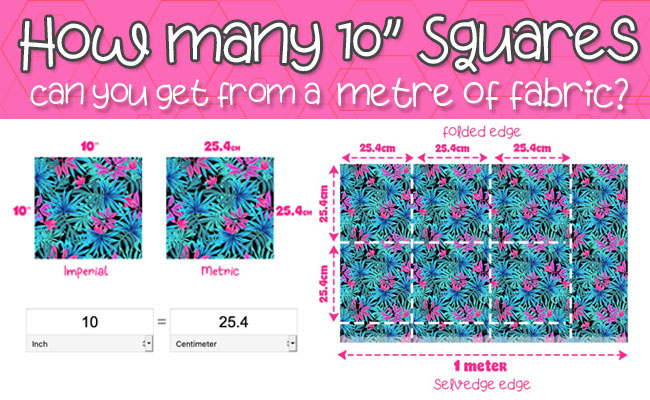
Image Source: www.alandacraft.com
Fathoming the Square Yard: A Foundation for Tiling
When embarking on a tiling project, especially tiling a yard or any outdoor space, precise calculations are key to success. Understanding the fundamental units of measurement is the first step. This is where we delve into the concept of a yard and how it relates to smaller units like inches. We’ll explore how to translate these measurements to ensure you have the right amount of materials for covering a yard with tiles.
The Yard: A Unit of Length and Area
A yard, as a unit of length, is equal to 3 feet or 36 inches. This linear measurement is crucial, but for tiling, we are primarily concerned with area of a yard. A square yard is an area that measures 3 feet by 3 feet, or equivalently, 36 inches by 36 inches.
Inches to Yard Conversion: Bridging the Gap
To accurately calculate how many of our 10-inch tiles will fit, we need to perform an inches to yard conversion.
- Linear Inch to Yard:
- 1 yard = 36 inches
This simple conversion is the bedrock of all subsequent calculations.
The Heart of the Matter: Calculating 10 Inch Squares in a Yard
Now, let’s tackle the core question: how many 10-inch squares are in a yard? This involves both linear and area calculations.
Linear Measurement: Inches Along a Side
First, consider one side of a square yard. A yard is 36 inches. How many 10-inch segments fit along this 36-inch line?
- 36 inches / 10 inches per tile = 3.6 tiles
This tells us that along one edge of a yard, you can fit 3 full 10-inch tiles, with some space left over. You’ll need to account for this by cutting tiles.
Area Calculation: Tiles Across and Down
To determine how many 10-inch squares fit in a square yard, we need to consider both dimensions. A square yard is 36 inches by 36 inches.
- Area of a square yard: 36 inches * 36 inches = 1296 square inches
Now, let’s find the area of one of our 10-inch tiles. Since we’re dealing with 10-inch squares, each tile is 10 inches by 10 inches.
- Area of a 10-inch tile: 10 inches * 10 inches = 100 square inches
To find out how many 100-square-inch tiles fit into 1296 square inches, we divide the total area by the area of a single tile:
- 1296 square inches / 100 square inches per tile = 12.96 tiles
This means that a single square yard can accommodate approximately 12.96 of your 10-inch tiles.
The 10×10 Inch Tile Calculation Explained
The 10 inch tile calculation directly leads to this figure. For every square yard, you will need to account for the fraction of a tile. This is where practical tiling comes into play, as you’ll be cutting tiles to fit the remaining space.
Practical Implications: Estimating Tile Quantity for Your Project
When estimating tile quantity, especially for a project like covering a yard with tiles, you can’t just buy fractions of tiles. You need to round up to ensure you have enough, plus extra for cuts, breakages, and future repairs.
Converting Square Footage to Square Yards
Often, project dimensions are given in square feet. Knowing the square footage to square yards conversion is vital.
- 1 square yard = 9 square feet (since 1 yard = 3 feet, so 1 sq yard = 3 ft * 3 ft = 9 sq ft)
So, if your yard measures, for example, 100 square feet:
- 100 square feet / 9 square feet per square yard = 11.11 square yards
Applying the Tile Count to a Larger Area
Let’s say your yard is 10 feet by 10 feet.
- Calculate the area in square feet: 10 ft * 10 ft = 100 sq ft.
- Convert to square yards: 100 sq ft / 9 sq ft/sq yd = 11.11 sq yd.
- Calculate the total number of tiles needed: 11.11 sq yd * 12.96 tiles/sq yd = 144.06 tiles.
Therefore, for a 10 ft by 10 ft area, you would need to purchase approximately 145 of your 10-inch tiles.
Tile Layout Math: Efficiently Covering Your Space
The tile layout math involves not only calculating the total number of tiles but also considering how they will be placed. With 10-inch tiles, you’ll be fitting them into a 36-inch yard dimension.
- Along a 3-foot (36-inch) side, you fit 3 tiles (30 inches) with 6 inches remaining.
- Along the other 3-foot (36-inch) side, you also fit 3 tiles (30 inches) with 6 inches remaining.
This means you’ll have rows of 3 full tiles and a partial tile, and columns of 3 full tiles and a partial tile. The corner where the partial tiles meet will require a 6-inch by 6-inch piece.
Planning for Cuts and Waste
It’s always recommended to add a percentage for waste, typically 10-15%, to your total tile count. This accounts for:
- Cutting tiles: To fit edges and corners.
- Breakage: Tiles can break during transport, handling, or cutting.
- Mistakes: Accidental cuts or dropped tiles.
- Future repairs: Having a few extra tiles can save you trouble down the line.
Using our 145-tile example for a 10×10 foot area, adding 10% for waste:
- 145 tiles * 0.10 = 14.5 extra tiles
- Total tiles to purchase: 145 + 15 (rounded up from 14.5) = 160 tiles.
Deciphering the 10 Inch Tile Calculation for Various Scenarios
Let’s explore the 10 inch tile calculation in different contexts and practical examples.
Scenario 1: A Rectangular Yard
Imagine a yard that is 12 feet long by 8 feet wide.
- Calculate area in square feet: 12 ft * 8 ft = 96 sq ft.
- Convert to square yards: 96 sq ft / 9 sq ft/sq yd = 10.67 sq yd.
- Calculate total tiles needed (without waste): 10.67 sq yd * 12.96 tiles/sq yd = 138.27 tiles.
- Add waste (10%): 138.27 * 1.10 = 152.10 tiles.
- Round up: You’d need to purchase 153 of the 10-inch tiles.
Scenario 2: Irregular Shaped Yards
For yards with irregular shapes, you’ll need to break them down into simpler geometric shapes (rectangles, squares, triangles) and calculate the area of each. Then, sum these areas to get the total square footage.
- Example: An L-shaped yard might be composed of a 10×10 ft square and a 5×8 ft rectangle.
- Area 1: 10 ft * 10 ft = 100 sq ft
- Area 2: 5 ft * 8 ft = 40 sq ft
- Total Area: 100 sq ft + 40 sq ft = 140 sq ft
- Convert to sq yards: 140 sq ft / 9 sq ft/sq yd = 15.56 sq yd
- Total tiles (without waste): 15.56 sq yd * 12.96 tiles/sq yd = 201.71 tiles
- Add waste (10%): 201.71 * 1.10 = 221.88 tiles
- Round up: Purchase 222 tiles.
Comprehending Square Yard Area in Relation to Tile Size
The square yard area is the fundamental unit of the space you wish to cover. The size of your tiles, in this case, 10×10 inch tiles, dictates how many of these units are required to fill that area.
- 1 Square Yard = 1296 square inches
- 1 (10×10 inch) Tile = 100 square inches
The ratio of these areas gives us the number of tiles per square yard:
- 1296 sq inches / 100 sq inches = 12.96 tiles per square yard.
The Importance of Accurate Inches to Yard Conversion
Any error in the inches to yard conversion will cascade through your calculations, leading to either too few or too many tiles. Ensuring this initial conversion is correct (36 inches per yard) is paramount.
Tiling a Yard: Beyond the Numbers
While the mathematical calculations are essential for estimating tile quantity, several other factors influence the success of tiling a yard and covering a yard with tiles.
Substrate Preparation
The ground beneath the tiles must be properly prepared. This usually involves:
- Excavation: Removing topsoil and vegetation.
- Compaction: Ensuring a firm base.
- Gravel/Crushed Stone Base: Providing drainage and stability.
- Sand Bedding: A layer for setting the tiles.
Grout and Spacing
Tile layout math also includes considering grout lines. While our calculation assumes tiles are placed edge-to-edge, real-world tiling involves grout. For 10×10 inch tiles, you might have a small grout line (e.g., 1/4 inch or 1/2 inch) between each tile. This will slightly reduce the number of full tiles needed but increases the overall area covered, as the grout contributes to the layout. For simplicity in initial estimation, edge-to-edge is a good starting point, but remember to factor in grout for the final placement.
Tools and Materials
Beyond tiles, you’ll need:
- Tile saw or wet saw for cutting
- Trowels for spreading adhesive/mortar
- Grout
- Spacers
- Level
- Measuring tape
- Gloves and safety glasses
Frequently Asked Questions (FAQ)
Q: How many 10-inch squares are in a linear yard?
A: In a linear yard (36 inches), you can fit 3.6 of your 10-inch squares along that line.
Q: Do I need to account for grout lines when calculating tiles?
A: Yes, you should factor in grout lines, especially for larger projects. While our primary calculation assumes edge-to-edge, grout adds to the overall dimensions. For precise calculations, measure the grout line width and add it to each tile’s dimension before calculating its area. For instance, a 10-inch tile with a 1/4-inch grout line effectively occupies an area of 10.25 inches by 10.25 inches in the layout.
Q: What is the best way to calculate tile for a complex shape?
A: Break the complex shape into simpler geometric forms (rectangles, squares, triangles), calculate the area of each, and sum them up. Then, proceed with the tile conversion calculations.
Q: Can I use 10-inch squares for a patio?
A: Yes, 10-inch square tiles can be used for patios, but ensure the tile material is rated for outdoor use and can withstand foot traffic, weather, and potential freeze-thaw cycles. The base preparation is also crucial for outdoor installations.
Q: How many square feet are in a square yard?
A: There are 9 square feet in a square yard.
Q: Why is waste important in tile estimation?
A: Waste accounts for tiles that are cut, broken during installation, or used for future repairs, ensuring you don’t run out of material mid-project. A 10-15% buffer is standard.
By carefully considering these calculations and practical aspects, you can confidently approach your tiling project, ensuring you have the right amount of 10-inch squares to beautifully cover your yard.