
A 3-yard dumpster is roughly 6 feet long, 4 feet wide, and 4 feet high, holding about 20-25 contractor bags of debris, making it a great dumpster for small jobs.
When tackling a home renovation, a big cleanup, or even a small landscaping project, you’ll inevitably need a way to manage the waste. Choosing the right dumpster size is crucial to avoid overpaying for unused space or making multiple trips to the landfill because your container is too small. Many people wonder, “How big is a 3-yard dumpster?” This article will delve into the typical dumpster dimensions, its 3-yard dumpster capacity, and when this particular waste container size is your best bet.
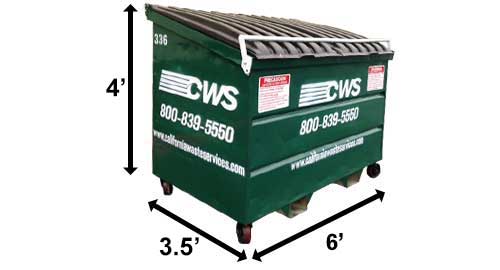
Image Source: www.californiawasteservices.com
Deciphering Dumpster Sizes: Why Size Matters
Dumpster sizes are typically measured in cubic yards, which is a unit of volume. A cubic yard represents a cube with sides measuring one yard (or three feet) in length. So, a 3-yard dumpster has a total volume of three cubic yards. This might seem straightforward, but the actual physical dimensions can vary slightly between manufacturers and rental companies. It’s like buying shoes – sizes are standardized, but brands might fit a little differently.
The primary reason for understanding dumpster volume is efficiency and cost-effectiveness. Renting a dumpster that’s too large means you’re paying for space you won’t use. Conversely, a dumpster that’s too small will lead to overflow, potential fines, and the hassle of ordering a second bin. For many homeowners and small businesses, a 3-yard dumpster strikes a good balance.
What is a 3-Yard Dumpster?
At its core, a 3-yard dumpster is a compact waste container designed for smaller-scale projects. It’s a step up from simply filling garbage bags and heading to the local dump yourself. These are often referred to as a 3 yard waste bin and are a popular choice for specific types of cleanups.
Common Uses for a 3-Yard Dumpster
What kinds of jobs call for a 3-yard dumpster? Think about projects that generate a moderate amount of waste but not an overwhelming amount.
- Small Home Renovations: A minor bathroom remodel, a kitchen cabinet refacing, or redoing a small section of flooring might fit within a 3-yard capacity.
- Garage or Attic Cleanouts: Decluttering an overstuffed garage or attic can produce a surprising amount of unwanted items, but often not enough to fill a larger bin.
- Landscaping Debris: Clearing out small garden beds, removing a few shrubs, or trimming back overgrown bushes can be handled by this small dumpster rental.
- Spring Cleaning: A thorough house cleaning that involves discarding old furniture, appliances, or general household junk.
- Demolition of Small Structures: Taking down a small shed or a playhouse might be suitable for a 3-yard dumpster.
- Junk Removal: Clearing out unwanted items from a property or preparing for a move.
What is the 3-Yard Dumpster Capacity in Terms of Bags?
To help visualize the 3 yard dumpster capacity, consider how much it can hold in terms of standard contractor bags, which are typically around 3 feet tall and 1.5 feet wide. A 3-yard dumpster can generally hold between 20 to 25 contractor bags of debris. This is a helpful metric for estimating if the dumpster will be sufficient for your project’s waste.
Fathoming the Physical Dimensions of a 3-Yard Dumpster
While the capacity is measured in cubic yards, the actual physical dimensions – length, width, and height – are what you need to consider for placement and logistics. Understanding dumpster dimensions ensures you have adequate space for delivery and that the dumpster fits where you intend to put it.
Typical Dumpster Dimensions for a 3-Yard Bin
While there isn’t one single universal standard, typical dumpster dimensions for a 3-yard dumpster usually fall within these ranges:
- Length: Around 6 to 7 feet
- Width: Around 4 feet
- Height: Around 4 feet
Let’s break these down further.
Length
The length dictates how much linear space the dumpster will occupy on your property. A 6-foot length is manageable for most driveways or even some backyard spaces.
Width
The width is important for clearance. You need to ensure there’s enough space for the dumpster to be placed without blocking essential access points. A 4-foot width is relatively narrow, making it easier to fit into tighter spots.
Height
The height determines how high you need to lift debris to get it into the dumpster. A 4-foot height is generally accessible for most individuals, though very heavy or bulky items might require a bit more effort.
Table: Approximate 3-Yard Dumpster Dimensions
| Dimension | Approximate Measurement (Feet) |
|---|---|
| Length | 6 – 7 |
| Width | 4 |
| Height | 4 |
Note: These are approximate figures. Always confirm the exact dimensions with your dumpster rental provider.
What is a Cubic Yard Dumpster?
A cubic yard dumpster is simply a dumpster whose capacity is measured in cubic yards. As mentioned, a 3-yard dumpster is a type of cubic yard dumpster, with a volume of 3 cubic yards. Other common sizes include 10-yard, 15-yard, 20-yard, and 30-yard dumpsters, each suited for progressively larger projects.
Comparing Dumpster Sizes: Is 3 Yards Right for You?
To make an informed decision, it’s helpful to compare the 3-yard dumpster to other common sizes. This will give you a better sense of its place in the spectrum of waste container size options.
Smaller Dumpsters: The 2-Yard Option
Some rental companies may offer 2-yard dumpsters. These are even more compact, with dimensions often around 4-5 feet long, 3-4 feet wide, and 3-4 feet high. They are suitable for very minor cleanups, like clearing out a small room or a weekend of yard waste. If your project is truly minimal, a 2-yard dumpster might suffice. However, the slight increase in size to a 3-yard dumpster often provides significantly more capacity for a marginal increase in cost and footprint.
Larger Dumpsters: Stepping Up
- 6-Yard Dumpsters: These are a significant step up, often measuring around 10-12 feet long, 5-6 feet wide, and 4-5 feet high. They offer double the capacity of a 3-yard bin and are suitable for medium-sized renovations or larger cleanouts.
- 10-Yard Dumpsters: These are common for more substantial projects. They can be around 12-14 feet long, 6-7 feet wide, and 4-5 feet high. Think of attic or basement renovations, or smaller demolition jobs.
- 20-Yard Dumpsters: These are the workhorses for many residential and commercial projects. They can be 20-22 feet long, 8 feet wide, and 4-5 feet high. They are ideal for major renovations, whole-house cleanouts, or significant landscaping overhauls.
Choosing the Right Size
When deciding between a 3-yard dumpster and a larger size, consider these questions:
- What type of debris will I be discarding? Bulky but lightweight items (like insulation or foam) take up more space than dense items (like concrete or soil).
- How much waste do I anticipate generating? It’s better to overestimate slightly than to underestimate and run out of space.
- What is the nature of my project? A single room renovation will require less than a whole-house remodel.
- What are the dumpster rental costs? While a larger dumpster costs more, the cost of a second rental or multiple trips to the landfill can be higher.
A 3-yard dumpster is often the perfect choice when you have a controlled amount of waste and need a convenient, compact solution. It’s a dumpster for small jobs that require more than a few trash bags but don’t warrant a massive container.
Practical Considerations for Your 3-Yard Dumpster Rental
Beyond just size, there are practical aspects to consider when renting a 3-yard dumpster.
Placement and Access
- Driveway Space: Most driveways can accommodate a 3-yard dumpster. The rental company will typically place it for you. Ensure there are no low-hanging branches or obstacles that could impede delivery.
- Street Placement: If placing on a public street, check with your local municipality for any permit requirements or restrictions.
- Gate Access: If the dumpster needs to be placed in a backyard or a gated area, ensure the gate is wide enough for the dumpster and the delivery truck to maneuver.
What Can You Put In a 3-Yard Dumpster?
The type of waste you can dispose of will depend on the rental company’s policies and local regulations. Generally, 3-yard dumpsters are suitable for:
- General household trash and debris
- Construction and demolition debris (wood, drywall, plaster)
- Yard waste (leaves, branches, grass clippings)
- Scrap metal
- Furniture and appliances (check for specific restrictions on hazardous materials or electronics)
What Cannot Go In a 3-Yard Dumpster?
Certain items are typically prohibited due to environmental or safety concerns. Always confirm with your rental provider, but common prohibited items include:
- Hazardous waste (paint, chemicals, solvents, oil)
- Batteries
- Electronics (TVs, computers – some companies have special recycling programs)
- Tires
- Mattresses (often incur an extra fee)
- Food waste
- Flammable materials
- Asbestos
Dumpster Features
3-yard dumpsters, like other cubic yard dumpster types, usually come with a hinged lid. This lid helps to:
- Contain odors: Particularly important for longer rentals or if you’re disposing of organic materials.
- Prevent overflow: It discourages people from piling trash higher than the rim.
- Keep rain out: Moisture can add weight and volume to your waste.
- Improve aesthetics: It makes the dumpster look tidier on your property.
Calculating Your Waste: Estimating Needs
One of the trickiest parts of renting a dumpster is accurately estimating your waste volume. Here’s a simple method to help gauge your needs for a 3-yard dumpster:
- Gather Your Debris: Collect all the items you plan to discard and place them in contractor bags.
- Estimate Bag Count: Count how many bags you have.
- Consider Bulk Items: If you have bulky items that won’t fit in bags (like a chair or a dresser), try to estimate their volume. You can use a simple formula: Length x Width x Height = Volume. Then, convert this volume to cubic feet.
- Convert to Cubic Yards: Since 1 cubic yard is equal to 27 cubic feet (3ft x 3ft x 3ft), divide your total cubic feet of debris by 27.
- Add a Buffer: It’s always wise to add a 10-20% buffer to your estimate to account for unforeseen waste or items you might have forgotten.
For a 3-yard dumpster, if your estimate comes out to around 2.5 to 3 cubic yards, this is an excellent indication that a 3-yard dumpster will be the right size. If it’s significantly less, you might consider a smaller dumpster if available, or use the extra space efficiently. If it’s much more, you’ll need to look at larger options.
Example Calculation:
Let’s say you have 20 contractor bags, and each bag takes up roughly 0.1 cubic yards of space.
20 bags * 0.1 cubic yards/bag = 2 cubic yards.
You also have an old armchair that measures 3 feet long, 3 feet wide, and 3 feet high.
3 ft * 3 ft * 3 ft = 27 cubic feet.
27 cubic feet / 27 cubic feet/cubic yard = 1 cubic yard.
Total estimated waste = 2 cubic yards (bags) + 1 cubic yard (armchair) = 3 cubic yards.
In this scenario, a 3-yard dumpster would be a perfect fit. If you added another small bag or two, you’d be pushing the capacity, so keeping an eye on how you fill it is key.
Frequently Asked Questions (FAQ)
Q1: How much does a 3-yard dumpster rental typically cost?
A1: The cost of a 3-yard dumpster rental can vary significantly based on your location, the rental company, and the duration of the rental. Generally, smaller dumpsters are less expensive. You can expect costs to range from $200 to $400, but this is a broad estimate. Always get a quote from local providers.
Q2: Can I put construction debris in a 3-yard dumpster?
A2: Yes, 3-yard dumpsters are often suitable for construction and demolition debris from small projects. However, heavy materials like concrete, bricks, or dirt may have weight restrictions, so it’s essential to check with your rental company. They might have specific pricing or weight limits for these materials.
Q3: How long can I keep a 3-yard dumpster?
A3: Most rental agreements for dumpsters are for a set period, typically 7 to 14 days. If you need the dumpster for longer, you’ll usually have to arrange for an extension, which may incur additional daily charges.
Q4: What happens if my 3-yard dumpster overflows?
A4: Dumpster companies usually have policies against overfilling. If your dumpster is filled beyond the rim, you may be charged an additional fee for extra disposal or be required to remove the excess debris before the company will pick it up.
Q5: Is a 3-yard dumpster the smallest available size?
A5: While 3-yard dumpsters are on the smaller end, some companies may offer 2-yard or even smaller bins for very specific needs. However, the 3-yard size is a very common and practical option for many smaller jobs.
Q6: How many tons of waste can a 3-yard dumpster hold?
A6: The weight capacity of a 3-yard dumpster varies. It depends on the density of the material being discarded. For lighter debris like wood, drywall, and general household junk, it might hold around 1 to 2 tons. For denser materials like soil or concrete, the weight capacity will be much lower, and you might exceed it quickly. Always check weight limits with your rental provider.
Q7: What is the difference between a 3-yard dumpster and a bin?
A7: The terms “dumpster” and “bin” are often used interchangeably in this context. A 3-yard dumpster is a specific type of waste bin with a capacity of 3 cubic yards. The essential difference lies in the volume they can contain.
Q8: Do I need a permit to place a 3-yard dumpster on my property?
A8: If you are placing the dumpster on private property, such as your driveway or yard, you generally do not need a permit. However, if you plan to place it on a public street or sidewalk, you will likely need to obtain a permit from your local municipality. Always check local regulations.
Choosing the right dumpster size is a critical step in managing your project waste efficiently. A 3-yard dumpster, with its compact footprint and practical 3 yard dumpster capacity, is an excellent solution for many homeowners and small businesses. By understanding its dumpster dimensions and considering its typical uses, you can confidently select the best waste container size for your next cleanup or renovation. Remember to communicate with your rental provider to ensure you get the most suitable small dumpster rental for your specific needs.