
A yard of material, typically a cubic yard, is a common measurement in landscaping, construction, and DIY projects. Many DIYers wonder, “How many wheelbarrows is a yard?” The answer is generally between 10 and 20 wheelbarrows, depending heavily on the size of your wheelbarrow and how full you fill it. This guide will break down the conversion and help you estimate accurately.
When dealing with bulk materials like soil, gravel, mulch, or concrete, the term “yard” usually refers to a cubic yard. This is a unit of volume, meaning it measures space, not weight. So, the question of “how many wheelbarrows is a yard” is fundamentally about converting a cubic yard into the volume that your wheelbarrow can hold. This is a crucial aspect of measuring dirt with a wheelbarrow or any other material.
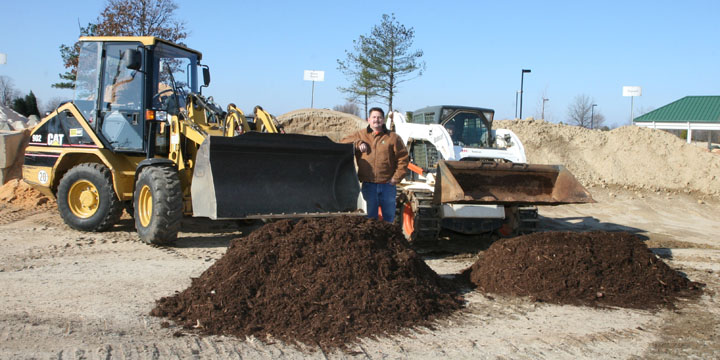
Image Source: www.southernmulch.com
Fathoming the Cubic Yard
A cubic yard is a cube with sides that are each one yard (or three feet) long. Imagine a box that is 3 feet wide, 3 feet long, and 3 feet high – that’s one cubic yard.
To visualize this, think of it this way:
- Length: 3 feet
- Width: 3 feet
- Height: 3 feet
The total volume is Length × Width × Height = 3 ft × 3 ft × 3 ft = 27 cubic feet.
So, 1 cubic yard = 27 cubic feet. This is a fundamental conversion for understanding how much material you’re dealing with.
Wheelbarrow Volume Yards: Sizes and Shapes
Wheelbarrows come in various sizes and shapes, which directly impacts their capacity. Understanding your wheelbarrow’s volume is key to the wheelbarrow to cubic yard calculator process.
Common Wheelbarrow Capacities
Wheelbarrows are often described by their capacity in cubic feet. You’ll commonly see them listed as:
- Small: 2 to 4 cubic feet
- Medium: 4 to 6 cubic feet
- Large: 6 to 10 cubic feet (or even more for heavy-duty contractor models)
When purchasing a wheelbarrow, check the manufacturer’s specifications for its capacity. If it’s not listed in cubic feet, you might need to estimate.
Estimating Wheelbarrow Capacity (If Not Listed)
If your wheelbarrow doesn’t have a listed capacity, you can estimate it using simple measurements. You’ll need a tape measure.
-
Measure the approximate dimensions of the basin:
- Length of the basin
- Width of the basin at its widest point
- Depth of the basin at its deepest point
-
Calculate the volume in cubic feet:
- For a roughly rectangular basin: Volume ≈ Length × Width × Depth.
- For a more rounded basin, this is an approximation, but it will give you a good idea. You might want to take an average of the length and width if they vary significantly.
Example: If your wheelbarrow basin measures approximately 3 feet long, 2 feet wide, and 1.5 feet deep:
Volume ≈ 3 ft × 2 ft × 1.5 ft = 9 cubic feet.Important Note: This is the gross volume. When actually loading, you won’t fill it to the absolute brim to avoid spills and make it manageable. This is where the concept of wheelbarrow load size becomes important.
The Cubic Yard to Wheelbarrow Conversion: Putting It Together
Now that we know how much a cubic yard is in cubic feet, and how much a wheelbarrow can hold in cubic feet, we can perform the conversion. The core calculation is:
Number of Wheelbarrows = Total Volume (in cubic feet) / Wheelbarrow Capacity (in cubic feet)
Let’s use our example. We want to move 1 cubic yard of material. We know 1 cubic yard is 27 cubic feet.
Scenario 1: Using a 4 cubic foot wheelbarrow
Number of Wheelbarrows = 27 cubic feet / 4 cubic feet per wheelbarrow = 6.75 wheelbarrows.
Since you can’t move a quarter of a wheelbarrow, you would need 7 full wheelbarrows to move approximately 1 cubic yard of material.
Scenario 2: Using a 6 cubic foot wheelbarrow
Number of Wheelbarrows = 27 cubic feet / 6 cubic feet per wheelbarrow = 4.5 wheelbarrows.
This means you’d need 5 full wheelbarrows.
Scenario 3: Using a 8 cubic foot wheelbarrow
Number of Wheelbarrows = 27 cubic feet / 8 cubic feet per wheelbarrow = 3.375 wheelbarrows.
You would need 4 full wheelbarrows.
This illustrates the direct relationship between wheelbarrow size and the number of trips required. The larger your wheelbarrow capacity cubic feet, the fewer trips you’ll make.
The “How Full Is Full?” Factor
The above calculations assume you fill your wheelbarrow to its rated capacity. In reality, you rarely fill a wheelbarrow to the absolute brim, especially with loose materials like soil or gravel. This is where the practical wheelbarrow load size comes into play.
- Loose Materials: Soil, sand, gravel, mulch tend to be less dense and can spill easily if overfilled. You might only fill these to about 75-80% of the wheelbarrow’s capacity.
- Damp Materials: Damp soil or sand might compact slightly and hold better, allowing for a fuller load.
- Concrete: When mixing or moving concrete, you often fill the wheelbarrow to a level that’s easier to manage and pour from, which might be around 70-80% of its stated capacity for larger volumes of concrete. For the question “how many wheelbarrows for 1 yard of concrete,” this factor is critical.
Let’s re-evaluate our 6 cubic foot wheelbarrow example, assuming you fill it to 80% capacity:
- Actual capacity filled = 6 cubic feet * 0.80 = 4.8 cubic feet.
Now, the calculation becomes:
Number of Wheelbarrows = 27 cubic feet / 4.8 cubic feet per wheelbarrow = 5.625 wheelbarrows.
So, you would need 6 full wheelbarrows.
Factors Affecting the Conversion
Beyond just the stated capacity, several other factors influence how many wheelbarrows make up a cubic yard:
Material Density and Compaction
Different materials have different densities. This means a cubic yard of feathers will weigh much less than a cubic yard of rocks. However, for volume conversions, density is less of an issue than how the material settles or compacts in the wheelbarrow.
- Loose soil: May not fill the wheelbarrow to its maximum theoretical volume and can settle.
- Gravel: Can be tricky; smaller gravel might fill voids better than larger, angular stones. How much gravel in a wheelbarrow depends on the size of the stones.
- Mulch: Is very light and bulky. You might fit more volume of mulch than soil by weight, but for volume, it’s still about filling the wheelbarrow.
- Wet sand or soil: Can be heavy and compact more, making it harder to get a truly “full” wheelbarrow without it being excessively heavy.
Wheelbarrow Type and Design
- Single-wheel vs. Double-wheel: Double-wheel barrows are more stable and can often carry slightly larger, heavier loads more easily, but their practical volume capacity might not be drastically different from a similarly sized single-wheel model.
- Basin Shape: A deeper, more conical basin might hold material differently than a shallower, wider one.
The Human Factor: How You Load
This is perhaps the most significant variable. Are you:
- Heaping the load? (Risky and inefficient due to spills)
- Leveling the load? (More controlled and safer)
- Packing the material down? (Can increase density but might make the load heavier)
A good rule of thumb for efficient and safe hauling is to fill the wheelbarrow so the material is level with the rim, or slightly below, ensuring it’s not going to spill with the first bump or tilt. This is what we’ve referred to as the wheelbarrow load size being less than the maximum theoretical capacity.
Using a Wheelbarrow to Cubic Yard Calculator
To make things easier, many online tools act as a wheelbarrow to cubic yard calculator. You input your wheelbarrow’s capacity in cubic feet (or sometimes gallons, which you’d then convert to cubic feet: 1 cubic foot ≈ 7.48 gallons), and the desired volume in cubic yards, and it gives you an estimate of the number of trips.
General Formula Recap:
Number of Wheelbarrows = (Cubic Yards of Material * 27) / Wheelbarrow Capacity (cu ft)
Let’s consider a common scenario: measuring dirt with a wheelbarrow for a garden bed. Suppose you need to add 0.5 cubic yards of topsoil.
Using a 6 cubic foot wheelbarrow (filled to about 4.8 cubic feet practically):
- Total cubic feet needed = 0.5 cubic yards * 27 cubic feet/cubic yard = 13.5 cubic feet.
- Number of wheelbarrows = 13.5 cubic feet / 4.8 cubic feet/wheelbarrow = 2.81 wheelbarrows.
So, you’d need approximately 3 wheelbarrows of soil.
Practical Tips for Hauling
- Know your wheelbarrow’s capacity: Check the manufacturer’s label or measure it yourself.
- Estimate realistically: Don’t plan on filling to the absolute brim. Aim for about 75-80% for most materials.
- Work in a rhythm: Find a steady pace for loading, transporting, and dumping.
- Consider the terrain: If you have hills or rough ground, you might need to fill the wheelbarrow less full to maintain stability and control.
- Use a level surface for loading: This makes it easier to judge how full the wheelbarrow is.
- Keep your load balanced: Distribute the weight evenly.
- Don’t overexert yourself: Pushing a heavily overloaded wheelbarrow can lead to injury. It’s better to make an extra trip than to strain yourself.
Frequently Asked Questions (FAQ)
Q1: How many wheelbarrows of dirt for a cubic yard?
A typical 6-cubic foot wheelbarrow, filled to about 80% capacity (4.8 cubic feet), will require about 5-6 wheelbarrows to move 1 cubic yard of dirt. Smaller wheelbarrows will require more trips, and larger ones fewer.
Q2: How much dirt is in a wheelbarrow?
A standard contractor-grade wheelbarrow often holds around 6 cubic feet. However, depending on the material and how full you pack it, you might practically load between 4 to 5.5 cubic feet of dirt per trip.
Q3: Is there a difference between a wheelbarrow and a cubic yard in measurement?
Yes. A wheelbarrow is a tool with a specific volume capacity (measured in cubic feet or gallons). A cubic yard is a unit of volume measurement for bulk materials, equivalent to 27 cubic feet. The conversion is about how many wheelbarrow-loads equal one cubic yard.
Q4: How do I calculate wheelbarrow volume in cubic feet?
You can estimate by measuring the length, width, and depth of your wheelbarrow basin and multiplying these dimensions. For a rectangular basin, Volume ≈ Length × Width × Depth. For rounded basins, this is an approximation.
Q5: How many wheelbarrows for 1 yard of concrete?
For 1 cubic yard of concrete, you’ll likely need between 4 and 8 wheelbarrows, depending on the size of your wheelbarrow and how full you fill it. A common 6 cubic foot wheelbarrow, filled to about 4 cubic feet for easier handling, would mean about 6-7 wheelbarrows are needed (27 cu ft / 4 cu ft = 6.75).
Q6: Can I use a wheelbarrow to measure gravel?
Yes, you can use a wheelbarrow for measuring gravel, but it’s an approximation. You’ll need to know your wheelbarrow’s capacity in cubic feet and consistently fill it to roughly the same level to get a reasonable estimate of the volume of gravel you’re moving.
Conclusion
The question of “how many wheelbarrows is a yard” doesn’t have a single, definitive answer. It’s a calculation that hinges on the wheelbarrow capacity in cubic feet and how efficiently you fill it. By understanding the basic conversion (1 cubic yard = 27 cubic feet) and considering the practicalities of wheelbarrow load size, you can accurately estimate the number of trips needed for your project. Whether you’re moving soil, gravel, mulch, or concrete, this guide provides the framework for effective planning and execution, ensuring you know exactly how much work your trusty wheelbarrow needs to do.