
A common question for quilters is: How many fat quarters are in a yard of fabric? The answer is typically four fat quarters can be cut from one yard of fabric. This blog post will delve into the details of quilting math, fabric yardage, and how to make the most of your sewing measurements and fabric cutting.
Quilting is a craft that combines creativity with a healthy dose of practical mathematics. Knowing your fabric measurements is key to successful patchwork projects and beautiful quilt patterns. Whether you’re a beginner quilter stocking up on craft supplies or an experienced maker planning a complex design, grasping these fundamental concepts will save you time, money, and frustration.
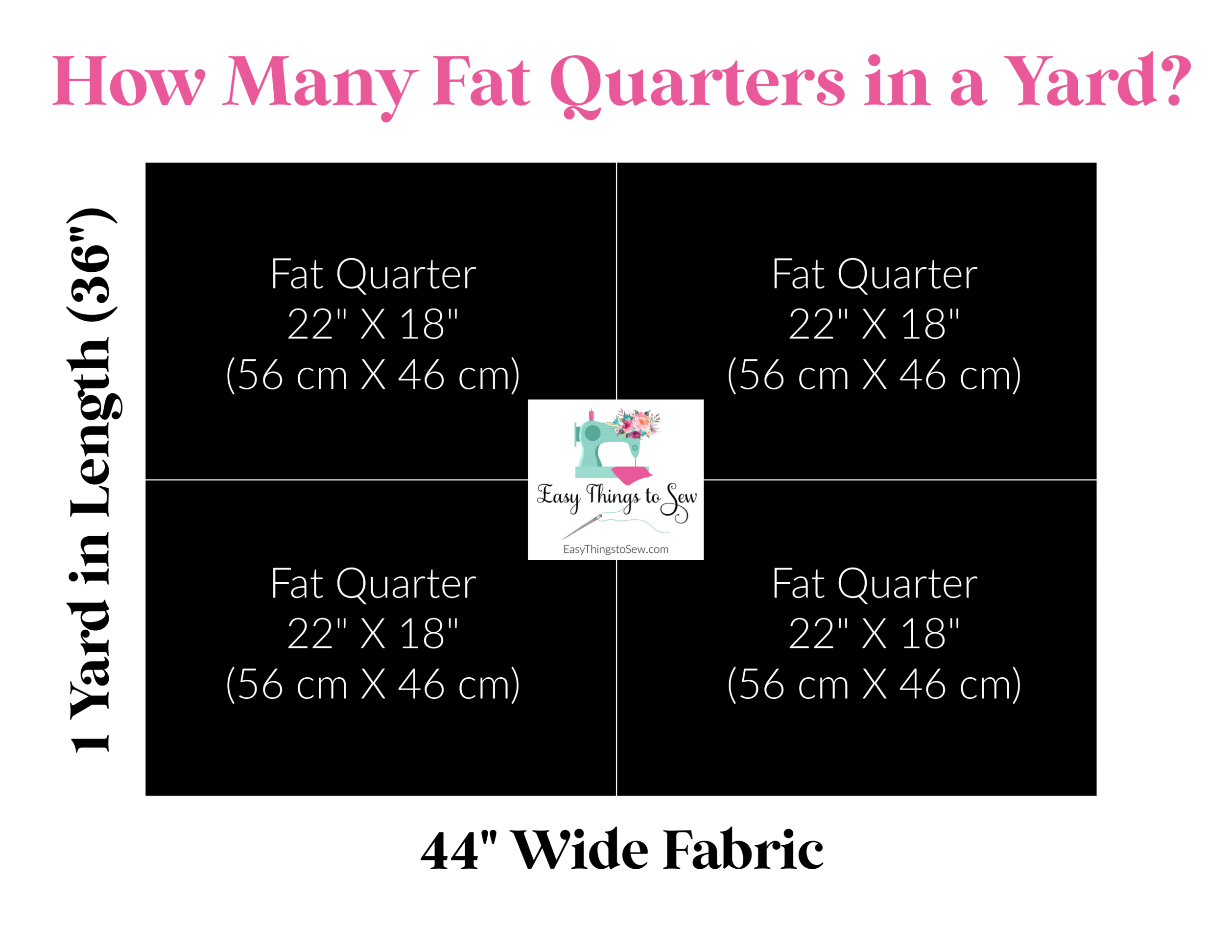
Image Source: easythingstosew.com
Deconstructing the Fat Quarter
Before we dive into the numbers, let’s clarify what a fat quarter actually is. A fat quarter is a pre-cut piece of fabric measuring approximately 18 inches by 22 inches. This is different from a traditional “long” or “skinny” quarter, which is cut the full width of the bolt (usually 40-44 inches) by 9 inches. The “fat” in fat quarter refers to its wider width compared to a traditional quarter yard cut. This larger size makes fat quarters incredibly versatile for quilting, as they yield more usable fabric for smaller pieces.
The Advantages of Fat Quarters
- Versatility: The 18″ x 22″ size is perfect for a wide range of quilting blocks, appliqué, and small sewing projects.
- Variety: Fat quarters are often sold in fabric bundles, allowing quilters to easily mix and match coordinating prints without buying large quantities of each. This is fantastic for building a diverse stash of quilting fabric.
- Reduced Waste: For many smaller projects, a fat quarter provides sufficient fabric, minimizing the need for extensive cutting and potential waste from larger yardage.
- Beginner Friendly: They are less intimidating than managing large bolts of fabric for newcomers to quilting.
The Math Behind the Yard
A standard yard of fabric, when unrolled from the bolt, is typically 36 inches long. The width of quilting fabric can vary, but it’s commonly around 40 to 44 inches. This width is crucial for our fat quarter calculations.
Calculating Fat Quarters from Yardage
To understand how many fat quarters you get from a yard, we need to visualize the fabric being cut.
- Start with one yard: Imagine a piece of fabric that is 36 inches long and 40 inches wide (using the narrower common width for simplicity).
- First cut: You will cut the yardage in half lengthwise. This gives you two pieces, each measuring 36 inches long by 20 inches wide.
- Second cut: Now, you take one of those 36″ x 20″ pieces and cut it in half widthwise. This yields two pieces, each 18 inches long by 20 inches wide.
- Repeat: You repeat the second cut with the other 36″ x 20″ piece.
This process results in four pieces of fabric, each measuring 18 inches by 20 inches. This is the standard fat quarter size!
Visualizing the Cuts
Let’s visualize this with a simple diagram:
Original Yard of Fabric (36″ x 40″)
————————————————– | | | | 36 inches | | ————————————————– 40 inches
After the first lengthwise cut (dividing the 40″ width by 2):
You get two pieces, each 36 inches long and 20 inches wide.
Piece 1 (36″ x 20″):
——————– | | | | | | 36 inches | | | | ——————– 20 inches
Piece 2 (36″ x 20″):
——————– | | | | | | 36 inches | | | | ——————– 20 inches
After cutting each 36″ piece in half widthwise (dividing the 36″ length by 2):
This is where the “fat” quarter is created. You are cutting across the 36-inch length, resulting in the 18-inch dimension.
From Piece 1:
——————– ——————– | | | | | 18″ | | 18″ | | | | | 20 inches ——————– ——————– 20 inches 20 inches
From Piece 2:
——————– ——————– | | | | | 18″ | | 18″ | | | | | 20 inches ——————– ——————– 20 inches 20 inches
This gives you your four fat quarters, each measuring 18 inches by 20 inches.
What About the Fabric Width?
The standard width of quilting fabric is often 40-44 inches. Our calculation used 40 inches. If you have fabric that is 44 inches wide:
- You still cut the yardage (36 inches) in half lengthwise, creating two pieces of 36 inches by 22 inches.
- Then, you cut each of those 36-inch pieces in half across the length. This yields four pieces, each measuring 18 inches by 22 inches.
So, regardless of whether your fabric width is 40 or 44 inches, you will always get four fat quarters from one yard of fabric. The only difference is the exact dimension of the “width” side of your fat quarter (20 inches vs. 22 inches).
Fabric Yardage: Beyond the Fat Quarter
Understanding fat quarters is just one piece of the quilting math puzzle. Knowing how to calculate and work with fabric yardage is essential for any sewing project.
Common Fabric Units of Measurement
- Yard: 36 inches (length). Width varies, commonly 40-44 inches for quilting fabric.
- Fat Quarter: Approximately 18 inches x 20-22 inches.
- Fat Eighth: Approximately 18 inches x 10-11 inches.
- Wider Backing Fabric: Often comes in widths of 90 inches, 108 inches, or even wider, specifically for quilt backs.
Why Knowing Your Yardage Matters
- Project Planning: Accurately calculating how much fabric you need for a quilt pattern or a specific project ensures you don’t run out or buy too much.
- Cost-Effectiveness: Buying fabric by the yard is generally more cost-effective than purchasing many individual fat quarters, especially for larger projects that require a lot of fabric.
- Stash Management: Keeping track of your fabric yardage helps you manage your craft supplies efficiently and know what you have on hand.
Converting Measurements
It’s helpful to be comfortable with converting between inches and yards:
- 1 yard = 36 inches
- 1/2 yard = 18 inches
- 1/4 yard = 9 inches
When buying fabric, you often buy by the yard or by the half-yard, quarter-yard, etc. Always check the listed width of the fabric when making your purchase.
Fabric Cutting for Quilting Projects
The precision of your fabric cutting directly impacts the success of your patchwork. Whether you’re cutting fat quarters or larger yardage, accuracy is key.
Essential Tools for Fabric Cutting
- Rotary Cutter: A sharp rotary cutter is essential for clean, straight cuts.
- Self-Healing Cutting Mat: Protects your work surface and helps guide your rotary cutter.
- Quilting Rulers: Clear acrylic rulers with marked measurements are vital for accurate cutting. Look for rulers with multiple angles and grid lines.
- Fabric Shears: Good quality scissors are still useful for trimming threads or cutting smaller pieces.
Tips for Accurate Fabric Cutting
- Pre-wash Your Fabric: This removes sizing and pre-shrinks the fabric, preventing your finished quilt from puckering or running colors.
- Square Up Your Fabric: Before cutting, trim off any selvages (the finished edges of the fabric) and ensure your fabric edges are straight and perpendicular.
- Lay Fabric Flat: Always lay your fabric as flat and smooth as possible on the cutting mat. Avoid stretching or distorting the fabric.
- Align Ruler Carefully: Place your quilting ruler precisely along the desired cutting line, ensuring the fabric is still and not bunched up underneath.
- Use a Sharp Blade: A dull rotary cutter blade can snag the fabric and lead to inaccurate cuts. Change your blade regularly.
- Cut with Confidence: Apply steady pressure with your rotary cutter, following the edge of the ruler.
Cutting Larger Yardage
When you need more than just fat quarters, you’ll be cutting larger pieces from yardage. For example, if a quilt pattern calls for 6-inch squares, and you have a yard of fabric:
- You have a piece that is 36 inches long and (let’s say) 40 inches wide.
- You can cut six 6-inch strips along the 36-inch length.
- Each of those 6-inch strips is 40 inches long.
- From each 6″ x 40″ strip, you can cut six 6-inch squares (since 40 inches divided by 6 inches is 6 with a remainder).
This yields a total of 36 (6×6 inch) squares from one yard of fabric, with some leftover strips.
Fabric Bundles and Fat Quarter Collections
The popularity of fat quarters has led to the creation of beautiful fabric bundles and collections. These curated sets of fat quarters often feature coordinating prints from a specific designer or fabric line, making it incredibly easy to select fabrics for your projects.
Benefits of Fabric Bundles
- Color Coordination: Bundles are designed with complementary colors and patterns, taking the guesswork out of fabric selection.
- Project-Specific: Many bundles are themed for specific quilt patterns or seasons, simplifying the process of gathering your craft supplies.
- Discovery: They are a great way to explore new fabric designers and styles.
- Giftable: Fabric bundles make excellent gifts for quilters.
When purchasing bundles, always check the number of fat quarters included and their approximate dimensions to ensure they meet your project needs.
Working with Fat Quarters in Quilt Patterns
Many quilt patterns are specifically designed with fat quarters in mind. This makes them an excellent starting point for beginners and experienced quilters alike.
Common Uses for Fat Quarters in Quilting
- Patchwork Blocks: Cutting squares, rectangles, triangles, and other shapes from fat quarters is a staple of patchwork quilting.
- Sashing and Borders: Longer, narrower pieces can be efficiently cut from fat quarters for sashing or border elements, though larger yardage might be more economical for extensive borders.
- Appliqué: The ample size of a fat quarter provides enough fabric for many appliqué designs.
- Small Projects: Cosmetic bags, pouches, mug rugs, and other small sewing projects are perfectly suited for fat quarter usage.
Planning Your Fabric Cuts
When following a quilt pattern that uses fat quarters, you’ll need to pay close attention to the cutting instructions. The pattern will tell you how many of each shape you need to cut from your fat quarters.
Example Cutting Instructions for a Simple Quilt Block:
Let’s say a pattern calls for:
- 16 squares of 4.5″ x 4.5″
- 8 rectangles of 2.5″ x 4.5″
From a single fat quarter (18″ x 20″):
- You can easily cut several 4.5″ squares. Along the 18-inch side, you can get four 4.5″ squares (18 / 4.5 = 4). Along the 20-inch side, you can get four 4.5″ squares (20 / 4.5 = 4 with a remainder). So, you can cut 16 squares from one fat quarter.
- For the rectangles, you can cut strips of 2.5″ width from the remaining fabric. You could cut a 2.5″ strip along the 20″ side, yielding pieces that are 2.5″ x 20″. From these, you can cut four 2.5″ x 4.5″ rectangles (since 20 / 4.5 = 4 with a remainder).
This demonstrates how efficient fat quarters can be for specific block components. You might need 2-3 fat quarters to complete the fabric requirements for a simple quilt block, depending on the sizes needed.
Maximizing Your Fabric Yield
Smart cutting is a hallmark of a skilled quilter. Knowing how to get the most out of your fabric is essential.
Strategic Cutting Techniques
- Cutting Across the Width: Always consider cutting your pieces across the wider dimension of your fabric (either 20″ or 22″ from a fat quarter) when possible. This often allows you to cut more pieces from a single cut.
- Using Scraps: Don’t discard small offcuts too quickly. They can often be pieced together or used for very small appliqué pieces or binding.
- Planning for Binding: Binding is typically cut in long strips. While you can piece together strips from your fat quarters, it’s usually more efficient to use yardage for binding, especially for larger quilts.
When Yardage is Better than Fat Quarters
While fat quarters are wonderful for variety and small projects, there are times when buying fabric by the yard is more practical:
- Large Quilt Backing: Standard fabric widths are usually insufficient for quilt backs. You’ll need wider backing fabric or to piece together multiple lengths of standard fabric.
- Large Border Strips: If your quilt has wide borders, cutting them from yardage will be more efficient and require less piecing than trying to make them from fat quarters.
- Continuous Background Fabrics: For quilts that rely heavily on a consistent background fabric, purchasing it by the yard ensures uniformity and avoids potential slight variations between fat quarters.
- Larger Projects: If you’re making garments, curtains, or larger home décor items, you’ll almost always need to buy fabric by the yard.
Frequently Asked Questions (FAQ)
Q1: How many fat quarters are in a yard of fabric?
A1: You can cut four fat quarters from one yard of fabric.
Q2: What are the dimensions of a fat quarter?
A2: A fat quarter typically measures 18 inches by 20-22 inches, depending on the original width of the fabric bolt.
Q3: Is it cheaper to buy fabric by the yard or as fat quarters?
A3: Generally, buying fabric by the yard is more economical if you need larger quantities of a specific fabric. Fat quarters are convenient for variety and smaller projects but can be more expensive per yard when purchased individually.
Q4: Can I cut a fat quarter from a traditional 1/4 yard cut?
A4: No. A traditional 1/4 yard cut is usually 9 inches by the full width of the bolt (40-44 inches). A fat quarter is cut differently to provide a wider piece (18 inches x 20-22 inches).
Q5: What is the best way to store fat quarters?
A5: Fold them neatly and store them on shelves or in bins. You can organize them by color, designer, or fabric collection to make finding what you need easier.
Q6: How much fabric do I need for a quilt?
A6: The amount of fabric you need depends entirely on the quilt pattern, its size, and the dimensions of the blocks used. Always refer to the specific fabric requirements listed in your chosen quilt pattern.
Q7: Are fat quarters good for quilting fabric stash building?
A7: Yes, fat quarters are excellent for building a diverse quilting fabric stash. They allow you to collect many different prints and colors without committing to large yardage.
By mastering these basic quilting math concepts, you’ll be well on your way to creating beautiful patchwork quilts and other sewing projects with confidence and efficiency. Happy sewing!