
Image Source: hydroscapespa.com
How To Keep Yard From Flooding: Easy Solutions
Can my yard flood? Yes, your yard can flood if it doesn’t drain properly. What causes yard flooding? Yard flooding is typically caused by heavy rainfall, poor soil drainage, compacted soil, improper yard grading, and inadequate rainwater management systems. Fortunately, there are many easy solutions to prevent your yard from flooding and keep it dry and healthy.
Flooding in your yard can be a frustrating and damaging problem. Standing water not only looks unsightly but can also harm your lawn, kill plants, and even lead to structural issues in your home. Fortunately, you don’t need to be a landscape architect to implement effective drainage solutions. This comprehensive guide will walk you through simple yet powerful strategies to keep your yard from flooding.
Why Your Yard Might Be Flooding
Before diving into solutions, it’s helpful to grasp why flooding occurs. Several factors contribute to a waterlogged yard:
- Heavy Rainfall: Sometimes, even the best-drained yards can be overwhelmed by extreme weather events.
- Soil Compaction: Over time, soil can become compacted due to foot traffic, heavy machinery, or even just natural settling. This makes it harder for water to soak in.
- Impermeable Surfaces: Driveways, patios, and compacted paths act as barriers, preventing water from naturally reaching the soil.
- Low Spots: Depressions and dips in your yard collect water, creating puddles that can linger for days.
- Poor Yard Grading: If your yard slopes towards your house or a specific area, water will naturally flow and accumulate there.
- Inadequate Rainwater Management: A lack of gutters, downspouts, or proper discharge points for roof water can send large volumes of water directly into your yard.
- High Water Table: In some areas, the groundwater level is naturally close to the surface, making it difficult for the soil to absorb more water.
Simple Strategies to Prevent Yard Waterlogging
The key to preventing yard waterlogging lies in redirecting water away from problem areas and helping it soak into the ground more effectively. Here are some easy solutions to consider:
1. Improving Lawn Drainage: Aeration is Key
One of the most straightforward ways to improve lawn drainage is through aeration. This process involves creating small holes in your soil, allowing air, water, and nutrients to penetrate deeper.
- How to Aerate: You can use a manual aerator (like a spike aerator or a core aerator) or rent a powered aerator.
- Spike Aerator: Pushes spikes into the ground, compacting the soil slightly but opening up channels. Best for lighter compaction.
- Core Aerator: Pulls out small plugs of soil, leaving holes and loose soil behind. This is more effective for significant compaction.
- When to Aerate: The best times for aeration are during your lawn’s active growing seasons. For cool-season grasses (like fescue and bluegrass), this is typically spring and fall. For warm-season grasses (like Bermuda and Zoysia), late spring or early summer is ideal.
- After Aerating: You can overseed your lawn after aerating, which helps establish new grass and further improves soil structure over time. Applying a light layer of compost also aids drainage and soil health.
2. Yard Grading: Directing Water Flow
Yard grading refers to the process of shaping the land to direct water flow. Proper grading ensures that water moves away from your house and other vulnerable areas.
- The “Fall Away” Rule: The general rule of thumb is to have a gentle slope of at least 1 inch of drop for every 4 feet of horizontal distance away from your home’s foundation. This encourages surface water to move away.
- Identifying Low Spots: Walk your yard after a rainstorm to identify where water collects. These are your priority areas for grading adjustments.
- DIY Grading: For minor grading issues, you can use a shovel and rake to build up soil in low spots and create gentle slopes.
- Adding Soil: Purchase good quality topsoil. Gently spread it in the low areas, ensuring you don’t smother existing grass roots.
- Compacting: Lightly compact the added soil to prevent settling.
- Professional Grading: For more significant or complex grading problems, hiring a landscape professional or a grading contractor is advisable. They have the expertise and equipment to create precise slopes and ensure long-term water management.
3. Water Runoff Control: Managing Surface Water
Water runoff control is all about managing how water flows across your property’s surface. When rain hits your yard, especially after a storm, it needs a clear path to go.
- Clear Gutters and Downspouts: Ensure your gutters are clean and free of debris. Clogged gutters can overflow, sending water directly down your foundation walls.
- Downspout Extensions: Make sure your downspouts extend at least 5-10 feet away from your house. This prevents roof water from pooling around your foundation. You can use flexible or rigid extensions, or even bury them if needed (with proper outlet considerations).
- Downspout Splash Blocks: Place splash blocks under downspouts to help disperse the water and prevent erosion where the water first hits the ground.
- Building Berms or Swales: Consider creating small mounds (berms) or shallow ditches (swales) to guide water flow along specific paths, away from structures or areas prone to flooding.
4. Rain Garden Creation: Natural Water Absorption
A rain garden creation is an aesthetically pleasing and highly effective rainwater management technique. It’s a shallow depression planted with native, water-tolerant plants that soak up rainwater and filter it naturally.
- Benefits: Rain gardens reduce runoff, replenish groundwater, filter pollutants, and provide habitat for wildlife.
- Location: Choose a spot that naturally collects water or is located downhill from impervious surfaces like driveways and patios. Avoid placing them directly against your foundation.
- Construction:
- Dig the Basin: Excavate a shallow depression, typically 4-8 inches deep, with gentle slopes.
- Soil Amendment: Mix native soil with compost and sand to improve drainage.
- Plant Selection: Choose native plants adapted to wet conditions. Examples include:
- Coneflowers
- Sedges
- Ferns
- Irises
- Joe-Pye Weed
- Mulching: Apply a layer of mulch to retain moisture and suppress weeds.
- Maintenance: Rain gardens require minimal maintenance once established, primarily weeding and occasional mulching.
5. French Drain System: Underground Drainage Solution
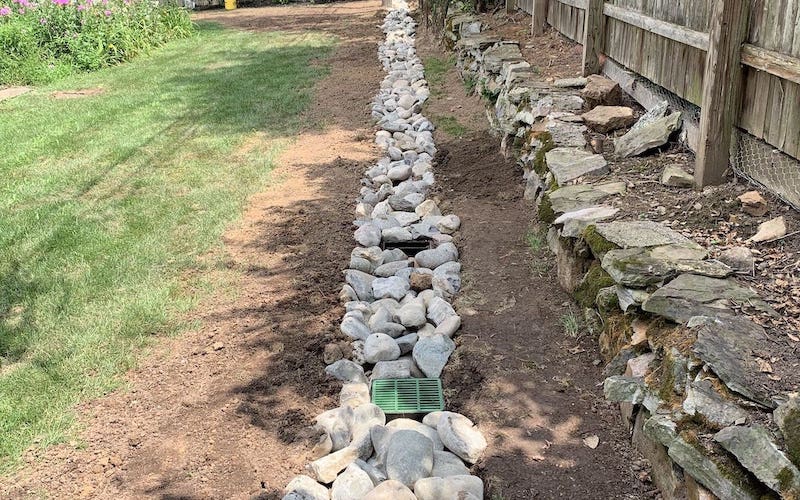
A French drain system is an excellent underground solution for diverting excess water from saturated areas of your yard. It’s a trench filled with gravel and a perforated pipe that collects and redirects groundwater.
- How it Works: Water enters the gravel trench, flows into the perforated pipe, and is carried away to a lower point, a dry well, a storm drain, or a downhill slope.
- Installation Steps:
- Plan the Path: Identify the problem area and the desired outlet for the water.
- Dig the Trench: Dig a trench that is about 12-24 inches deep and 12-24 inches wide, with a slight slope (1-2% grade) towards the outlet.
- Add Gravel: Lay a layer of coarse gravel at the bottom of the trench (about 4-6 inches).
- Install Pipe: Place a perforated drainage pipe (often wrapped in filter fabric) on top of the gravel, ensuring the perforations face down.
- Fill with Gravel: Cover the pipe with more gravel, filling the trench to about 1-2 inches from the surface.
- Add Filter Fabric: Wrap the gravel and pipe with filter fabric to prevent soil from clogging the system.
- Top Layer: Cover the fabric with topsoil and reseed or plant grass.
- When to Use: French drains are effective for areas with persistent standing water, soggy spots, or near foundations experiencing hydrostatic pressure.
6. Sump Pump Installation: For Basements and Low-Lying Areas
While more commonly associated with basements, a sump pump installation can also be an effective solution for particularly low-lying yards or areas with a high water table that consistently collect large amounts of water.
- How it Works: A sump pit is dug in the lowest part of the yard. When the water level in the pit rises to a certain point, the sump pump activates, pumping the water away through an outlet pipe.
- Considerations:
- Power Source: Sump pumps require electricity. Consider a battery backup to ensure it functions during power outages.
- Outlet: Ensure the discharge pipe carries water far enough away from your house and neighboring properties, and is directed to a place where it won’t cause new problems.
- Professional Installation: Due to the electrical and excavation aspects, professional installation is often recommended.
7. Landscape Water Diversion: Guiding Water Thoughtfully
Landscape water diversion involves using the natural landscape features and strategically placed hardscaping to guide water flow.
- Terracing: On slopes, creating terraces can slow down water flow, allowing more time for absorption and preventing erosion.
- Rain Chains: Instead of downspouts, rain chains can be used to guide water from gutters down into a rain barrel or directly into a designated drainage area. They offer a more visual appeal and can help spread the water out.
- Permeable Paving: For patios and walkways, consider using permeable pavers or gravel instead of solid concrete or asphalt. This allows water to soak through directly into the ground.
- Strategic Planting: Planting trees and shrubs with deep root systems can help improve soil structure and water absorption over time. Choose plants appropriate for your soil type and climate.
8. Soil Amendment: Enhancing Absorption
Improving your soil’s ability to absorb water is crucial. Over time, soil can become compacted and lose its structure, hindering drainage.
- Composting: Regularly adding compost to your soil is one of the best ways to improve its structure and drainage. Compost introduces organic matter that creates pore spaces, allowing water to infiltrate more easily.
- Adding Sand (with Caution): In clay soils, adding coarse sand can help improve drainage. However, adding too much sand to heavy clay soil without sufficient organic matter can create a concrete-like mixture. It’s usually best to amend heavily with compost.
- Avoid Compaction: Minimize foot traffic on your lawn, especially when it’s wet. Use designated paths for walking. Avoid mowing wet grass.
9. Raised Beds and Mounds: Lifting Your Gardens
If specific garden areas are prone to flooding, consider building raised garden beds or creating slightly mounded planting areas.
- Raised Beds: These are constructed containers filled with good quality soil, elevating your plants above the waterlogged ground.
- Mounds: Simply mounding up soil in your garden beds creates a higher planting elevation, allowing excess water to drain away from the plant roots.
Putting It All Together: A Holistic Approach
The most effective way to combat yard flooding is often to combine several of these strategies. For instance:
- Combine Grading with Rain Gardens: Grade your yard to direct water towards a strategically placed rain garden.
- Use French Drains with Downspout Extensions: Have downspout extensions lead water towards the inlet of a French drain system for more robust water management.
- Aeration and Composting for Soil Health: Regularly aerate and amend your soil with compost to consistently improve its ability to absorb water.
Table 1: Common Yard Flooding Problems and Solutions
| Problem Area | Common Causes | Recommended Solutions |
|---|---|---|
| Standing Water Puddles | Low spots, soil compaction, poor grading | Yard grading, aeration, soil amendment, rain garden, French drain |
| Waterlogged Lawn | Soil compaction, heavy clay soil, inadequate aeration | Aeration, soil amendment (compost), overseeding with drainage-improving grasses |
| Foundation Dampness | Improper grading, downspouts discharging too close to the house, poor drainage | Yard grading away from foundation, extend downspouts, install French drain near foundation, check for basement sealing issues |
| Erosion | Fast-moving surface water, lack of ground cover | Water runoff control (berms, swales), strategic planting, mulching, terracing on slopes |
| Saturated Garden Beds | Poorly draining soil, location in a low spot | Raised garden beds, soil amendment, mounding plants, rain garden |
Frequently Asked Questions (FAQ)
Q1: How much slope do I need for my yard to drain properly?
A1: A general guideline is a slope of at least 1 inch of drop for every 4 feet of horizontal distance away from your home’s foundation. This ensures surface water moves away from structures.
Q2: Can I fix yard flooding myself?
A2: Many common yard flooding issues can be addressed with DIY solutions like aeration, clearing gutters, extending downspouts, and minor grading. For more complex problems, professional help might be necessary.
Q3: When is the best time to install a French drain?
A3: The best time to install a French drain is typically during dry weather to allow for easier excavation and installation. However, the project can be completed at any time of year, though very wet conditions can make the work more challenging.
Q4: Will a rain garden really make a difference?
A4: Yes, rain gardens are highly effective at managing stormwater. They absorb significant amounts of rainwater, reduce runoff volume, filter pollutants, and help recharge groundwater, making a noticeable difference in yard drainage.
Q5: Is a sump pump suitable for my yard if I don’t have a basement?
A5: Yes, a sump pump system can be installed in a yard without a basement. A sump pit can be dug in the lowest area of the yard to collect and pump away excess water.
By implementing these easy and effective solutions, you can transform your waterlogged yard into a dry, healthy, and beautiful outdoor space. Remember that consistent maintenance and a thoughtful approach to rainwater management will pay off in the long run, protecting your property and enhancing your enjoyment of your yard.