
Does the thought of tackling a sprawling lawn leave you dreading your weekend? Many homeowners face the same challenge. Keeping a large yard neat can feel like a never-ending chore, and pushing a standard mower across acres of grass is exhausting work. You need a machine that works with you, not against you.
Choosing the right riding lawnmower seems complicated. Should you pick a zero-turn or a garden tractor? What about horsepower and deck size? These decisions directly impact how fast and how well you finish the job. Getting it wrong means wasted money and more time sweating under the sun.
This guide cuts through the confusion. We will break down the key features, explain what those confusing terms mean, and show you exactly how to match the perfect mower to your property size and budget. Prepare to trade that back-breaking push for smooth, satisfying rides.
Top Riding Lawnmower Recommendations
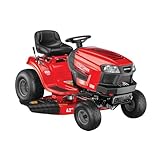
- 42" GAS RIDE ON MOWER: Provides the optimized power and performance that reduces the amount of time and labor needed to maintain the beauty of your yard
- HIGH-PERFORMANCE ENGINE: Powered by a reliable 17.5 HP* Briggs and Stratton single-cylinder engine that delivers easy starting and superior results every time
- DURABLE AND EFFICIENT: Rugged 42" stamped steel deck cuts up to 2 acres of grass, and the optional mulching kit allows you to cut and finish like a professional
- EASY MANEUVERABILITY: 18" turning radius and heavy-duty 15x6/20x8 wheels make it easy to navigate around obstacles and get the job done efficiently
- RIDE IN COMFORT: 7-speed manual transmission allows you to choose the perfect speed for the task, and the contoured low-back seat provides a comfortable ride every time

- 36" GAS RIDE ON MOWER: Provides the optimized power and performance that reduces the amount of time and labor needed to maintain the beauty of your yard
- HIGH-PERFORMANCE ENGINE: Powered by a reliable 11.5 HP* Briggs and Stratton single-cylinder engine that delivers easy starting and superior results every time
- DURABLE AND EFFICIENT: Rugged 36" reinforced stamped steel deck cuts up to 2 acres of grass and fits through most gates and tight spaces, and the included mulching kit allows you to cut and finish like a professional
- EASY MANEUVERABILITY: 18" turning radius and heavy-duty Turf Saver wheels make it easy to navigate around obstacles and get the job done efficiently
- RIDE IN COMFORT: 7-speed manual transmission allows you to choose the perfect speed for the task, and the contoured low-back seat provides a comfortable ride every time

- 22HP Briggs EXi series engine
- 46-Inch Stamped, 2-Blade Mower Deck
- K46 Tuff Torq Hydrostatic Transmission
- 3 gallon fuel capacity
- Ground speed: 5 mph forward/2 mph reverse

- 22HP Briggs EXI engine
- 46-Inch stamped 2-Blade mower deck
- Hydro-Gear EZT transmission
- 3.5 gallon fuel capacity
- Ground speed: 6.5 mph forward
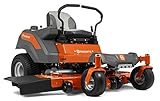
- 23 HP Kawasaki engine provides reliable startups and a max speed of 6.5 MPH
- Hydrostatic, no-maintenance transmission is worry free, empowering the mower to take on a variety of cutting conditions
- ClearCut deck offers a best-in-class 54 in. cut and better bagging thanks to its deep deck design, superior air flow and high-performance blades
- Clippings can be discharged, mulched or bagged (mulching kit and bagger attachment sold separately)
- Comfortable seat, ergonomic control panel and anti-slip foot area make mowing intuitive and safe
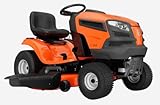
- 22HP Briggs PXi series engine
- 46-Inch Stamped, 2-Blade Mower Deck
- Tuff Torq Hydrostatic Transmission
- 2.5 gallon fuel capacity
- Ground speed: 5 mph forward/2 mph reverse

- 19hp Briggs and Stratton 540cc OHV Engine
- Featuring a 42” fabricated deck constructed of strong 11-gauge steel
- Foot-operated deck lift, high-back seat with seat springs, sealed ball bearings

- 24HP/724cc Briggs & Stratton Endurance Series V-Twin OHV Engine
- 54-Inch, 3-blade stamped mower deck
- Hydro-Gear EZT transmission
- 3.5 gallon fuel capacity
- Ground speed: 6.5 mph forward/3.5 mph reverse
The Ultimate Buying Guide for Your Next Riding Lawnmower
Buying a riding lawnmower feels like a big step. These machines make cutting large lawns much easier and faster. This guide helps you pick the right one for your yard.
Key Features to Look For
When you shop, check these important parts first. They decide how well the mower works for you.
Engine Power and Type
- Horsepower (HP): More HP means the mower handles thick grass better. For small yards (under an acre), 12-18 HP is usually fine. For big, rough yards, look for 20 HP or more.
- Engine Placement: Most modern mowers have the engine in the front. This placement helps with cooling and easier maintenance.
Cutting Deck Size
The deck is the part that holds the blades. A bigger deck cuts more grass in one pass.
- Small Yards (Under 1 Acre): A 30- to 42-inch deck works well.
- Medium Yards (1 to 2 Acres): Aim for a 42- to 50-inch deck.
- Large Yards (Over 2 Acres): Look for decks 50 inches or larger.
Transmission Type
This controls how the mower moves.
- Automatic (CVT or Hydrostatic): These are the easiest to use. You just use a pedal or lever to go forward or backward. They are best for yards with many trees or curves.
- Manual (Gear Drive): You must stop and shift gears like a car. They cost less but take more effort.
Important Materials and Build Quality
The materials used tell you how long the mower will last. Stronger parts mean fewer repairs.
Deck Construction
The deck should be made of strong steel. Thicker steel resists dents and rust better. Some high-quality decks are “fabricated,” meaning they are welded together from thick pieces of steel. This is better than “stamped” decks, which are pressed into shape from thinner metal.
Frame and Chassis
The frame holds everything together. Look for a heavy-duty, welded steel frame. Lighter frames might save money, but they flex and wear out faster, especially on bumpy ground.
Tires
Good tires help you steer and keep the mower stable. Look for pneumatic (air-filled) tires. Ensure the tread grips well, especially if your yard has slopes.
Factors That Improve or Reduce Quality
Small details make a big difference in your mowing experience.
Comfort and Ease of Use (Quality Boosters)
- Seat Comfort: A high-back, padded seat saves your back on long mowing days.
- Turn Radius: A smaller turning circle lets you clean up edges without making too many three-point turns.
- Ease of Starting: Electric start is standard now. Make sure the controls are easy to reach.
Maintenance and Durability (Quality Reducers)
- Deck Washout Ports: These small holes let you attach a hose to clean grass clippings from underneath. This prevents buildup that causes rust.
- Engine Brand: Trusted brands like Kohler or Kawasaki often mean better parts and longer engine life. Cheaper, unknown engines might fail sooner.
User Experience and Use Cases
Think about how you will actually use the machine.
Flat, Open Yards
If your lawn is mostly flat, you can focus on deck size and speed. A hydrostatic transmission will make mowing fast and easy.
Hilly or Sloped Yards
Safety is key here. You need good traction. Look for mowers with a lower center of gravity. Avoid very steep hills entirely, as riding mowers can tip over.
Obstacle-Filled Yards
If you have many flower beds, fences, or trees, prioritize maneuverability. A tighter turn radius is more important than a massive cutting deck.
10 Frequently Asked Questions (FAQ) About Riding Lawnmowers
Q: How often should I change the oil in my riding mower?
A: Most manufacturers suggest changing the oil after every 50 hours of use, or at least once per mowing season. Check your owner’s manual for the exact recommendation.
Q: Can I use a riding mower on wet grass?
A: It is best to avoid mowing wet grass. Wet grass clumps up, clogs the deck, and does not cut evenly. Also, wet grass makes the mower tires slip.
Q: What is the difference between a lawn tractor and a zero-turn mower?
A: A lawn tractor steers with a steering wheel, like a car. A zero-turn mower (ZTR) steers using two lap bars, allowing it to turn almost in place. ZTRs are faster and better for yards with many obstacles.
Q: How much should I expect to pay for a reliable new riding mower?
A: Entry-level lawn tractors usually start around $1,800 to $2,500. Mid-range models with better features and engines often cost $3,000 to $4,500. Zero-turn mowers start higher, usually around $3,500 and up.
Q: How do I store my riding mower for the winter?
A: Always store your mower in a dry place. Add a fuel stabilizer to the gas tank and run the engine for a few minutes to circulate the treated fuel. Disconnect the spark plug wire for safety.
Q: What tire pressure should I use?
A: Tire pressure is very important for a good cut. Most mowers require between 10 and 15 PSI (pounds per square inch). Always check the sidewall of the tire or the owner’s manual for the correct pressure.
Q: Are electric riding mowers a good choice?
A: Electric mowers are quiet and require very little maintenance. They are excellent for smaller to medium yards (under 1.5 acres). However, their battery life limits how long you can mow compared to gas models.
Q: What is “deck leveling”?
A: Deck leveling means making sure the cutting deck is set perfectly flat side-to-side and slightly lower in the front than the back. Leveling ensures an even, clean cut across your entire lawn.
Q: Do I need to wear safety gear when operating a riding mower?
A: Yes. Always wear sturdy, closed-toe shoes. Safety glasses are essential to protect your eyes from flying debris. If the mower is loud, wear ear protection.
Q: What is “mulching” vs. “side discharge”?
A: Side discharge blows the clippings out the side of the deck. Mulching chops the grass clippings into very fine pieces which then fall back onto the lawn, acting as a natural fertilizer.