
The average cost of a cubic yard of concrete in Ohio can range from $125 to $200, with factors like mix design, delivery distance, and project type influencing the final price. This price typically includes the concrete itself but may not cover labor for pouring, finishing, or site preparation.
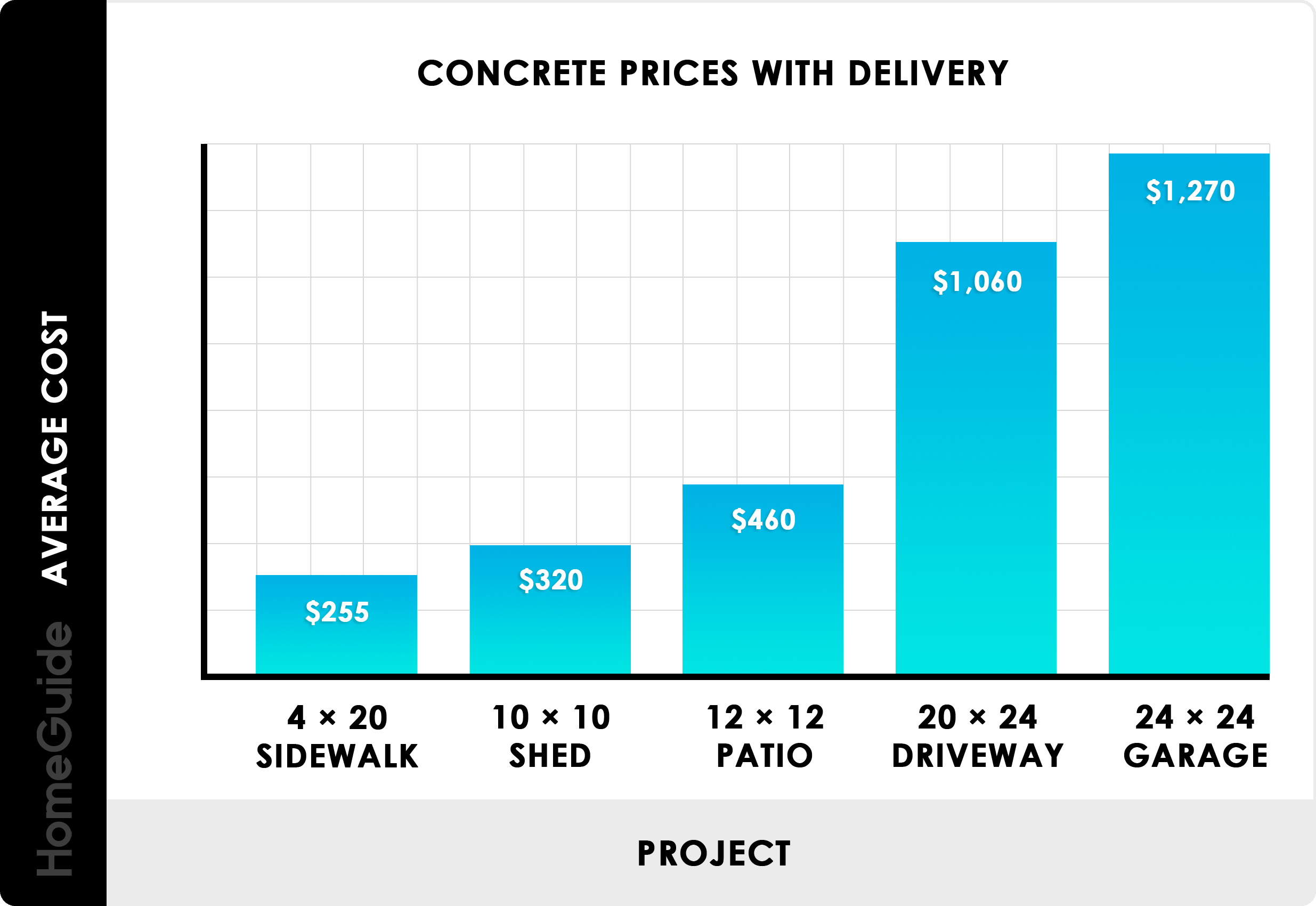
Image Source: static.homeguide.com
Factors Shaping Ohio Concrete Pricing
When you’re planning a project in Ohio, from a simple patio to a large commercial foundation, you’ll quickly realize that Ohio concrete pricing isn’t a one-size-fits-all figure. Several key elements contribute to the final concrete yard cost Ohio homeowners and builders pay. Understanding these factors is crucial for accurate budgeting and avoiding surprises.
The Concrete Mix: The Heart of the Price
At its core, concrete is a mixture of cement, water, and aggregates (sand and gravel). However, the specific proportions and additives used in the mix have a significant impact on the cost per cubic yard concrete Ohio producers charge.
Strength and Durability (PSI)
Concrete strength is measured in pounds per square inch (PSI). Common residential applications might use 3000 PSI concrete, while commercial projects or areas needing extra durability might require 4000 PSI or even higher.
- 3000 PSI: Generally the most affordable.
- 4000 PSI: Offers increased strength and durability, leading to a slightly higher price.
- Higher PSI mixes: May include specialized additives or cement types, further increasing the cost.
Additives and Special Mixes
Beyond basic strength, various additives can enhance concrete’s properties, each with its own cost implication:
- Air Entrainers: Crucial for Ohio’s freeze-thaw cycles, these microscopic air bubbles improve resistance to cracking caused by ice expansion.
- Water Reducers: Allow for less water in the mix while maintaining workability, leading to stronger concrete.
- Fibers (Steel or Synthetic): Add tensile strength and crack control, often used in industrial floors or driveways.
- Color Admixtures: For decorative concrete, adding pigments will increase the price per yard.
- Accelerators/Retarders: Control the setting time, useful in extreme weather conditions.
These specialized mixes, while beneficial for specific applications, will naturally elevate the Ohio concrete prices 2024.
Delivery: Getting the Concrete to You
The concrete delivery cost Ohio suppliers factor into their pricing is another significant component.
Distance and Logistics
The further the concrete needs to be transported from the plant to your job site, the higher the delivery cost. This is due to fuel, driver wages, and truck wear and tear. Many suppliers have a base delivery fee and then charge per mile beyond a certain radius.
Batch Size and Truck Type
- Standard Concrete Trucks: Most common, carrying around 9-11 cubic yards.
- Smaller or Specialized Trucks: May be necessary for tight access jobs, and these can sometimes incur higher delivery fees.
If you require less than a full truckload, you might still be charged for a full load, as the truck needs to make the trip regardless of the exact volume delivered.
Project Type and Quantity
The nature of your project and the total volume of concrete needed also play a role.
Residential vs. Commercial Concrete Ohio Cost
- Residential Concrete Ohio Pricing: Often involves smaller quantities, though projects like extensive patio extensions, large driveways, or pool decks can still require substantial amounts. Pricing might be more sensitive to smaller order surcharges.
- Commercial Concrete Ohio Cost: Typically involves larger volumes, which can sometimes lead to a slightly lower price per yard due to economies of scale. However, commercial projects often demand higher strength mixes and more rigorous quality control, potentially offsetting volume discounts.
Volume Discounts
Ordering larger quantities of concrete can sometimes lead to a discount per cubic yard. If your project requires 10 or more yards, it’s worth asking suppliers if volume pricing is available.
Labor: The Pouring and Finishing
While this article focuses on the material cost, it’s essential to remember that the concrete pouring cost Ohio contractors charge is a separate but equally important consideration for your overall project budget. This labor cost covers:
- Site preparation (excavation, grading, formwork)
- Placing and leveling the concrete
- Finishing techniques (broom finish, troweled, stamped, etc.)
- Curing the concrete
For DIY concrete Ohio price considerations, you’ll need to factor in tool rental or purchase, and your own time and effort.
Deciphering the Average Concrete Cost Ohio
To give you a clearer picture of what to expect, let’s break down the potential costs. The average concrete cost Ohio projects fall into a general range, but remember these are estimates.
General Cost Ranges for Concrete per Cubic Yard in Ohio
| Concrete Strength (PSI) | Typical Price Per Cubic Yard (Material Only) | Notes |
|---|---|---|
| 3000 PSI | $125 – $150 | Suitable for basic patios, walkways, footings. |
| 3500 PSI | $130 – $160 | Good all-around strength for many uses. |
| 4000 PSI | $140 – $175 | Ideal for driveways, garage floors, heavier loads. |
| 4500 PSI | $150 – $190 | Enhanced durability for demanding applications. |
| 5000+ PSI | $160 – $200+ | High-strength applications, structural elements. |
- Note: These prices are for the concrete material only and do not include delivery, labor, or any specialized additives.
Factors Influencing the Average Concrete Cost Ohio
- Location within Ohio: Prices can vary slightly between major metropolitan areas (like Cleveland, Columbus, Cincinnati) and more rural regions due to local competition and delivery distances.
- Supplier: Different ready-mix concrete plants will have their own pricing structures.
- Time of Year: While less common for concrete than for some other materials, extreme weather can sometimes affect production and availability, potentially influencing pricing.
- Market Demand: High demand periods can sometimes lead to slight price increases.
Fathoming the Cost Per Cubic Yard Concrete Ohio: Detailed Breakdown
Let’s delve deeper into what makes up that price tag for a concrete yard cost Ohio customers will see.
Material Costs: The Foundation of the Price
The primary cost drivers are the raw materials themselves:
- Portland Cement: The binder that holds everything together. Its price is influenced by manufacturing costs, energy prices, and demand.
- Aggregates (Sand and Gravel): Sourced locally in Ohio, their availability and transportation costs are key. Washed and screened aggregates are necessary for quality concrete.
- Water: While seemingly abundant, the quality and treatment of water used in concrete mixes can play a role.
Additives and Their Cost Impact
As discussed earlier, additives significantly influence the final Ohio concrete prices 2024.
- Air Entrainers: Typically add $5-$15 per cubic yard.
- Water Reducers: Can add $5-$10 per cubic yard.
- Fibers: Steel fibers might add $20-$50+ per cubic yard, while synthetic fibers are generally less expensive, perhaps $10-$20 per cubic yard.
- Color: Can add $15-$50+ per cubic yard depending on the pigment and desired depth of color.
Delivery Costs: The Logistics Premium
The concrete delivery cost Ohio projects incur can be broken down further:
- Base Delivery Fee: Most suppliers charge a flat fee for delivery to a general zone, often covering the first 5-10 miles. This might range from $50 to $150.
- Per-Mile Surcharge: Beyond the base delivery area, expect an additional charge, often $3-$10 per mile.
- Minimum Load Fees: If you order less than a full truckload (e.g., 5 yards when a truck holds 9), you might be charged a minimum load fee, effectively making the price per yard higher.
- Delayed Discharge Fees: If the driver has to wait an excessive amount of time at the job site, they may charge a demurrage fee.
Project-Specific Considerations for Ohio Concrete Pricing
Residential Concrete Ohio Pricing Examples
- Small Patio (e.g., 10’x10′ = ~1.25 yards): You’d likely order 2 yards to ensure enough material and account for waste. Cost: 2 yards * $140/yard (average for 3500 PSI) + delivery = $280 + $100 (estimated delivery) = $380. This doesn’t include labor.
- Standard Driveway (e.g., 20’x40’x4″ = ~6.7 yards): You’d order 7 yards. Cost: 7 yards * $150/yard (average for 4000 PSI) + delivery = $1050 + $120 (estimated delivery) = $1170. Again, this is material and delivery only.
Commercial Concrete Ohio Cost Examples
- Warehouse Floor (e.g., 10,000 sq ft x 6″ thick = ~185 cubic yards): At $140/yard for 4000 PSI + $80/yard delivery (assuming a bulk rate and closer proximity), the material and delivery cost could be approximately 185 yards * ($140 + $80) = $41,400.
DIY Concrete Ohio Price Factors
If you’re considering a DIY concrete Ohio price calculation, you need to account for:
- Material and Delivery: The costs outlined above.
- Formwork: Lumber, stakes, and hardware to create the mold for the concrete.
- Reinforcement: Rebar or wire mesh for added strength.
- Tools: Shovels, rakes, screeds, floats, trowels, concrete mixer (if not ordering ready-mix), wheelbarrows. Rental or purchase costs.
- Curing Compounds/Sealers: To protect the finished concrete.
- Your Time and Labor: This is often the most significant “cost” in DIY projects.
For smaller DIY projects where you might mix your own concrete (not recommended for anything larger than a small post hole or repair), bagged concrete is available. A 60lb bag typically yields about 0.45 cubic feet, and a cubic yard is 27 cubic feet. So, you’d need roughly 60 bags per cubic yard. Bagged concrete can cost $5-$10 per bag, making it significantly more expensive per yard than ready-mix for larger quantities ($270 – $540+ per yard). This highlights why ready-mix concrete delivery is usually the most cost-effective option for anything beyond minor repairs.
Ohio Concrete Prices 2024: What to Expect
The Ohio concrete prices 2024 landscape is largely influenced by the ongoing trends in construction material costs, fuel prices, and labor availability. Generally, expect prices to remain stable or see modest increases compared to previous years.
Key Trends Affecting Pricing
- Inflation: General inflation continues to impact the cost of raw materials, energy, and transportation.
- Supply Chain Stability: While generally improved, any disruptions can affect raw material costs.
- Demand for Construction: A strong construction market, both residential and commercial, can put upward pressure on prices.
- Fuel Costs: Directly impacts delivery charges.
Getting the Best Concrete Yard Cost Ohio
- Shop Around: Obtain quotes from multiple ready-mix suppliers in your area.
- Be Specific: Clearly state the PSI, any required additives, and your estimated volume.
- Know Your Volume: Use online calculators or consult with your contractor to accurately estimate the amount of concrete needed. Ordering too little leads to costly delays and potentially multiple small orders with separate delivery fees. Ordering too much means wasted material.
- Plan Your Delivery: Ensure the site is accessible for the truck and that you have enough help on-site to manage the pour.
Comprehending Concrete Pouring Cost Ohio
The concrete pouring cost Ohio contractors charge is separate from the material cost. This fee covers the expertise and labor involved in transforming liquid concrete into a durable, finished surface.
Elements of Concrete Pouring Labor
- Site Preparation: This includes ensuring the area is properly graded, compacted, and that any necessary underground utilities are located and protected.
- Formwork Construction: Building the wooden or metal forms that will contain the wet concrete and give it its final shape.
- Reinforcement Placement: Installing rebar or wire mesh as specified by engineering plans for structural integrity.
- Concrete Placement: Directing the concrete from the truck chute or using a pump to fill the forms.
- Screeding and Leveling: Using screeds (long, straight edges) to strike off excess concrete and bring the surface to the correct elevation.
- Floating: Using floats to embed aggregates and smooth the surface after screeding.
- Finishing: This is where the final surface texture is achieved. Options include:
- Broom Finish: Creates a non-slip texture by dragging a broom across the surface. This is common for sidewalks and driveways.
- Troweled Finish: Results in a very smooth, hard surface, often used for garage floors or commercial interiors.
- Stamped Concrete: Involves pressing decorative patterns into the surface while it’s still wet. This is a premium finish with higher labor costs.
- Edging and Grooving: Creating clean edges and control joints to prevent random cracking.
- Curing: The process of maintaining moisture and temperature in the concrete after placement to ensure proper strength development. This can involve water curing, covering with plastic, or applying curing compounds.
Typical Labor Rates for Concrete Work in Ohio
Labor costs can vary significantly based on the complexity of the job, the type of finish required, and the contractor’s experience and overhead.
- Basic Flatwork (Patios, Sidewalks): You might expect labor costs to range from $5 to $15 per square foot, in addition to the material cost.
- Driveways: Given the larger area and potential need for thicker pours and stronger mixes, labor might be $6 to $18 per square foot.
- Decorative Concrete (Stamping, Coloring): These specialized finishes can add $10 to $30+ per square foot to the labor cost due to the extra time, skill, and materials involved.
- Foundations and Structural Work: These are typically priced on a project-by-project basis, often involving engineering specifications and more complex formwork and reinforcement, leading to higher per-square-foot labor costs.
Example: A 10’x10′ patio (100 sq ft) requiring 1.25 yards of concrete at $140/yard plus $100 delivery ($240 total material/delivery). If labor is $10/sq ft, the pouring cost would be $1000. Total project cost: $1240.
FAQ: Your Concrete Questions Answered
Q1: What is the cheapest way to get concrete in Ohio?
A1: For most projects, purchasing ready-mix concrete from a local supplier is the most cost-effective method. Mixing your own concrete from bags is significantly more expensive for anything more than a very small repair.
Q2: Can I order less than a full yard of concrete in Ohio?
A2: While some suppliers may offer less than a full yard for specialized orders, you will likely be charged a premium or the equivalent of a full yard. It’s usually best to round up to the nearest full yard for budgeting.
Q3: Who is the best concrete supplier in Ohio?
A3: “Best” is subjective and depends on your specific needs, location, and budget. It’s recommended to get quotes from several local ready-mix concrete producers and check online reviews or ask for recommendations from local contractors.
Q4: How much does it cost to pour a concrete driveway in Ohio?
A4: A typical 20’x40′ concrete driveway (approx. 7 yards) could cost between $1100 and $2500+ for materials and delivery, depending on the concrete mix and supplier. Labor costs for pouring and finishing would be additional, potentially adding another $1000 to $3000+ depending on the complexity and finishes.
Q5: Is stamped concrete more expensive than regular concrete in Ohio?
A5: Yes, stamped concrete is significantly more expensive than standard broom-finished or troweled concrete. The added cost comes from the specialized labor, tools, and decorative stamps or molds used to create the pattern. Expect to pay an additional $10-$30+ per square foot for the decorative finish.
Q6: What are the typical daily rates for a concrete finisher in Ohio?
A6: Daily rates for experienced concrete finishers can vary widely, but generally range from $250 to $500 per day, depending on their skill level, the project, and the region within Ohio.
Q7: How do I calculate how much concrete I need?
A7: To calculate the volume in cubic yards, multiply the length (in feet) by the width (in feet) by the depth (in feet). Then, divide the total cubic feet by 27 (since there are 27 cubic feet in a cubic yard). Always add 5-10% extra for waste and settling.
Q8: Does Ohio have specific regulations for concrete installation?
A8: While there aren’t specific state-wide “regulations” for residential concrete installation in the same way there are for building codes, local municipalities may have ordinances regarding permits, setbacks, or sidewalk construction. For commercial projects, adherence to engineering specifications and building codes is mandatory. Using reputable contractors who are familiar with local practices is advisable.
By carefully considering these factors and gathering quotes, you can accurately estimate the Ohio concrete pricing for your next project and make informed decisions about your budget.