
One cubic yard of mulch typically covers about 100 square feet at a depth of 3 inches. Knowing how much mulch you need is crucial for any landscaping project, whether you’re refreshing garden beds or starting a new design. This guide will help you accurately estimate your mulch needs, ensuring you buy the right amount and avoid waste.
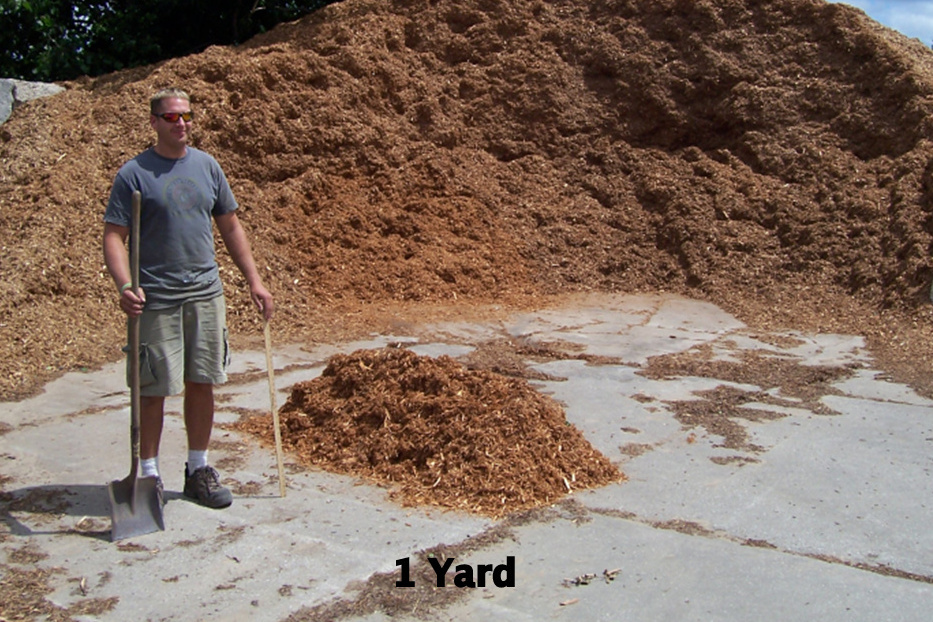
Image Source: klsupplies.com
Figuring Out Your Mulch Needs
When planning your landscaping project, you’ll want to know how much mulch to buy. This involves a few simple calculations to determine the volume of mulch required. We’ll break down the process step-by-step, making it easy to get the right quantity of mulch for your garden beds or any other area.
Measuring Your Area
The first step in estimating mulch needed is to accurately measure the area you plan to cover. You’ll need a tape measure for this.
Measuring Rectangular or Square Areas
For simple shapes like squares or rectangles, measure the length and width of the area in feet.
- Example: If you have a garden bed that is 10 feet long and 5 feet wide, your calculation is straightforward.
Measuring Irregularly Shaped Areas
For more complex shapes, you can break them down into smaller, manageable geometric shapes (rectangles, squares, circles, triangles). Measure each section and then add their areas together.
- Circles: Measure the diameter (the distance across the center). To find the radius, divide the diameter by 2. The formula for the area of a circle is π (pi) multiplied by the radius squared (Area = πr²). Use 3.14 for π.
- Example: A circular garden bed with a 6-foot diameter has a 3-foot radius. Area = 3.14 * (3 feet)² = 3.14 * 9 square feet = 28.26 square feet.
- Triangles: Measure the base and height of the triangle. The formula is (base × height) / 2.
- Example: A triangular planting area with a 4-foot base and a 3-foot height has an area of (4 feet × 3 feet) / 2 = 12 / 2 = 6 square feet.
Calculating the Area in Square Feet
Once you have your measurements, calculate the total area in square feet.
- For Rectangles/Squares: Area = Length × Width
- Example: 10 feet (length) × 5 feet (width) = 50 square feet.
- For Combined Shapes: Add the areas of all the individual shapes you measured.
This process helps you determine the total square footage you need to cover. This is a key part of mulch calculation for garden beds and other landscaping features.
Determining the Desired Mulch Depth
The next important factor is how deep you want to apply the mulch. The recommended depth for most mulches is 2 to 3 inches.
- Why Depth Matters: Applying mulch too thinly won’t provide adequate weed suppression or moisture retention. Applying it too thickly can suffocate plant roots and encourage fungal growth. A consistent depth is key.
Standard Mulch Depths
- General Landscaping: 2-3 inches is standard.
- New Plantings: 3-4 inches around the base of new trees and shrubs, keeping it a few inches away from the trunk.
- Around Established Perennials: 2-3 inches.
- Vegetable Gardens: 2-3 inches, which also helps retain soil moisture and reduce watering needs.
You can use a mulch depth calculator online or do a simple calculation yourself.
Converting Depth to Feet for Calculation
Since you’ll be working with square feet for your area and cubic yards for mulch, you need to convert your desired depth from inches to feet.
- Conversion: There are 12 inches in 1 foot.
- Calculation: Divide the desired depth in inches by 12.
- Example for 3 inches: 3 inches / 12 inches/foot = 0.25 feet.
- Example for 2 inches: 2 inches / 12 inches/foot = 0.167 feet (approximately).
This conversion is essential for accurate mulch quantity for landscaping calculations.
Calculating Mulch Volume: Cubic Feet to Cubic Yards
Now that you have the area in square feet and the depth in feet, you can calculate the total volume of mulch needed in cubic feet.
The Basic Volume Formula
Volume = Area × Depth
- Using our example:
- Area = 50 square feet
- Desired Depth = 3 inches = 0.25 feet
- Volume (cubic feet) = 50 sq ft × 0.25 ft = 12.5 cubic feet.
This calculation shows you the total volume needed in cubic feet.
Converting Cubic Feet to Cubic Yards
Mulch is typically sold in cubic yards. There are 27 cubic feet in 1 cubic yard (3 feet × 3 feet × 3 feet = 27 cubic feet). To convert your cubic feet measurement to cubic yards, divide by 27.
-
Conversion Formula: Cubic Yards = Cubic Feet / 27
-
Using our example:
- Volume (cubic feet) = 12.5 cubic feet
- Cubic Yards = 12.5 cubic feet / 27 cubic feet/cubic yard ≈ 0.46 cubic yards.
This tells you that for a 50 sq ft area needing 3 inches of mulch, you’d need about half a cubic yard. This is where a mulch coverage calculator can simplify the process.
Visualizing Mulch Coverage: One Cubic Yard
To help visualize, let’s consider what one cubic yard of mulch covers at different depths. This answers the question, “how much does one yard of mulch cover?” or more specifically, “how much does one yard of mulch cover?“
Mulch Coverage Per Cubic Yard Table
| Desired Depth (inches) | Desired Depth (feet) | Coverage Area (sq ft) per Cubic Yard |
|---|---|---|
| 1 | 0.083 (1/12) | 324 sq ft |
| 2 | 0.167 (2/12) | 162 sq ft |
| 3 | 0.25 (3/12) | 108 sq ft |
| 4 | 0.333 (4/12) | 81 sq ft |
| 5 | 0.417 (5/12) | 65 sq ft |
| 6 | 0.5 (6/12) | 54 sq ft |
This table provides a quick reference for mulch coverage per cubic yard. You can see that the deeper you go, the less area one cubic yard will cover.
Factors Influencing Mulch Coverage
While the calculations provide a good estimate, several real-world factors can affect how much mulch you actually need.
Type of Mulch
Different types of mulch have varying densities and particle sizes, which can slightly influence their spreadability and how they settle.
- Shredded Bark vs. Wood Chips: Shredded bark might compress more than chunky wood chips, meaning you might need slightly more of it to achieve the same visual depth.
- Fine vs. Coarse Mulch: Finer mulches can sometimes settle more compactly.
Existing Conditions
The current state of your garden beds can also play a role.
- Bare Soil vs. Existing Mulch: If you’re applying mulch over bare soil, your calculations will be more straightforward. If you’re topping up an existing layer, you’ll need to account for how much is already there. You might only need to add enough to reach your desired depth in the low spots.
- Compacted Soil: Heavily compacted soil might require a slightly thicker layer to achieve the desired effect and benefits.
Application Technique
How you spread the mulch matters.
- Even Spreading: Aim for an even layer across the entire area. This ensures consistent benefits and a tidy appearance.
- Over-application: It’s generally better to have a little extra mulch than not enough. You can always use any leftover mulch in other areas or save it for future touch-ups.
Using a Mulch Calculator
For those who prefer a digital approach, a mulch coverage calculator is an invaluable tool. These online calculators simplify the mulch calculation for garden beds by allowing you to input your dimensions and desired depth, and they’ll instantly tell you how many cubic yards you need.
How to Use a Mulch Calculator
- Measure Your Area: Get your length and width measurements in feet.
- Input Dimensions: Enter the length and width into the calculator. If you have multiple shapes, you might need to calculate the area for each and add them together before inputting the total square footage.
- Specify Depth: Enter your desired mulch depth in inches.
- Get Your Result: The calculator will provide the estimated number of cubic yards required.
These tools are excellent for quickly checking your mulch quantity for landscaping needs.
How Far Does a Bag of Mulch Go?
Mulch is also commonly sold in bags, often measuring 2 cubic feet or 3 cubic feet. Knowing how far does a bag of mulch go helps compare pricing and purchasing options.
Bag Size to Cubic Yard Conversion
-
1 Cubic Yard = 27 Cubic Feet
-
How many 2 cu ft bags per yard? 27 cubic feet / 2 cubic feet/bag = 13.5 bags.
- How many 3 cu ft bags per yard? 27 cubic feet / 3 cubic feet/bag = 9 bags.
So, if you need 3 cubic yards of mulch:
* You’d need approximately 13.5 bags/yard * 3 yards = 40.5 bags of 2 cu ft size.
* You’d need approximately 9 bags/yard * 3 yards = 27 bags of 3 cu ft size.
This is a useful way to gauge your needs when buying smaller quantities. It also helps in estimating mulch needed for smaller projects or when you’re unsure about buying in bulk.
Practical Tips for Mulch Application
Applying mulch is not just about quantity; it’s also about doing it effectively.
Preparing the Area
Before spreading new mulch, it’s wise to prepare the ground.
- Weeding: Remove any existing weeds. Applying mulch over weeds will only trap them and make them harder to remove later.
- Edging: Define the edges of your beds with edging material if desired. This creates a clean border and helps contain the mulch.
- Loosening Soil: Gently loosen the top few inches of soil. This improves water penetration and allows mulch to settle in nicely.
Applying the Mulch
Spread the mulch evenly to your desired depth.
- Use a Rake: A garden rake is excellent for spreading mulch smoothly and evenly.
- Avoid Piling: Don’t pile mulch directly against the base of trees or shrubs. Leave a small gap (a few inches) around the trunk or stems to prevent rot and pest issues. This is crucial for plant health.
Top-Up Strategy
If you’re just refreshing an existing layer of mulch, you don’t necessarily need to remove the old mulch (unless it’s degraded significantly or you’re changing types).
- Assess Depth: Use a trowel or stick to gauge the current depth.
- Add as Needed: Add new mulch only where the layer is thin to reach your desired depth. This is an efficient way of estimating mulch needed for maintenance.
When to Order Bulk vs. Bags
Deciding whether to buy mulch in bulk (from a landscape supplier) or in bags (from a garden center) depends on the scale of your project and your convenience.
Bulk Mulch
- Pros: Usually more cost-effective per cubic yard for larger projects. Delivery to your home is often available.
- Cons: Requires more space to store temporarily if not spread immediately. You’ll likely need a wheelbarrow and shovel for application.
- Best for: Larger landscaping jobs, covering significant areas, or when you need multiple cubic yards.
Bagged Mulch
- Pros: Convenient for smaller projects. Easy to transport and store. Pre-measured quantities simplify calculations.
- Cons: Can be more expensive per cubic yard than bulk. Requires multiple trips to the store and carrying bags.
- Best for: Small garden beds, containers, or spot-treatments.
Frequently Asked Questions (FAQ)
Here are some common questions people have about mulch coverage:
Q1: How many cubic yards of mulch do I need for a 10×20 foot garden bed with 3 inches of mulch?
A1: First, calculate the area: 10 ft * 20 ft = 200 sq ft.
Convert depth: 3 inches / 12 inches/ft = 0.25 ft.
Calculate volume in cubic feet: 200 sq ft * 0.25 ft = 50 cubic feet.
Convert to cubic yards: 50 cubic feet / 27 cubic feet/cubic yard ≈ 1.85 cubic yards.
You should round up to 2 cubic yards to be safe.
Q2: Can I use a shallower layer of mulch to save money?
A2: While you can use a shallower layer, it’s generally not recommended. A depth of at least 2 inches is needed for effective weed suppression and moisture retention. Going too thin will mean you’ll have to replenish it more often and it won’t provide the full benefits.
Q3: What is the best mulch depth for protecting plants in winter?
A3: For winter protection, a slightly thicker layer, around 3-4 inches, can be beneficial, especially in colder climates. This helps insulate the soil and protect plant roots from extreme temperature fluctuations. However, always keep the mulch a few inches away from the plant’s stem or trunk.
Q4: How do I measure for mulch if my garden beds have curved edges?
A4: For curved edges, you can approximate the area by breaking the curve into segments or by using an online landscaping area calculator that allows for irregular shapes. Alternatively, you can measure the longest straight sections and estimate the curved parts. It’s often better to slightly overestimate when dealing with irregular shapes.
Q5: How do I calculate the mulch quantity for landscaping a whole yard?
A5: This involves breaking down your yard into different zones (e.g., flower beds, around trees, pathways). Measure each zone, calculate its area in square feet, and determine the desired mulch depth for each. Then, sum up the required cubic yards for all zones. Using a mulch calculation for garden beds approach for each section will help.
Q6: Will rain affect how much mulch I need?
A6: Rain primarily affects how mulch settles. Heavy rain can compact some mulches more than others. However, it doesn’t change the initial volume needed to cover your area to the desired depth. You might need to fluff or top up mulch after very heavy rain or wind, but the initial purchase quantity is based on surface area and depth.
Q7: Is there a formula for determining mulch volume directly from square footage and depth in inches?
A7: Yes, you can use this simplified formula:
Cubic Yards Needed = (Area in sq ft × Depth in inches) / 324
The number 324 comes from (27 cubic feet/cubic yard * 12 inches/foot). This factor accounts for the conversion from inches to feet and cubic feet to cubic yards.
By following these guidelines and using the tools available, you can confidently tackle your next landscaping project, ensuring you have just the right amount of mulch to enhance your garden’s beauty and health.