
So, you’re wondering, “How much does a yard of rock salt weigh?” The answer isn’t a single, fixed number, but a range, typically between 2,000 and 2,700 pounds. This variation depends mainly on the density of rock salt and how tightly it’s packed. Knowing this helps you figure out bulk salt orders, trailer capacity, and how much salt you’ll need for de-icing.
Estimating rock salt weight is crucial for many tasks, from ordering supplies for your business to planning your snow removal operations. This article will provide a comprehensive guide to understanding the weight of rock salt per cubic yard, breaking down the factors that influence it, and giving you practical tools for estimation. We’ll delve into the science behind it and offer real-world context, so you can confidently answer “how many pounds in a yard of salt” for your specific needs.
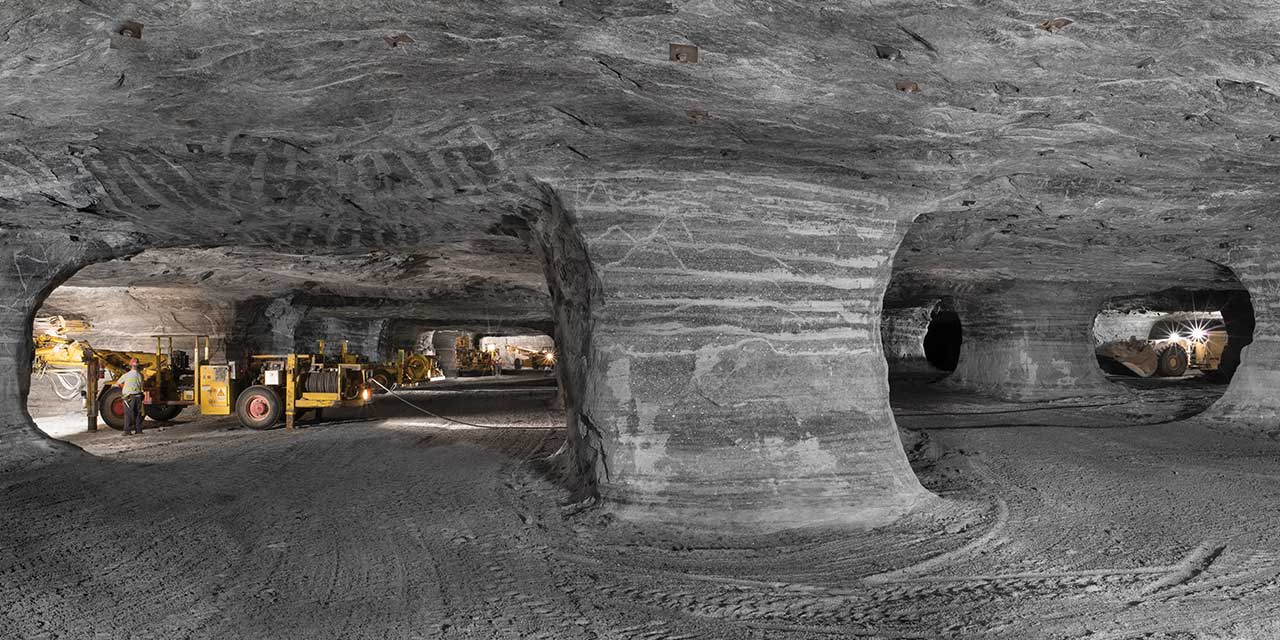
Image Source: www.cargill.com
Deciphering the Weight: Factors Influencing Rock Salt’s Volume-to-Weight Ratio
The weight of a cubic yard of rock salt isn’t as simple as picking up a single rock. It’s about the total mass of salt contained within that three-dimensional space. Several key factors contribute to the variability in rock salt weight per cubic yard:
- Type of Rock Salt: While we generally refer to “rock salt,” there are variations. Different geological formations can yield salt with slightly different compositions and crystal structures. This can subtly impact its inherent density.
- Grain Size and Shape: Rock salt isn’t a perfectly uniform substance. It’s composed of many small crystals. The size and shape of these individual salt grains play a significant role. Smaller, more angular grains tend to pack together more tightly than larger, rounded ones. This tighter packing means more salt mass fits into the same volume.
- Moisture Content: Salt, especially when exposed to the air, can absorb moisture. Water is heavier than salt. Therefore, salt with higher moisture content will weigh more per cubic yard than dry salt.
- Compaction: How the salt is handled and transported affects its density. Salt loaded loosely into a truck or storage bin will have more air pockets than salt that has been compacted. The more compacted the salt, the higher its density and, consequently, its weight per cubic yard.
These factors collectively influence the density of rock salt, which is the core property we need to consider when calculating its weight.
The Science of Density: How it Relates to Rock Salt Weight
Density is defined as mass per unit volume. For rock salt, this means how much the salt material itself weighs in a specific amount of space. However, when we talk about a “yard of rock salt,” we’re usually referring to the bulk density, which includes the salt grains and the air spaces between them.
The theoretical density of pure sodium chloride (NaCl), the primary component of rock salt, is around 2.16 grams per cubic centimeter (g/cm³). This translates to approximately 135 pounds per cubic foot (lb/ft³).
However, in practical terms, we’re dealing with bulk, unrefined rock salt, not pure, compressed crystals. This bulk density is significantly lower due to the air trapped between the salt particles.
Calculating the Weight: A Practical Approach
To determine the rock salt weight per cubic yard, we need to use commonly accepted bulk density figures. These figures are derived from industry averages and practical experience.
Standard Conversions and Estimates
A cubic yard is a volume measurement. To convert volume to weight, we need density. Here’s a breakdown of how we arrive at the typical weight range:
- Cubic Feet to Cubic Yards: There are 27 cubic feet in 1 cubic yard (3 ft x 3 ft x 3 ft = 27 ft³).
- Bulk Density Estimates: For typical, reasonably compacted rock salt, a common bulk density used in the industry is around 100 to 135 pounds per cubic foot.
Now, let’s do the math:
- Lower End Estimate: 100 lb/ft³ * 27 ft³/yard³ = 2,700 pounds per cubic yard.
- Higher End Estimate: 135 lb/ft³ * 27 ft³/yard³ = 3,645 pounds per cubic yard.
Wait, this seems higher than the initial range provided. This is where the nuances of “bulk” density and compaction become critical. The initial range of 2,000 to 2,700 pounds per cubic yard often accounts for less dense packing or perhaps a slightly different average bulk density that reflects real-world delivery conditions.
Let’s re-examine the common industry figures for rock salt density chart applications and practical estimations:
A more commonly cited range for the weight of bulk salt per cubic yard, taking into account typical packing and particle size variations, is between 2,000 and 2,700 pounds. This range is often what suppliers use and what you’ll find in most cubic yard of rock salt calculator tools.
This discrepancy highlights the importance of asking your supplier for their specific density figures if precise calculation is critical. However, for most general purposes, the 2,000-2,700 lb/yard³ is a reliable estimate.
Comparing Rock Salt to Other Bulk Materials
To put the weight of rock salt into perspective, let’s compare it to other common bulk materials. This helps in understanding estimating rock salt weight in relation to what you might already know.
Here’s a table showing approximate weights per cubic yard for common materials:
| Material | Typical Weight Per Cubic Yard (lbs) | Notes |
|---|---|---|
| Rock Salt | 2,000 – 2,700 | Varies with moisture and compaction. |
| Gravel (Crushed) | 2,500 – 3,000 | Denser than salt due to higher density of aggregate material. |
| Sand (Dry) | 2,500 – 3,000 | Dry sand is quite dense. Moisture increases weight significantly. |
| Topsoil | 2,000 – 2,800 | Can vary greatly with organic content and moisture. |
| Crushed Stone | 2,600 – 2,800 | Similar to gravel, generally denser than salt. |
| Wood Chips | 500 – 1,000 | Much lighter due to lower density and high air content. |
As you can see from the gravel weight per yard and sand weight per cubic yard comparisons, rock salt falls within a similar, but often slightly lighter, density range than many common aggregates. This means a cubic yard of rock salt is roughly equivalent in weight to a cubic yard of topsoil or slightly less than gravel.
How Many Pounds in a Yard of Salt: Practical Application
When you’re ordering bulk salt, you’re likely dealing with cubic yards. Knowing how many pounds in a yard of salt is essential for:
- Trailer Capacity: If you’re buying salt in a dump trailer, you need to know the weight to avoid exceeding your trailer’s Gross Vehicle Weight Rating (GVWR). A common 6-foot wide by 10-foot long by 2-foot high dump insert (which is approximately 1.5 cubic yards) could hold anywhere from 3,000 to 4,050 pounds of salt.
- Storage Planning: Understanding the weight helps in planning the structural support needed for salt storage facilities.
- Cost Calculation: Suppliers often price bulk salt by the ton (2,000 pounds), so converting cubic yards to tons is a common practice. For example, if rock salt weighs 2,500 pounds per cubic yard, then 1 yard is 1.25 tons.
Using a Cubic Yard of Rock Salt Calculator
While you can do the math manually, a cubic yard of rock salt calculator can be a quick and easy tool. These online calculators typically ask for the material type (rock salt) and the volume in cubic yards. They then use pre-programmed average density figures to provide an estimated weight.
When using a calculator, remember that it’s providing an estimate. If you need precise figures for specific applications, always consult with your salt supplier. They may have specific bulk rock salt volume to weight data based on the salt they source and process.
The Rock Salt Density Chart: What to Look For
While a single, universally accepted rock salt density chart isn’t readily available in the same way one might find for common construction materials, the concept remains important. Suppliers or salt producers might have internal charts or specifications that detail the density of their particular product.
When looking for this information, consider asking your supplier for:
- Bulk Density (lbs/ft³ or kg/m³): This is the most relevant figure for cubic yard calculations.
- Specific Gravity: While less direct for bulk calculations, the specific gravity of pure NaCl is 2.165.
- Moisture Content Specifications: Knowing the expected moisture level helps in adjusting weight estimates.
Estimating Rock Salt Weight for Your Needs
Let’s walk through a common scenario for estimating rock salt weight:
Scenario: You need to order enough rock salt to fill a standard 5-yard dump truck bed.
Steps:
- Determine the Volume: You need 5 cubic yards of rock salt.
- Select an Average Density: Let’s use a mid-range figure of 2,350 pounds per cubic yard.
- Calculate Total Weight: 5 cubic yards * 2,350 pounds/cubic yard = 11,750 pounds.
- Convert to Tons: 11,750 pounds / 2,000 pounds/ton = 5.875 tons.
This calculation suggests that 5 cubic yards of rock salt would weigh approximately 5.875 tons. This information is critical for ensuring your truck is not overloaded and for placing your order accurately.
Factors Affecting Rock Salt Density in Practice
Let’s dive deeper into the factors that influence the actual density of rock salt you receive:
Particle Size Distribution
The mix of large and small salt crystals affects how they pack. A material with a wide range of particle sizes, including fine dust and larger chunks, can often pack more densely than a material composed of uniformly sized particles. This is because the smaller particles can fill the voids between the larger ones.
Moisture Content
As mentioned, moisture is a significant factor. Water has a density of about 62.4 pounds per cubic foot (8.34 lb/gallon). Even a small percentage of moisture can noticeably increase the weight of a cubic yard of salt. For example:
- If dry rock salt has a bulk density of 100 lb/ft³, then a cubic yard (27 ft³) weighs 2,700 lbs.
- If that same salt gains 1% moisture by weight, the total weight becomes 2,700 lbs * 1.01 = 2,727 lbs.
- If it gains 5% moisture, the weight becomes 2,700 lbs * 1.05 = 2,835 lbs.
This might seem small, but when dealing with large volumes, these differences add up.
Handling and Compaction
How the salt is loaded and transported matters.
- Loose Loading: When salt is dumped from a conveyor or loader into a truck or bin, it tends to be loosely packed, with more air pockets.
- Vibration/Compaction: If the salt is subjected to vibration (e.g., during transit) or intentionally compacted, the air pockets are reduced, increasing the bulk density and thus the weight per cubic yard.
The “Yard” Itself: Defining the Measurement
It’s worth noting that a “yard” of rock salt typically refers to a loose cubic yard. This is the volume the salt occupies when it’s piled up freely, not when it’s been compressed into a solid block. This is why the bulk density is always lower than the theoretical density of solid salt.
Common Misconceptions and Clarifications
- Is all rock salt the same weight? No. As we’ve discussed, variations in particle size, moisture, and compaction mean that the weight can differ.
- Can I just use the pure salt density? No, that would be inaccurate for bulk material. You need to use the bulk density.
- Are there specific standards for rock salt weight? While there aren’t universal legal standards for the weight of a cubic yard of rock salt that apply everywhere, industry best practices and supplier specifications provide reliable figures.
Conclusion: Fathoming the Weight of Your Rock Salt
To sum up, when asking, “How much does a yard of rock salt weigh?”, the definitive answer is a range, generally between 2,000 and 2,700 pounds per cubic yard. This figure is a practical estimate based on the average bulk density of rock salt, which is influenced by its particle size distribution, moisture content, and the degree of compaction.
By considering the factors that affect the density of rock salt and utilizing reliable estimates or a cubic yard of rock salt calculator, you can confidently determine the rock salt weight per cubic yard for your specific needs. This knowledge is invaluable for efficient procurement, safe transportation, and effective application of this essential winter chemical. Always communicate with your supplier to get the most accurate figures for their specific product.
Frequently Asked Questions (FAQ)
Q1: What is the average weight of a cubic yard of rock salt?
A1: The average weight of a cubic yard of rock salt typically falls between 2,000 and 2,700 pounds.
Q2: Does the type of rock salt affect its weight per cubic yard?
A2: Yes, subtle differences in the geological source and resulting crystal structure can influence the inherent density, though particle size, moisture, and compaction are usually more significant factors in bulk weight.
Q3: How does moisture affect the weight of rock salt?
A3: Moisture increases the weight. Water is denser than salt, so the more moisture rock salt absorbs, the heavier a cubic yard will be.
Q4: Can I assume all suppliers sell rock salt with the same density?
A4: No, while the range is generally consistent, variations exist between suppliers based on their sourcing and processing methods. It’s best to ask your supplier for their specific weight per cubic yard estimates.
Q5: If I need to convert cubic yards of salt to tons, what multiplier should I use?
A5: To convert pounds to tons, divide by 2,000. If you estimate 2,500 pounds per cubic yard, then 1 cubic yard is 2,500 / 2,000 = 1.25 tons.
Q6: Why is rock salt lighter than gravel or sand per cubic yard?
A6: While pure salt (sodium chloride) has a density comparable to some minerals in gravel and sand, rock salt in its bulk, unprocessed form contains more air pockets due to its crystalline structure and less uniform particle shapes, making its bulk density generally lower.