
So, you’re wondering, how much does a cubic yard of sand weigh? The answer isn’t a single number because it depends on the type of sand, but a typical cubic yard of sand weighs anywhere from 2,000 to 3,000 pounds. This general range is useful for many projects, but to get a more precise answer for your specific needs, it’s crucial to dive deeper into the factors that influence sand’s weight.
When you’re planning a project that involves moving or ordering sand, knowing its weight is vital. Whether you’re building a patio, creating a sandbox, or undertaking a larger construction job, this knowledge helps you order the right amount, budget accurately, and ensure safe transportation and handling. This article will thoroughly explore the weight of sand by volume, breaking down what makes this seemingly simple question have a nuanced answer. We’ll cover everything from sand density per cubic yard to how different types of sand affect the final weight.
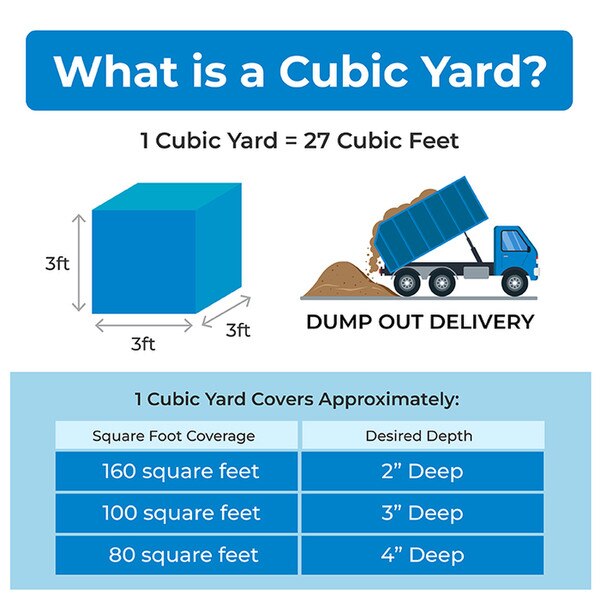
Image Source: www.cumminlandscapesupply.com
Fathoming Sand’s Weight: The Science Behind It
The primary reason why a cubic yard of sand weight can vary is its density. Density is a measure of how much mass is packed into a given volume. For sand, this means how tightly the grains are packed together and what the grains are made of.
Sand Density Per Cubic Yard: What Affects It?
Several factors contribute to the sand density per cubic yard. These include:
- Grain Size: Smaller grains can pack more tightly than larger grains, potentially leading to higher density.
- Grain Shape: Smoother, rounded grains tend to pack more closely than angular grains.
- Moisture Content: Wet sand is significantly heavier than dry sand because water adds mass.
- Composition: Different minerals have different densities. For example, quartz sand is common and has a known density, but if your sand contains heavier minerals, its overall weight will increase.
- Compaction: How tightly the sand is packed, either naturally or through mechanical means, plays a big role.
Typical Sand Density: A Baseline
When we talk about typical sand density, we are usually referring to dry, uncompacted sand. For construction purposes, a good general figure to keep in mind for dry sand is around 100 to 120 pounds per cubic foot. This gives us a starting point for calculating the weight of a cubic yard.
Calculating the Weight of a Yard of Sand
To answer how heavy is a yard of sand, we need to do a simple conversion. A cubic yard is a unit of volume equal to 27 cubic feet (3 feet x 3 feet x 3 feet).
Sand Weight Per Cubic Foot: The Foundation
Let’s use our baseline for sand weight per cubic foot:
- Lower end: 100 pounds per cubic foot
- Higher end: 120 pounds per cubic foot
Now, we can multiply this by the number of cubic feet in a cubic yard:
- Lower end calculation: 100 pounds/cubic foot * 27 cubic feet/cubic yard = 2,700 pounds per cubic yard
- Higher end calculation: 120 pounds/cubic foot * 27 cubic feet/cubic yard = 3,240 pounds per cubic yard
This calculation confirms our initial range of 2,000 to 3,000 pounds, but we can refine it further by looking at specific types of sand.
Types of Sand and Their Weights
The weight of sand by volume changes depending on the type of sand you’re dealing with. Different applications call for different kinds of sand, and each has its own density characteristics.
Construction Sand: A Common Choice
Construction sand, often referred to as builder’s sand or all-purpose sand, is a widely used material for concrete, mortar, and base layers. The density of construction sand is generally in the range we’ve already discussed.
- Dry construction sand: Typically weighs between 2,700 to 3,000 pounds per cubic yard.
- Wet construction sand: Can weigh significantly more, potentially reaching 3,500 pounds or even higher, due to the added weight of water filling the void spaces between grains.
Landscaping Sand: Aesthetic and Functional
When you ask, how much does landscaping sand weigh, the answer is often similar to construction sand, but there can be slight variations depending on its grain size and any added components for color or texture.
- Typical landscaping sand: A cubic yard of dry landscaping sand can range from 2,500 to 3,000 pounds. The exact weight depends on its composition and how fine or coarse the grains are. For instance, finer sands might pack a bit more densely.
Play Sand: Safety and Weight
Play sand is specifically processed for safety and consistency, often with rounded grains.
- Play sand weight: A cubic yard of dry play sand typically weighs around 2,500 to 2,800 pounds. Its rounded grains might allow for slightly better packing than some angular construction sands, but the overall density is usually comparable.
River Sand and Beach Sand: Natural Variations
River sand and beach sand can vary greatly in their density.
- River sand: Often contains a mix of grain sizes and shapes, and its density can be influenced by the mineral content of the riverbed. It generally falls within the 2,500 to 3,000 pounds per cubic yard range.
- Beach sand: Can be quite fine and may contain shell fragments, which can affect its weight. The typical sand density of beach sand is often around 2,600 to 2,900 pounds per cubic yard when dry.
Other Sand Types and Their Weights
- Silica sand: Known for its high quartz content, silica sand’s density can be slightly higher, around 115-130 pounds per cubic foot when dry, translating to approximately 3,100 to 3,500 pounds per cubic yard.
- Pea gravel: While technically a coarse aggregate, it’s often discussed alongside sand. Pea gravel is much lighter than sand because of its larger, more irregular shape, with a cubic yard typically weighing around 2,000 to 2,500 pounds.
Factors Influencing Sand Weight in Detail
To truly grasp how much a cubic yard of sand weighs, we need to break down the contributing factors into more detail.
Moisture Content: The Heavy Hitter
This is perhaps the most significant variable. Water is heavy! When sand is wet, water occupies the spaces between the sand grains, adding substantial weight.
- Dry sand: The voids between grains are filled with air.
- Damp sand: Some voids are filled with water.
- Saturated sand: All voids are filled with water.
Consider this: water has a density of about 62.4 pounds per cubic foot. If a cubic foot of sand has 30% void space and is completely saturated, that water alone adds:
0.30 (void space) * 62.4 lbs/cu ft (water density) = 18.72 pounds per cubic foot of water.
This means a cubic foot of dry sand weighing 110 lbs could weigh close to 130 lbs when saturated. This translates to an increase of over 500 pounds per cubic yard!
Compaction: Squeezing Out the Air
How compacted the sand is directly affects its density. Sand delivered in a loose state will weigh less per cubic yard than sand that has been compacted.
- Loose sand: Has more air pockets.
- Compacted sand: Has fewer air pockets, meaning more sand grains are packed into the same volume.
For construction projects where a stable base is needed, sand is often compacted. This means the sand weight conversion to a heavier figure is not just about the sand itself, but how it’s prepared for its intended use.
Grain Size and Shape: The Packing Principle
The physical characteristics of the sand grains themselves play a role.
- Grain Size: Uniformly sized fine sand can pack more tightly than a mix of large and small grains. However, very fine, uniform sand can sometimes have more air between particles if not properly settled.
- Grain Shape: Rounded grains, like those in some play sands, can roll into tighter configurations than angular grains, potentially leading to slightly higher density.
Material Composition: What’s it Made Of?
While most common sands are primarily silicon dioxide (quartz), variations in mineral composition can subtly alter the weight. Heavy minerals, though usually present in small quantities, can contribute to a higher overall density.
Using a Bulk Sand Weight Calculator
For those planning larger projects or needing precise figures, a bulk sand weight calculator can be invaluable. These online tools typically ask for the type of sand and its moisture content to provide a more accurate estimate. They essentially perform the sand weight conversion based on established density figures for various sand types.
How to Use a Calculator Effectively:
- Identify your sand type: Is it general construction sand, play sand, or a specific blend?
- Estimate moisture content: Is the sand bone dry, slightly damp, or wet? This is often the hardest part to estimate without testing.
- Input volume: Enter the number of cubic yards you need.
- Review the results: The calculator will provide an estimated weight.
Example of Calculator Output (Hypothetical):
If you input “Construction Sand,” “Dry,” and “1 Cubic Yard,” a calculator might output: 2,750 lbs.
If you input “Construction Sand,” “Damp,” and “1 Cubic Yard,” it might output: 3,200 lbs.
Practical Applications of Knowing Sand Weight
Why is this information so important? Knowing the cubic yard of sand weight is crucial for several practical reasons:
Ordering and Budgeting:
- Accurate quantities: Prevents over-ordering (waste of money and effort) or under-ordering (project delays).
- Transportation costs: Many delivery services charge based on weight or volume. Knowing the weight helps estimate these costs.
- Material costs: Suppliers often sell by the ton, so converting cubic yards to tons is essential for budgeting.
Transportation and Handling:
- Vehicle capacity: Ensuring your truck, trailer, or wheelbarrow can handle the weight. A cubic yard of sand can easily exceed the payload capacity of a standard half-ton pickup truck.
- Safe lifting: Knowing the weight helps in planning how to move the sand safely, especially if using manual labor or small equipment.
Project Planning:
- Foundation stability: For certain construction projects, the density and weight of the sand base are critical for structural integrity.
- Volume calculations: For tasks like filling a swimming pool or a large sandbox, accurate volume-to-weight conversion helps estimate the total material needed.
Converting Pounds to Tons: Another Essential Step
Since sand is often sold by the ton (2,000 pounds), knowing how to perform a sand weight conversion from pounds to tons is vital.
- Formula: Tons = Pounds / 2,000
Example: If a cubic yard of sand weighs 2,750 pounds:
Tons = 2,750 lbs / 2,000 lbs/ton = 1.375 tons
This means a single cubic yard of sand can weigh more than a ton!
Tables for Quick Reference
To make this information easily digestible, here are some tables summarizing typical weights:
Table 1: Estimated Weight of a Cubic Yard of Dry Sand
| Sand Type | Approximate Weight per Cubic Yard (Dry) | Notes |
|---|---|---|
| Construction Sand | 2,700 – 3,000 lbs | Common for concrete, mortar, base fill |
| Landscaping Sand | 2,500 – 3,000 lbs | Varies with grain size and composition |
| Play Sand | 2,500 – 2,800 lbs | Rounded grains, processed for safety |
| River Sand | 2,500 – 3,000 lbs | Natural variations in grain, composition |
| Beach Sand | 2,600 – 2,900 lbs | Often fine, may contain shell fragments |
| Silica Sand (Quartz) | 3,100 – 3,500 lbs | Higher density due to quartz content |
| Pea Gravel | 2,000 – 2,500 lbs | Larger, coarser aggregate |
Table 2: Impact of Moisture on Sand Weight (Approximate Increase)
| Moisture Level | Typical Weight Increase per Cubic Yard |
|---|---|
| Damp | 300 – 600 lbs |
| Wet | 500 – 1,000+ lbs |
Important Note: These are estimates. Actual weights can vary. Always confirm with your supplier if precise weight is critical.
Frequently Asked Questions (FAQ)
Q1: How much does a cubic yard of sand weigh when it’s wet?
A1: Wet sand is significantly heavier. A cubic yard of wet sand can weigh anywhere from 3,200 to 4,000 pounds or more, depending on how saturated it is. The water fills the voids between the sand grains, adding considerable weight.
Q2: Can I fit a cubic yard of sand in a standard pickup truck?
A2: It depends on the truck’s payload capacity. A cubic yard of sand can weigh 2,000 to 3,000 pounds (or more if wet). Many standard pickup trucks have payload capacities in this range or slightly higher, but it’s crucial to check your truck’s specifications to avoid overloading. It’s often safer and more practical to transport sand in a trailer or make multiple trips.
Q3: What is the difference between sand weight per cubic foot and per cubic yard?
A3: A cubic yard is a much larger volume than a cubic foot. Since there are 27 cubic feet in one cubic yard, the weight per cubic yard will be 27 times the weight per cubic foot. For example, if dry sand weighs 110 pounds per cubic foot, it will weigh approximately 2,970 pounds per cubic yard (110 * 27).
Q4: Does the color of the sand affect its weight?
A4: Generally, no. The color of sand is usually due to trace mineral impurities or coatings on the grains, which have a negligible effect on the overall density and weight of the bulk material compared to factors like grain size, shape, and moisture content.
Q5: Who should I ask if I need the exact weight of a specific type of sand?
A5: Your best resource for exact weight information is the sand supplier or quarry. They can provide you with the density specifications or typical weights for the specific sand product they offer.
Conclusion
So, the answer to how much does a cubic yard of sand weigh is a range, not a single figure. By considering the type of sand, its moisture content, and how compacted it is, you can make a much more informed estimate. For most common applications, a good rule of thumb is 2,700 to 3,000 pounds per cubic yard for dry sand. Always remember that wet sand adds significant weight. Using resources like a bulk sand weight calculator and consulting with your supplier will ensure you have the most accurate information for your project’s success. Knowing these details prevents costly mistakes and makes your project planning much smoother, from ordering materials to handling them safely.