
If you’re wondering “How much does a cubic yard of rock weigh?”, the answer generally ranges from 1,200 to 2,000 pounds. This significant variation is due to the different types of rock and their densities.
When planning any project involving bulk materials like rocks, knowing their weight is crucial. Whether you’re calculating how much your truck can carry, figuring out the bulk rock cost calculation, or ensuring your landscaping or construction project has the right amount of material, the weight of a cubic yard of rock is a vital piece of information. This guide will delve into the factors that influence rock weight, provide typical weights for various types of rock, and explain how you can find the most accurate figures for your specific needs. We’ll explore rock density, how to use a stone weight calculator, and the differences between loose rock weight and compacted weights.
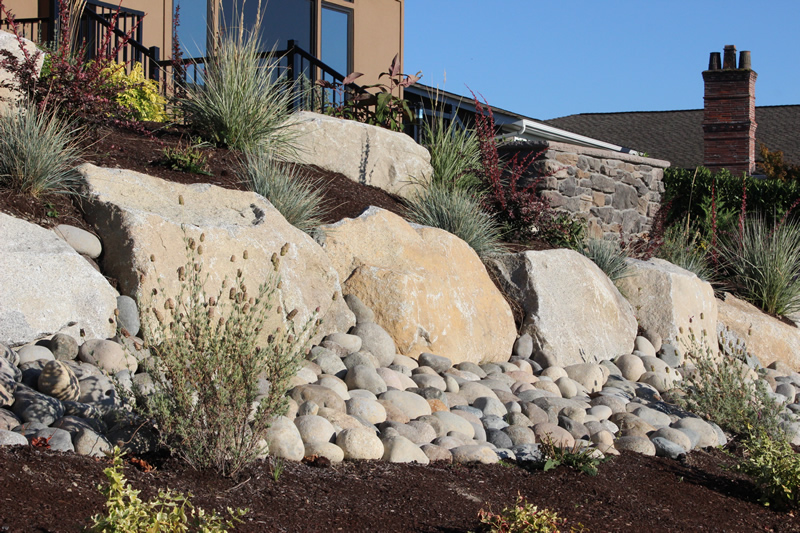
Image Source: www.earthhaulers.com
Deciphering Rock Density and Its Impact
The most significant factor determining how much a cubic yard of rock weighs is its rock density. Density is a measure of mass per unit of volume. For rocks, this means how tightly packed the minerals are within the stone. Denser rocks, with tightly packed molecules, will weigh more than less dense rocks, even if they occupy the same amount of space.
Factors Influencing Rock Density
Several elements contribute to a rock’s density:
- Mineral Composition: Different minerals have different atomic structures and weights. Rocks rich in heavy minerals like iron or basalt will be denser than those composed of lighter minerals like quartz or pumice.
- Porosity: Rocks with many small holes or pores will have less solid material within a given volume, making them less dense and lighter. Sedimentary rocks, in particular, can be quite porous.
- Moisture Content: Water adds weight. If rocks are wet, they will weigh more than dry rocks of the same type and volume. This is especially relevant for gravel weight per cubic yard, as gravel can absorb and hold a good amount of water.
- Compaction: The way rock is broken down and handled affects its weight per cubic yard. Loose rock weight will typically be less than compacted rock because there are more air pockets between the pieces.
Common Rock Types and Their Weights
The type of rock you’re using will heavily influence its weight per cubic yard. Here’s a look at some common types used in construction and landscaping, along with their estimated weights. These figures are general averages and can vary.
Gravel Weight Per Cubic Yard
Gravel is a popular choice for driveways, pathways, and drainage. Its weight can fluctuate depending on the type of stone used to create the gravel.
- Washed Gravel (Pea Gravel, River Rock): Typically lighter due to rounded shapes and potentially more porous nature.
- Weight Range: 2,200 to 2,800 pounds per cubic yard.
- Crushed Gravel (Crushed Limestone, Granite): Often denser due to angular shapes and harder mineral composition.
- Weight Range: 2,400 to 3,000 pounds per cubic yard.
Crushed Stone Weight Per Cubic Yard
Crushed stone, often used as a base for roads, patios, and foundations, generally has a higher density than rounded gravel.
- Crushed Limestone: A common and relatively dense material.
- Weight Range: 2,400 to 2,700 pounds per cubic yard.
- Crushed Granite: Known for its hardness and density.
- Weight Range: 2,600 to 2,900 pounds per cubic yard.
- Crushed Basalt: One of the denser igneous rocks.
- Weight Range: 2,800 to 3,200 pounds per cubic yard.
Landscaping Rock Weight Per Cubic Yard
Landscaping rocks can range from small pebbles to large boulders. The weight per cubic yard will vary significantly based on the size and type of rock. For smaller decorative stones:
- River Rock/Pebbles:
- Weight Range: 2,200 to 2,800 pounds per cubic yard.
- Decorative Crushed Stone (e.g., Quartzite, Slate Chips):
- Weight Range: 2,500 to 3,000 pounds per cubic yard.
Sandstone and Shale
These sedimentary rocks tend to be less dense due to their formation and often higher porosity.
- Sandstone:
- Weight Range: 1,800 to 2,400 pounds per cubic yard.
- Shale:
- Weight Range: 1,500 to 2,000 pounds per cubic yard.
Volcanic Rocks (Pumice, Scoria)
These rocks are formed from volcanic eruptions and are often very porous, making them significantly lighter.
- Pumice: Extremely light and porous, sometimes even floats.
- Weight Range: 800 to 1,200 pounds per cubic yard.
- Scoria: Also porous but generally denser than pumice.
- Weight Range: 1,400 to 1,800 pounds per cubic yard.
Cubic Yard to Pound Conversion: Practical Applications
Knowing the cubic yard to pound conversion is essential for logistics and cost management. When you buy rock by the cubic yard, you’re buying a volume. However, when you need to transport it or understand its load-bearing capacity, you need its weight.
Transporting Rock
- Vehicle Capacity: Pickup trucks and trailers have weight limits. Overloading can be dangerous and illegal. Knowing the weight per cubic yard helps you determine how many cubic yards you can safely transport in a single trip. For instance, if your truck has a payload capacity of 2,000 pounds, and you’re hauling dense crushed granite (2,800 lbs/cu yd), you can only carry about 0.7 cubic yards.
- Delivery Costs: Some suppliers may charge based on weight or delivery distance, which is often influenced by the total weight of the material.
Construction Projects
- Foundation and Base Layers: The weight of the aggregate is critical for the stability and load-bearing capacity of foundations, road bases, and patio structures. A denser, heavier aggregate will provide a more stable base.
- Material Estimation: Accurate weight estimations prevent over-ordering (leading to waste and extra cost) or under-ordering (leading to project delays).
Loose Rock Weight vs. Compacted Weight
It’s important to distinguish between loose rock weight and compacted weight. When rock is first excavated and transported, it’s in a loose state with significant air spaces between the individual pieces.
- Loose Rock Weight: This is the weight of the rock as it is delivered or piled. It includes the air pockets.
- Compacted Weight: When the rock is spread and vibrated or rolled (as in road construction or patio bases), it settles, reducing the air spaces. The rock material density becomes more apparent as the rock becomes more compact, and the weight per cubic yard increases.
For landscaping purposes where rocks are spread loosely, the initial loose weight is usually more relevant. For construction bases, the compacted weight is more pertinent to structural calculations.
Using a Stone Weight Calculator
For precise calculations, using a stone weight calculator is highly recommended. These online tools often allow you to specify the type of rock and the volume (in cubic yards or tons) you need. They use databases of rock density values to provide accurate weight estimates.
How to Use a Stone Weight Calculator Effectively:
- Identify Your Rock Type: Be as specific as possible. Instead of just “gravel,” try to determine if it’s “crushed limestone gravel” or “washed river rock.”
- Determine Your Volume: Measure the area and desired depth of your project, or use the volume specified by your supplier.
- Input the Data: Enter the rock type and volume into the calculator.
- Consider Moisture: Some advanced calculators may have options for moisture content, but generally, assume average dry conditions unless you know otherwise.
Rock Material Density: A Deeper Dive
The rock material density is the fundamental property governing weight. Here’s a table illustrating approximate densities for common minerals found in rocks, which helps explain the weight variations:
| Mineral | Approximate Density (g/cm³) | Typical Rock Associations |
|---|---|---|
| Quartz | 2.65 | Granite, Sandstone, Quartzite |
| Feldspar | 2.55 – 2.76 | Granite, Basalt, Andesite |
| Mica (Muscovite) | 2.85 | Granite, Schist |
| Mica (Biotite) | 3.00 | Granite, Basalt, Schist |
| Olivine | 3.30 – 3.37 | Basalt, Peridotite |
| Pyroxene | 3.20 – 3.55 | Basalt, Gabbro, Andesite |
| Amphibole | 2.90 – 3.50 | Basalt, Andesite, Diorite |
| Calcite | 2.71 | Limestone, Marble, Sandstone |
| Dolomite | 2.85 | Dolomite, Marble |
| Hematite | 5.24 | Iron ore, some sedimentary rocks |
| Magnetite | 5.15 | Igneous and metamorphic rocks, ores |
Note: The density of a rock is not just the density of its primary mineral but an average that accounts for the proportions of all its constituent minerals and any voids.
Specific Gravity
Often, rock density is expressed as specific gravity, which is the ratio of the rock’s density to the density of water (approximately 1 g/cm³ or 62.4 lb/ft³). If a rock has a specific gravity of 2.7, it means it’s 2.7 times denser than water.
To convert specific gravity to pounds per cubic foot:
Specific Gravity × 62.4 lb/ft³ = Density in lb/ft³
And to convert pounds per cubic foot to pounds per cubic yard:
Density in lb/ft³ × 27 ft³/yd³ = Density in lb/yd³
For example, a rock with a specific gravity of 2.7 would have a density of:
2.7 × 62.4 lb/ft³ = 168.48 lb/ft³
168.48 lb/ft³ × 27 ft³/yd³ = 4,549 lb/yd³ (solid rock)
This figure (4,549 lb/yd³) represents the weight of solid rock material without any air gaps. For bulk materials like construction aggregate weight, the actual weight per cubic yard will be lower due to the voids between the pieces.
Estimating Rock Weight Without a Calculator
While a stone weight calculator is ideal, you can make estimations if you know the approximate specific gravity or rock density of the material.
General Rule of Thumb:
- Lightweight Rocks (e.g., Pumice, Scoria): Around 1,000 – 1,500 lbs per cubic yard.
- Medium Density Rocks (e.g., Limestone, Sandstone): Around 1,800 – 2,500 lbs per cubic yard.
- Dense Rocks (e.g., Granite, Gravels): Around 2,400 – 3,000 lbs per cubic yard.
These are very rough estimates and should be used with caution. Always try to get specific data from your supplier.
Why Accurate Weight Matters for Bulk Rock Cost Calculation
When calculating bulk rock cost calculation, weight is often a more reliable factor than volume, especially if you’re comparing prices from different suppliers or managing project budgets.
- Fair Pricing: Weight provides a consistent measure. A supplier selling a denser, heavier rock for the same price per cubic yard as a lighter rock might be offering a better deal in terms of material quantity.
- Transportation Costs: Transporting heavy materials costs more. Knowing the weight helps in estimating freight charges accurately.
- Project Budgeting: For large projects, even a slight difference in weight per cubic yard can add up to significant cost savings or overruns if not accounted for properly.
Frequently Asked Questions (FAQ)
Q1: How much does a cubic yard of crushed gravel weigh?
A1: A cubic yard of crushed gravel typically weighs between 2,400 and 3,000 pounds, depending on the type of stone (e.g., limestone, granite) and its density.
Q2: What is the weight of a cubic yard of sand?
A2: A cubic yard of sand can weigh between 2,200 to 3,000 pounds. Dry sand is lighter than wet sand. Coarser sands tend to be heavier than fine sands.
Q3: How much does a cubic yard of topsoil weigh?
A3: A cubic yard of topsoil generally weighs between 1,200 to 1,600 pounds. This can vary significantly based on moisture content and the organic material composition.
Q4: Can I use a general estimate for rock weight per cubic yard?
A4: While general estimates can give you a ballpark figure, it’s always best to try and get specific weight data for the type of rock you are using, especially for construction projects where accuracy is critical. Using a stone weight calculator or asking your supplier is recommended.
Q5: Does moisture affect the weight of rocks?
A5: Yes, absolutely. Water adds weight. Wet rocks will weigh more per cubic yard than dry rocks of the same type due to the absorption of water, especially noticeable in porous materials like gravel.
Q6: What’s the difference between loose rock weight and compacted rock weight?
A6: Loose rock weight refers to the weight of rock as it is delivered, with air pockets between pieces. Compacted rock weight is the weight after the rock has been settled and compressed, reducing air spaces and increasing density per cubic yard.
Q7: Where can I find information on rock density?
A7: You can find information on rock density from geological surveys, material suppliers, construction guides, and online resources that often list specific gravity or density values for different rock types.
By now, you should have a solid grasp of how much a cubic yard of rock weighs and the many factors that influence this measurement. Whether you’re a homeowner planning a landscaping project or a contractor working on a large construction site, accurate weight estimations are key to efficient planning, budgeting, and execution. Always consult your material supplier for the most accurate specifications for their products.