
A cubic yard of mulch typically weighs between 400 and 700 pounds, but this can vary significantly based on the type of mulch, its moisture content, and its particle size. Fathoming the exact mulch weight per cubic yard is crucial for planning landscaping projects, ordering materials, and calculating transportation needs. This detailed guide will help you grasp the factors influencing mulch weight and provide estimates for common mulch types.
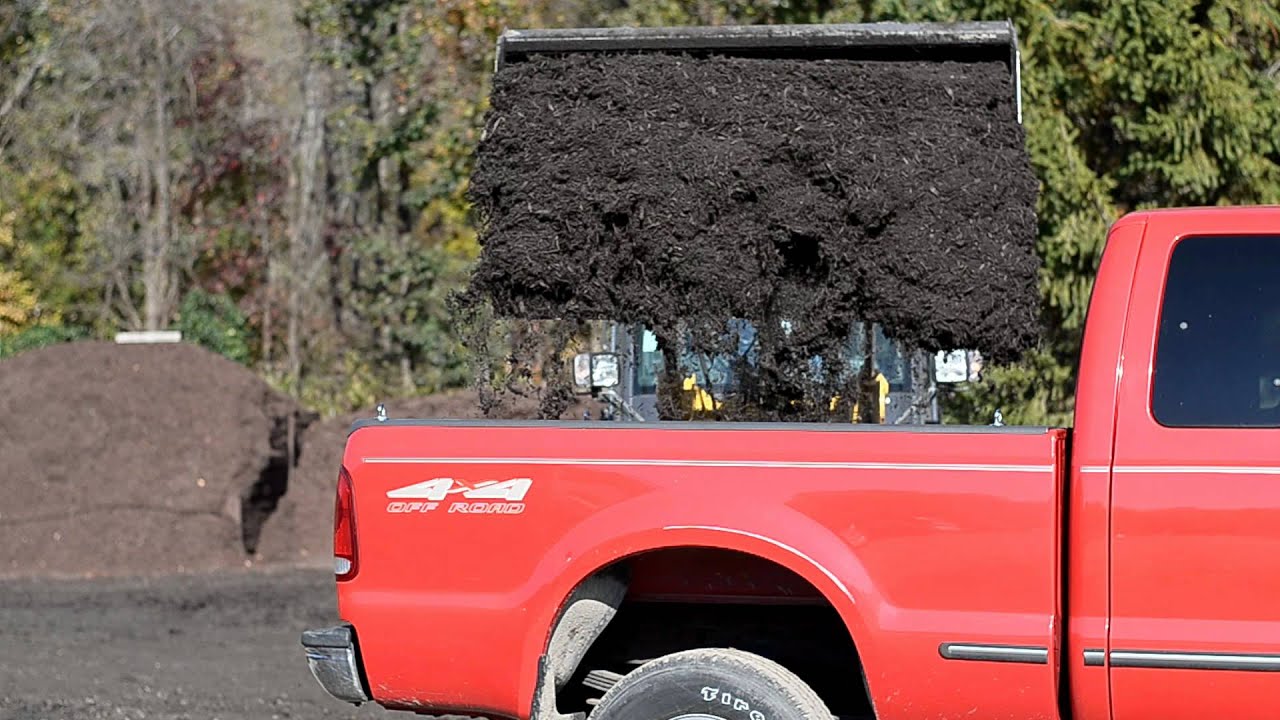
Image Source: i.ytimg.com
Deciphering Mulch Density: What Makes Mulch Heavy?
Mulch density refers to how much a given volume of mulch weighs. It’s not a fixed number; it changes based on several key elements. Think of it like a sponge: dry and fluffy, it’s light. Wet and compacted, it’s much heavier.
Here are the main factors that influence mulch weight:
Wood Type and Composition
Different types of wood have inherent densities. For instance, hardwoods are generally denser than softwoods. The processing of the wood also plays a role. Mulch made from whole wood chips will have a different density than mulch made from shredded bark.
Moisture Content
This is arguably the most significant factor. Freshly harvested wood contains a considerable amount of water. As mulch dries, it loses weight. Conversely, if mulch is exposed to rain or stored in damp conditions, its weight can increase dramatically. Wet mulch can be almost twice as heavy as dry mulch.
Particle Size and Compaction
Larger, chunkier mulch pieces tend to be less dense than finely shredded mulch. This is because there’s more air space between larger pieces. However, finely shredded mulch can sometimes compact more tightly, increasing its density. The way mulch is bagged or piled also affects its compaction.
Age and Decomposition
As mulch ages and begins to decompose, it can change in density. Finer particles can fill in air spaces, and the breakdown of wood fibers can also influence how tightly the material packs.
How Much Does A Cubic Yard Of Mulch Weigh? Common Estimates
When you’re planning your garden, you’ll often buy mulch by the cubic yard. Knowing the typical mulch weight per cubic yard helps you estimate how much you need and whether your vehicle can handle the load.
The general range for the mulch weight per cubic yard is 400 to 700 pounds. However, it’s essential to delve into specific types for more accurate planning.
Pine Bark Mulch Weight
Pine bark mulch is a popular choice, known for its attractive color and ability to retain moisture. Due to pine being a softwood, it’s generally lighter than hardwood mulches.
- Dry Pine Bark Mulch: Approximately 300-450 pounds per cubic yard.
- Wet Pine Bark Mulch: Can increase significantly, reaching 500-700 pounds per cubic yard or more.
The shredded nature of much pine bark mulch contributes to its relatively low density when dry.
Cedar Mulch Weight
Cedar mulch is prized for its aromatic properties and natural insect-repelling qualities. Cedarwood is also a softwood, making it lighter than many hardwoods.
- Dry Cedar Mulch: Roughly 350-500 pounds per cubic yard.
- Wet Cedar Mulch: Can weigh between 500-750 pounds per cubic yard.
The “fluffiness” of cedar mulch, especially when finely shredded, means it can take up a good amount of space for its weight.
Hardwood Mulch Weight
Hardwood mulches, derived from trees like oak, maple, or hickory, are typically denser than softwoods. This makes them more durable and longer-lasting but also heavier.
- Dry Hardwood Mulch: Generally ranges from 450-700 pounds per cubic yard.
- Wet Hardwood Mulch: Can easily reach 700-900 pounds per cubic yard, and sometimes even exceed 1000 pounds if very wet and finely shredded.
The denser cell structure of hardwoods accounts for their higher weight.
Other Popular Mulch Types and Their Weights
- Cypress Mulch: Similar in density to cedar and pine, typically 300-500 pounds per cubic yard when dry.
- Shredded Bark Mulch (General): Varies widely, but expect 350-600 pounds per cubic yard when dry.
- Composted Mulch: Once organic matter decomposes, it tends to become denser and hold more moisture, so composted mulches can be heavier, often starting around 400 pounds and going up to 700 pounds per cubic yard when dry, with wet weights easily exceeding that.
Bagged Mulch Weight vs. Bulk Mulch Weight
A common question is about the difference in weight between bagged mulch weight and bulk mulch weight. While the mulch itself might be the same, the packaging and how it’s handled can influence your perception of its weight.
Bagged Mulch
Bagged mulch is typically sold in bags that hold 2 or 3 cubic feet of material. To convert this to cubic yards:
- 1 cubic yard = 27 cubic feet (3 feet x 3 feet x 3 feet)
- A 2 cubic foot bag is approximately 0.074 cubic yards (2 / 27).
- A 3 cubic foot bag is approximately 0.111 cubic yards (3 / 27).
The weight of a bag of mulch will reflect the weight of that smaller volume. For example, if a cubic yard of dry hardwood mulch weighs 500 pounds, a 3 cubic foot bag (which is 1/12th of a cubic yard) would weigh approximately 42 pounds (500 / 12).
Key points about bagged mulch:
- Convenience: Easier to transport and handle for smaller projects.
- Pre-packaged moisture: Bags can sometimes trap moisture, making the mulch inside heavier than if it had been air-dried.
- Price per volume: Often more expensive than bulk mulch.
Bulk Mulch
Bulk mulch is delivered by the cubic yard in large trucks. This is usually the more economical choice for larger landscaping projects.
- Direct delivery: You receive the full cubic yardage without packaging.
- Moisture variation: The moisture content can be more apparent with bulk deliveries, as it hasn’t been contained in plastic.
- Handling: Requires a truck or trailer for transport if you pick it up yourself.
When comparing bagged mulch weight to bulk mulch weight, remember that the weight is for the same volume of material. A cubic yard of mulch, whether bagged in small quantities or delivered in a large pile, will weigh roughly the same if it has the same moisture content and is of the same type.
Topsoil vs. Mulch Weight: A Crucial Distinction
It’s important not to confuse topsoil vs. mulch weight. While both are used in landscaping, their purpose and density differ significantly.
- Topsoil: Typically denser than mulch, especially when wet. It’s composed of minerals, organic matter, and soil particles. The weight of topsoil can range from 1,200 to 1,800 pounds per cubic yard, depending on its composition and moisture content.
- Mulch: Primarily organic material, designed to sit on top of the soil. Its primary function is to retain moisture, suppress weeds, and improve soil appearance. Its looser structure and lighter organic composition make it considerably lighter than topsoil.
Knowing the difference is vital when ordering materials. You don’t want to mistakenly order topsoil when you need mulch, or vice versa, as the weight difference can impact delivery costs and your ability to move the materials.
Estimating Mulch Weight for Your Project
Estimating mulch weight is a practical skill for any gardener or landscaper. Here’s how to approach it:
Calculate Your Volume Needs
First, determine how much mulch you need in cubic yards.
- Measure your area:
- For rectangular areas: Length (ft) x Width (ft) = Square Feet
- For circular areas: π (pi) x Radius (ft)² = Square Feet (use 3.14 for π)
- Determine the desired depth: Most landscaping recommendations suggest a depth of 2 to 4 inches. Convert this to feet: 3 inches = 0.25 feet.
- Calculate cubic feet: Square Footage x Desired Depth (ft) = Cubic Feet
- Convert to cubic yards: Cubic Feet / 27 = Cubic Yards
Example:
You have a flower bed that is 10 feet long and 5 feet wide, and you want a depth of 3 inches.
1. Area: 10 ft x 5 ft = 50 sq ft
2. Depth: 3 inches = 0.25 ft
3. Volume in cubic feet: 50 sq ft x 0.25 ft = 12.5 cubic feet
4. Volume in cubic yards: 12.5 cubic feet / 27 = 0.46 cubic yards
For this small area, you might round up to 0.5 cubic yards or buy a few bags of mulch.
Applying Weight Estimates
Once you have your volume in cubic yards, you can use the estimated weights provided earlier.
Example (Continuing from above):
If you need 0.5 cubic yards of dry pine bark mulch, which weighs about 375 pounds per cubic yard (mid-range for dry pine), the estimated weight would be:
0.5 cubic yards * 375 lbs/cubic yard = 187.5 pounds.
If you were ordering 5 cubic yards of wet hardwood mulch (estimating 700 lbs/cubic yard), the total weight would be:
5 cubic yards * 700 lbs/cubic yard = 3500 pounds.
This weight is critical if you’re picking up mulch yourself. A standard pickup truck might have a payload capacity of around 1,000-2,000 pounds. 5 cubic yards of wet hardwood mulch would likely be too heavy for most personal vehicles.
Using a Mulch Weight Calculator
For quick estimations, many online resources offer a mulch weight calculator. These tools simplify the process. You typically input:
- The dimensions of your area (length, width, depth).
- The type of mulch you plan to use.
The calculator then uses pre-programmed mulch density figures to provide an estimated weight. While these are helpful for quick planning, they are still estimates. Always factor in a margin for error, especially regarding moisture content.
Factors Affecting Specific Mulch Weights
Let’s revisit some specific mulch types and the nuances that can affect their weight.
Pine Bark Mulch Weight: The Lighter Option
Pine bark mulch often comes in various forms: shredded, nuggets, or mini-nuggets.
- Shredded Pine Bark: Tends to be the lightest due to its fibrous nature and air pockets. Dry weights can be as low as 300 lbs/cubic yard.
- Pine Bark Nuggets: These larger pieces create more air space and are also on the lighter side, typically 350-450 lbs/cubic yard when dry.
- Moisture: Pine bark, being a softwood, can absorb a significant amount of water, quickly increasing its weight by 50-100%.
Cedar Mulch Weight: Aromatic and Lightweight
Cedar mulch is known for its pleasant scent and natural resistance to pests. Its wood structure makes it relatively lightweight.
- Shredded Cedar: Similar to shredded pine, it’s airy and light. Dry weights are often in the 350-450 lbs/cubic yard range.
- Cedar Mulch Nuggets: Larger cedar pieces will follow similar density principles as pine nuggets.
- Moisture: Cedar can also absorb water readily, pushing its weight upwards of 500-750 lbs/cubic yard when saturated.
Hardwood Mulch Weight: The Dense Choice
Hardwood mulches offer excellent durability and a rich color. Their denser wood fibers mean they weigh more from the start.
- Shredded Hardwood: Can be quite dense, especially if the wood is finely processed. Dry weights often start at 450 lbs/cubic yard and can go up to 700 lbs/cubic yard.
- Hardwood Chips: Larger chips might be slightly less dense than finely shredded hardwood, but the difference is usually not dramatic.
- Moisture: Due to their inherent density and capacity to absorb water, wet hardwood mulches can become exceptionally heavy, potentially exceeding 900-1000 lbs/cubic yard.
Practical Considerations When Ordering Mulch
Delivery Weight vs. Pickup Weight
If you’re having mulch delivered, the weight is usually factored into the delivery cost. If you’re picking it up yourself, you need to be very aware of your vehicle’s capacity. A cubic yard of mulch can be a lot of material, and its weight, especially when wet, can easily exceed what a standard car or small truck can safely carry.
“Fluffy” Mulch vs. Compacted Mulch
You might notice that different suppliers or even different batches from the same supplier seem to occupy different volumes for the same weight. This is due to the mulch density and how it was processed and handled. Some mulch might be fluffed up with more air, appearing to be more material than a more compacted batch of the same weight. Always focus on cubic yardage when ordering, but be mindful of the potential weight implications.
Seasonal Moisture Levels
The time of year can also play a role in the moisture content of mulch. Mulch stored in open piles during rainy seasons will naturally be heavier. Mulch that has been recently manufactured might have less moisture than mulch that has been sitting in a yard for several months.
Frequently Asked Questions (FAQ)
Q1: How much does 3 cubic yards of mulch weigh?
A: It depends on the type and moisture content. For dry hardwood mulch (approx. 550 lbs/cu yd), 3 cubic yards would weigh around 1650 lbs. For dry pine mulch (approx. 375 lbs/cu yd), it would be about 1125 lbs. Always add more for wet conditions.
Q2: Can I haul a cubic yard of mulch in my SUV?
A: It’s risky. Most SUVs have a payload capacity of around 800-1200 lbs. A cubic yard of even dry mulch can easily weigh 400-700 lbs, and wet mulch can be much heavier. It’s best to use a truck or trailer, or order delivery.
Q3: Why is my bagged mulch so heavy?
A: Bagged mulch can retain moisture within the plastic packaging. This trapped moisture can make the contents heavier than you might expect if you were comparing it to air-dried mulch.
Q4: What’s the difference between mulch weight and topsoil weight?
A: Topsoil is significantly denser and heavier than mulch. A cubic yard of topsoil can weigh 1200-1800 lbs, while a cubic yard of mulch typically weighs 400-700 lbs when dry.
Q5: How can I find an accurate mulch weight calculator?
A: Search online for “mulch calculator” or “mulch weight calculator.” Many landscaping supply companies and gardening websites offer free, user-friendly tools.
By arming yourself with this knowledge about mulch weight, you can make informed decisions for your landscaping projects, ensuring you order the right amount of material and can handle its transport and application effectively.