
So, how much does 1 yard of stone weigh? The answer isn’t a single number because it depends on the type of stone. Generally, 1 cubic yard of stone can weigh anywhere from 1,400 pounds to over 2,000 pounds. This variation is crucial to grasp when planning projects, ordering materials, or calculating transportation needs. Factors like the stone’s density, moisture content, and how it’s compacted all play a significant role in its final weight.
Whether you’re embarking on a major landscaping project, building a driveway, or simply trying to figure out how much gravel to order for a small garden path, knowing the stone weight per cubic yard is essential. This knowledge helps prevent under or over-ordering, saving you time, money, and effort. This comprehensive guide will delve into the specifics of why stone weights vary and provide you with the information you need to make informed decisions. We’ll explore the densities of different types of stone, discuss how to calculate these weights, and provide practical advice for your projects.
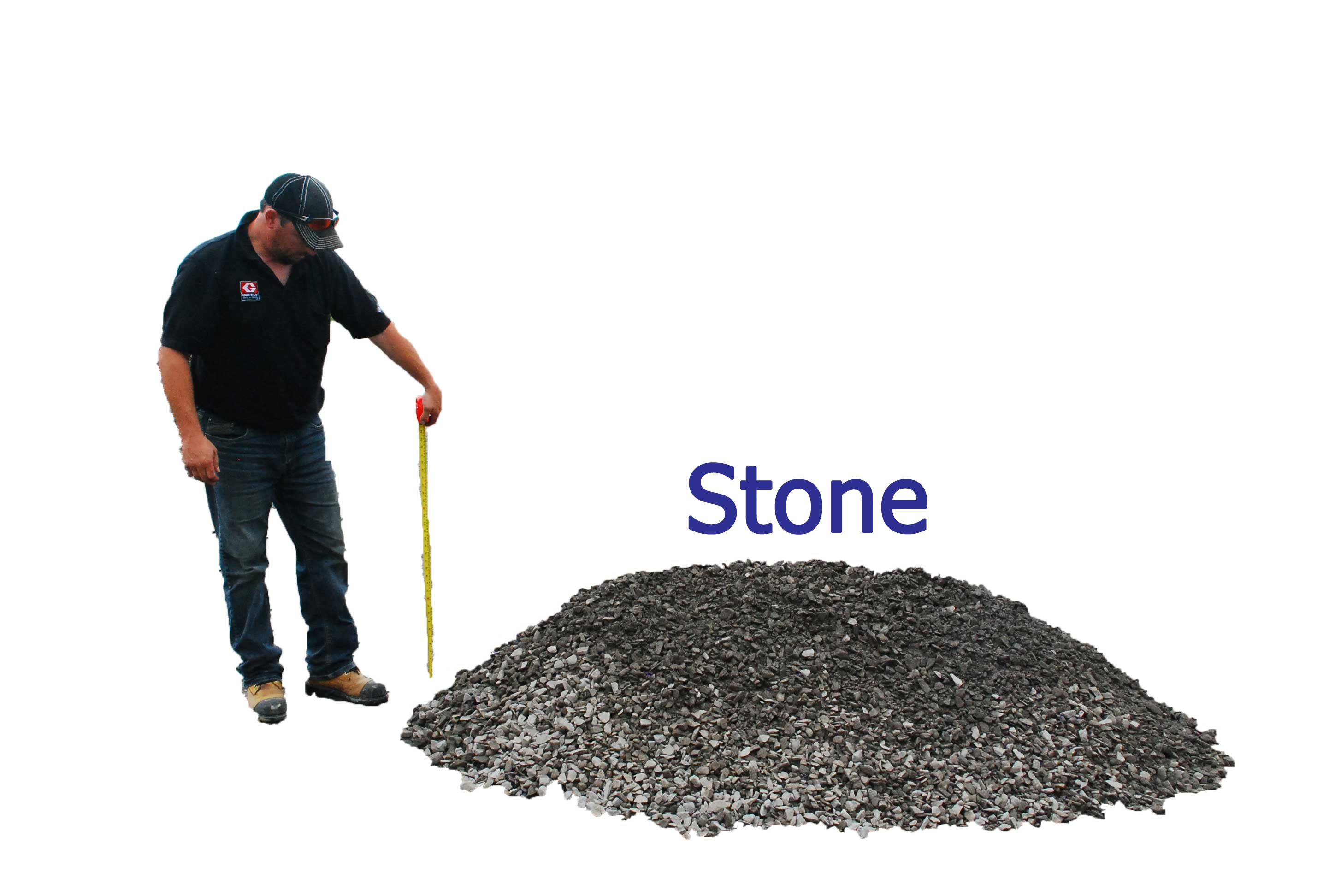
Image Source: greelysand.com
Deciphering the Density: What Makes Stones Weigh Differently?
The fundamental reason behind the varying weights of stone per cubic yard lies in its density. Density is a measure of mass per unit volume. Think of it like this: if you have a box filled with feathers and the same size box filled with lead, the lead box will be much heavier. This is because lead is denser than feathers. The same principle applies to different types of stone.
Several factors contribute to a stone’s density:
- Mineral Composition: Different minerals have different atomic structures and therefore different densities. Stones rich in heavy minerals will naturally weigh more. For example, granite, which contains feldspar, quartz, and mica, is denser than sandstone, which is often composed of quartz and feldspar but can also include lighter materials like clay.
- Porosity: The presence of pores or air pockets within the stone significantly affects its overall density. A more porous stone will have more empty space, making it lighter. Igneous rocks like pumice are highly porous and can even float, while dense metamorphic rocks like basalt are much heavier.
- Moisture Content: Water is heavy! If a stone absorbs moisture, its weight will increase. This is especially important to consider with materials like gravel or crushed stone, which are often transported and stored in the open and can absorb rainwater or dew.
- Compaction and Particle Size: For bulk materials like gravel and crushed stone, how tightly the particles are packed together also influences the weight. A yard of loosely piled gravel will weigh less than a yard of the same gravel that has been vibrated and compacted. Smaller, more angular pieces tend to interlock better, leading to higher density when compacted.
Stone Weight Per Cubic Yard: Common Material Weights
To give you a clearer picture, here’s a look at the average weight of gravel and other common landscaping and construction aggregates. Remember, these are approximations, and the actual weight can vary.
Gravel Density Pounds
Gravel is one of the most common materials used in landscaping and construction. Its weight can fluctuate based on the type of rock it’s made from and its size.
- Pea Gravel (1/2 inch to 3/4 inch): Typically weighs around 2,000 – 2,500 pounds per cubic yard. This is because the smaller, rounded stones create more void space.
- Crushed Gravel (3/4 inch to 1.5 inches): Generally falls between 2,200 – 2,700 pounds per cubic yard. The angular nature of crushed stone allows for better interlocking and denser packing.
- Larger Gravel (1.5 inches to 2.5 inches): Can weigh from 2,300 – 2,800 pounds per cubic yard.
Crushed Stone Weight Calculator Insights
When you’re using a crushed stone weight calculator, you’ll often input the type of stone (e.g., granite, limestone, basalt) and its size. The calculator then uses pre-programmed density values to provide an estimate.
- Granite Crushed Stone: Often in the range of 2,500 – 2,700 pounds per cubic yard. Granite is known for its high density.
- Limestone Crushed Stone: Tends to be slightly lighter, typically 2,200 – 2,500 pounds per cubic yard. Limestone is generally less dense than granite.
- Basalt Crushed Stone: Similar to granite, basalt is a dense volcanic rock and can weigh 2,500 – 2,800 pounds per cubic yard.
Landscaping Stone Weight
Landscaping stones, especially larger decorative ones, have unique weight considerations.
- River Rock: Varies significantly based on size and smoothness, but a cubic yard can range from 2,400 – 2,900 pounds. Smoother, rounder stones might pack slightly less densely than angular ones.
- Flagstone: This is typically sold by the pound or ton, but if you were to estimate a cubic yard of broken flagstone, it could weigh anywhere from 2,000 – 2,800 pounds, depending on the specific type of rock (e.g., sandstone flagstone vs. slate flagstone).
- Decorative Boulders: These are usually sold by weight or piece. A single boulder’s weight is highly dependent on its individual size and density.
Bulk Stone Weight
When ordering stone in bulk, understanding the bulk stone weight is crucial for transportation and job site logistics. A typical dump truck can carry several cubic yards of material.
- A standard dump truck might carry 10-14 cubic yards of gravel. Knowing the weight per cubic yard helps determine if the truck is overloaded.
- For example, if you order 10 cubic yards of crushed stone that weighs 2,500 pounds per cubic yard, you’re ordering 25,000 pounds (12.5 tons) of material.
Density of Quarry Stone: A Deeper Dive
The density of quarry stone is the foundational element for calculating its weight. Quarry stone refers to rock that has been extracted from a quarry, which can then be processed into various sizes and types of aggregate.
- Igneous Rocks (Granite, Basalt): These are typically dense and heavy, with densities often around 160-180 pounds per cubic foot.
- Sedimentary Rocks (Sandstone, Limestone): These can be lighter, with densities ranging from 130-160 pounds per cubic foot, depending on their composition and porosity.
- Metamorphic Rocks (Marble, Slate): Densities vary, but marble is generally around 160-170 pounds per cubic foot, while slate can be closer to 170-180 pounds per cubic foot.
To convert these to a stone weight per cubic yard, you multiply the pounds per cubic foot by 27 (since there are 27 cubic feet in a cubic yard).
- Granite: 170 lbs/cu ft * 27 cu ft/cu yd = 4,590 pounds per cubic yard.
- Limestone: 150 lbs/cu ft * 27 cu ft/cu yd = 4,050 pounds per cubic yard.
However, these figures represent solid rock. When stone is crushed and prepared for landscaping or construction, it includes air pockets, which is why the weight of construction aggregate is lower than solid rock.
Weight of Construction Aggregate: Beyond Just Stone
The term “construction aggregate” encompasses a wide range of granular materials, including crushed stone, gravel, sand, and even recycled concrete. Each has its own density and therefore its own weight per cubic yard.
- Sand: Dry sand can weigh around 2,500 – 2,800 pounds per cubic yard.
- Crushed Concrete: Often similar to crushed stone, ranging from 2,300 – 2,700 pounds per cubic yard.
- Topsoil: While not stone, it’s often ordered in bulk and weighs approximately 1,800 – 2,500 pounds per cubic yard, depending on its moisture content and organic matter.
Knowing the weight of construction aggregate is vital for structural calculations in building projects. A foundation’s load-bearing capacity must account for the weight of the materials used.
Calculating Stone Weight: How to Calculate Stone Weight
If you need to determine the weight of a specific type of stone not listed here, or want to be more precise, you can perform your own calculations. The core of this process is understanding density.
Here’s how to calculate stone weight:
-
Determine the Density: The most accurate way to find the density of your specific stone is to measure a known volume and weigh it.
- Method: Take a container of a known volume (e.g., a 1-cubic-foot box or a clearly marked bucket). Fill it with the stone material, ensuring it’s packed similarly to how it would be in your project. Weigh the filled container. Then, subtract the weight of the empty container. This gives you the weight of the stone for that specific volume.
- Example: If your 1-cubic-foot box filled with gravel weighs 150 pounds, then the density of that gravel is 150 pounds per cubic foot.
-
Convert to Cubic Yards: Since most material is sold by the cubic yard, you’ll need to convert your per-cubic-foot density.
- Formula: Weight per cubic yard = (Weight per cubic foot) × 27
-
Apply to Your Project: Once you have the weight per cubic yard for your specific material, you can easily calculate the total weight for any quantity.
- Formula: Total Weight = (Weight per cubic yard) × (Number of cubic yards)
Estimating Stone Weight for Common Projects
Let’s look at some common project scenarios and how to estimate the stone weight.
Driveway Gravel Calculations
For a gravel driveway, you’ll need to calculate the volume of gravel required.
- Step 1: Calculate the Area: Length × Width = Square Feet
- Step 2: Determine the Depth: Convert the desired depth to feet (e.g., 4 inches = 0.33 feet).
- Step 3: Calculate the Volume in Cubic Feet: Area × Depth = Cubic Feet
- Step 4: Convert to Cubic Yards: Cubic Feet / 27 = Cubic Yards
- Step 5: Calculate Total Weight: Cubic Yards × Weight per Cubic Yard (from our tables or your own calculation) = Total Weight
Example:
You want to build a driveway that is 50 feet long, 10 feet wide, and 4 inches (0.33 feet) deep, using crushed granite which weighs approximately 2,600 pounds per cubic yard.
- Area = 50 ft × 10 ft = 500 sq ft
- Volume (Cubic Feet) = 500 sq ft × 0.33 ft = 165 cu ft
- Volume (Cubic Yards) = 165 cu ft / 27 = 6.11 cu yd
- Total Weight = 6.11 cu yd × 2,600 lbs/cu yd = 15,886 pounds (approximately 7.94 tons)
This calculation helps you understand how much does a yard of gravel weigh in the context of your specific project needs.
Landscaping Bed Fill
For a landscaping bed, the calculation is similar but often involves different types of stone.
Example:
A rectangular flower bed is 15 feet long, 5 feet wide, and you want to fill it with 3 inches (0.25 feet) of pea gravel. Pea gravel weighs about 2,200 pounds per cubic yard.
- Area = 15 ft × 5 ft = 75 sq ft
- Volume (Cubic Feet) = 75 sq ft × 0.25 ft = 18.75 cu ft
- Volume (Cubic Yards) = 18.75 cu ft / 27 = 0.69 cu yd
- Total Weight = 0.69 cu yd × 2,200 lbs/cu yd = 1,518 pounds
This calculation shows the landscaping stone weight you’ll be dealing with.
Tools and Resources: Your Crushed Stone Weight Calculator
Fortunately, you don’t always have to do these calculations manually. Many suppliers and online resources offer a crushed stone weight calculator. These tools are incredibly useful for quickly estimating material needs.
When using such a calculator, be prepared to input:
- Type of Stone: (e.g., crushed granite, pea gravel, river rock)
- Dimensions of the Area: Length, width, and depth.
- Units: Ensure you are consistent with your units (feet, inches, yards).
These calculators often use standard density figures, so if you know your material is particularly dense or porous, you might still want to adjust the estimate slightly.
Factors Affecting Stone Weight in Practice
Beyond the inherent density of the stone itself, several practical factors can influence the actual weight of a cubic yard you receive.
Moisture Content: The Hidden Weight
As mentioned earlier, moisture is a significant contributor to weight. A cubic yard of gravel that has been sitting in the rain will weigh considerably more than the same cubic yard of dry gravel.
- Impact: This can add anywhere from 5% to 20% or even more to the total weight, depending on the porosity of the stone and how saturated it becomes.
- Mitigation: If possible, try to order your stone on a dry day. If you’re storing it, cover it to prevent excessive moisture absorption. When using a crushed stone weight calculator, remember that the default densities are usually for dry material.
Compaction and Aeration: How It’s Handled
The way stone is handled and transported can also affect its density and therefore its weight per cubic yard.
- Loose vs. Compacted: Stone that is simply piled loosely will have more air pockets than stone that has been vibrated or compacted. This means a cubic yard of compacted stone will weigh more.
- Supplier Practices: Reputable suppliers will aim for a consistent density in their bulk materials. However, variations can occur.
- On-Site Compaction: When you spread and compact stone for a driveway or patio, you’re reducing the air space, making the material denser and heavier per cubic foot.
Particle Size and Shape
The size and shape of individual stones within your cubic yard also matter.
- Angular vs. Rounded: Angular crushed stone pieces interlock better, creating a denser mass than rounded river rock, which has more void space between the stones. This is why crushed stone is often denser.
- Gradation: A mix of different particle sizes (gradation) can lead to tighter packing and thus higher density compared to a material made up of only one size of stone.
Ordering and Transporting Stone: Practical Considerations
When ordering stone in bulk, a common unit of measure is the cubic yard. However, depending on your location and the supplier, you might also encounter pricing or ordering by the ton.
Cubic Yards vs. Tons
- Cubic Yard: This is a measure of volume. It’s useful because it tells you how much space the material will occupy.
- Ton: This is a measure of weight. It’s useful for transportation logistics and when dealing with materials that have highly variable densities.
To convert between cubic yards and tons, you need the material’s weight per cubic yard.
- Formula: Tons = (Total Weight in Pounds) / 2000
Example:
If you order 8 cubic yards of gravel that weighs 2,500 pounds per cubic yard:
- Total Weight = 8 cu yd × 2,500 lbs/cu yd = 20,000 pounds
- Tons = 20,000 lbs / 2000 lbs/ton = 10 tons
This conversion is crucial for coordinating with trucking companies, as they often operate based on weight limits.
Transportation Weight Limits
- Vehicle Capacity: Trucks have specific weight limits. Knowing the bulk stone weight of your order is essential to ensure you don’t exceed these limits, which can lead to fines or accidents.
- Road Restrictions: Some roads have weight restrictions, especially for bridges. Always check local regulations if you’re planning on transporting large quantities yourself.
Frequently Asked Questions (FAQ)
Q1: How much does a yard of common gravel weigh?
A1: A cubic yard of common gravel typically weighs between 2,000 and 2,700 pounds, depending on the size and type of gravel.
Q2: Is crushed stone heavier than gravel?
A2: Generally, yes. Crushed stone, due to its angular shape, tends to interlock more tightly, leading to a higher density and thus a greater weight per cubic yard compared to rounded gravel of similar composition.
Q3: What is the average weight of gravel?
A3: The average weight of gravel is roughly 2,200 to 2,500 pounds per cubic yard for typical landscaping and construction grades.
Q4: How do I calculate the weight of stone for my project?
A4: To calculate stone weight, first determine the volume of stone needed in cubic yards. Then, multiply that by the estimated weight per cubic yard for the specific type of stone you are using. You can find these weights in tables like the one provided or by using a crushed stone weight calculator.
Q5: Does moisture affect the weight of stone?
A5: Yes, absolutely. Moisture adds significant weight to stone, especially porous materials like gravel. A cubic yard of wet gravel will weigh more than a cubic yard of dry gravel.
Q6: Can I use a simple conversion for all types of stone?
A6: No. While general estimates exist, the density of quarry stone and aggregate varies significantly. It’s best to use specific weight-per-cubic-yard figures for the exact type of stone you are ordering or using.
Q7: How do I find out the specific weight of the stone I need?
A7: Your stone supplier should be able to provide you with the approximate weight per cubic yard for their products. You can also try weighing a known volume yourself for the most accurate measurement.
By now, you should have a solid grasp on how much does 1 yard of stone weigh and the factors influencing it. This knowledge empowers you to plan your projects more effectively, order materials accurately, and ensure a smoother, more successful outcome.