
So, you’re wondering, “How many square feet does 1 yard of mulch cover?” One cubic yard of mulch, when spread at the standard depth of 3 inches, will cover approximately 108 square feet. This guide will help you accurately calculate your mulch needs for any landscaping project.
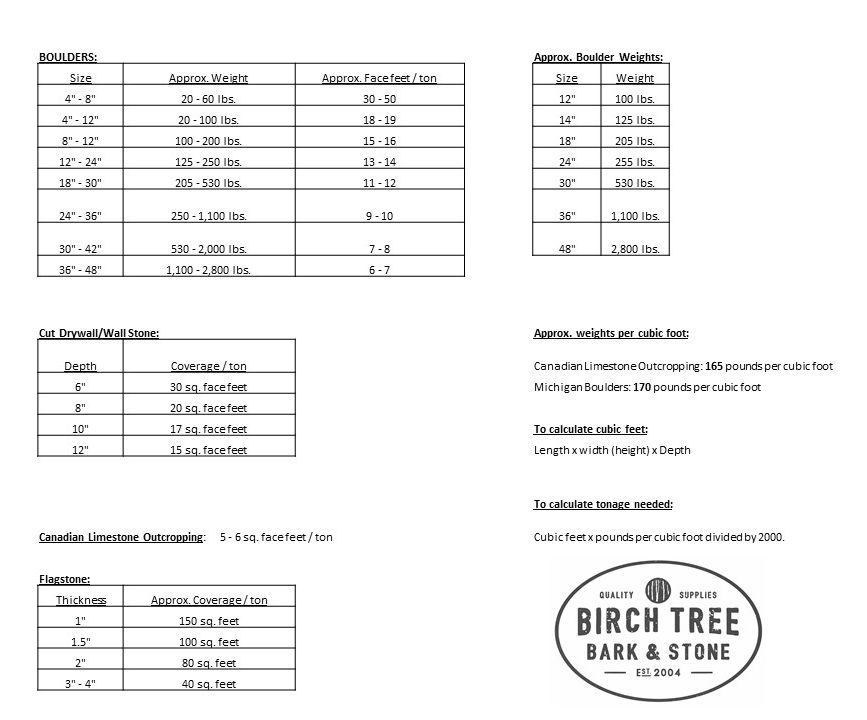
Image Source: www.birchtreebarkandstone.com
Figuring Out Your Mulch Coverage Needs
When you’re planning a landscaping project, whether it’s a small garden bed or a large area around your home, knowing how much mulch for a garden bed you need is crucial. Mulch is fantastic for gardens. It keeps weeds down, holds moisture in the soil, and makes your plants look great. But buying too much mulch can be wasteful, and buying too little means an unfinished look. This guide will walk you through the simple math to ensure you get it just right. We’ll cover everything from converting cubic yards to square feet to understanding the spread rate of mulch.
The Science Behind Mulch Coverage: Cubic Yards to Square Feet
The key to knowing how much mulch to buy lies in converting volume (cubic yards) into area (square feet) at a specific depth. Think of it this way: mulch comes in bags or bulk, measured by volume. But you apply it to a flat surface, measured by area. The depth you choose for your mulch application bridges this gap.
Why Depth Matters in Mulch Calculations
The depth at which you spread your mulch is the most critical factor in determining coverage. A shallower layer will cover more area with the same amount of mulch, while a deeper layer will cover less.
- Typical Mulch Coverage: For most garden beds and around trees, a depth of 2 to 4 inches is recommended. This depth provides good weed suppression and moisture retention without suffocating plant roots or causing other issues.
- Mulch Depth for Coverage:
- 2 inches: Ideal for areas where weed pressure is low or for decorative purposes. It offers a lighter layer of protection.
- 3 inches: This is the most common and often recommended depth. It strikes a good balance between weed control, moisture retention, and cost-effectiveness. This is the depth used for the 108 sq ft calculation.
- 4 inches: Best for areas with significant weed problems or where you need maximum moisture retention, like on slopes or in very dry climates. However, be careful not to pile mulch too high around the base of trees and shrubs, as this can lead to rot and pest issues.
Calculating Your Mulch Needs: A Step-by-Step Approach
Let’s get down to the practicalities. To accurately estimate how much mulch you need, you’ll follow a straightforward process. This process is essentially how to calculate mulch needs.
Step 1: Measure Your Area
First, you need to know the total area you want to cover.
- Rectangular or Square Areas: Measure the length and width of the area in feet. Multiply the length by the width to get the square footage.
- Formula: Area (sq ft) = Length (ft) × Width (ft)
- Circular Areas: Measure the diameter of the circle in feet. Divide the diameter by 2 to get the radius. Use the formula for the area of a circle.
- Formula: Area (sq ft) = π × (Radius (ft))² (where π is approximately 3.14)
- Irregular Shapes: Break down the irregular shape into smaller, more manageable geometric shapes (rectangles, squares, triangles, circles). Calculate the area of each section and then add them together to get the total square footage.
Step 2: Determine Your Desired Mulch Depth
As discussed, the depth is crucial. Most mulch calculators and recommendations use inches.
- Convert Depth to Feet: Since your area is in square feet, it’s easiest to convert your desired depth from inches to feet.
- Formula: Depth (ft) = Depth (in) / 12
Step 3: Calculate the Volume of Mulch Needed (Cubic Feet)
Now, you can calculate the volume of mulch required in cubic feet.
- Formula: Volume (cubic ft) = Area (sq ft) × Depth (ft)
Step 4: Convert Cubic Feet to Cubic Yards
Mulch is typically sold in cubic yards. There are 27 cubic feet in 1 cubic yard (3 ft × 3 ft × 3 ft = 27 cu ft).
- Formula: Volume (cubic yards) = Volume (cubic ft) / 27
The Handy Mulch Coverage Calculator
To make things even easier, you can use a mulch coverage calculator. These tools take your measurements and desired depth and do the math for you. You can find them online from garden supply stores or landscaping companies. Some are even designed as a mulch coverage calculator by depth, allowing you to input your specific depth preference.
Example Calculation: A Typical Garden Bed
Let’s walk through an example to solidify this.
Imagine you have a rectangular garden bed that is 10 feet long and 5 feet wide. You want to spread mulch at a depth of 3 inches.
-
Measure the Area:
- Length = 10 ft
- Width = 5 ft
- Area = 10 ft × 5 ft = 50 sq ft
-
Determine Desired Depth (in Feet):
- Desired Depth = 3 inches
- Depth in feet = 3 inches / 12 = 0.25 ft
-
Calculate Volume Needed (Cubic Feet):
- Volume (cu ft) = 50 sq ft × 0.25 ft = 12.5 cubic ft
-
Convert to Cubic Yards:
- Volume (cubic yards) = 12.5 cu ft / 27 cu ft/yard ≈ 0.46 cubic yards
Since you can’t buy 0.46 cubic yards, you would round up to 1 cubic yard to ensure you have enough. This confirms our initial statement: 1 cubic yard covers about 108 sq ft at a 3-inch depth. If your area was 108 sq ft, you would need exactly 1 cubic yard.
Understanding the Spread Rate of Mulch
The spread rate of mulch is directly related to the desired depth. A higher spread rate (more square feet covered per cubic yard) means a shallower depth. Conversely, a lower spread rate means a deeper depth.
- 1 cubic yard at 2 inches depth: Covers approximately 162 sq ft (1 cubic yard * 27 cu ft/cubic yard / (2 inches/12 inches/ft))
- 1 cubic yard at 3 inches depth: Covers approximately 108 sq ft (1 cubic yard * 27 cu ft/cubic yard / (3 inches/12 inches/ft)) – Our baseline.
- 1 cubic yard at 4 inches depth: Covers approximately 81 sq ft (1 cubic yard * 27 cu ft/cubic yard / (4 inches/12 inches/ft))
This highlights why it’s so important to decide on your depth before calculating.
Using a Mulch Calculator for Landscaping Projects
A mulch calculator for landscaping is an invaluable tool for larger projects. These often allow you to input multiple areas of different shapes and sizes, summing them up to give you a total mulch requirement. They simplify complex landscape mulch calculations, especially when dealing with winding paths, curved garden beds, or large tree surrounds.
Common Mulch Depths and Their Coverage
Let’s visualize this with a table to make it easy to see the typical mulch coverage:
| Mulch Depth (Inches) | Mulch Depth (Feet) | Sq Ft Covered per Cubic Yard |
|---|---|---|
| 1 | 0.083 | 324 |
| 2 | 0.167 | 162 |
| 3 (Recommended) | 0.25 | 108 |
| 4 | 0.333 | 81 |
| 5 | 0.417 | 65 |
| 6 | 0.5 | 54 |
Note: These are approximate figures and can vary slightly based on the specific type and density of the mulch.
Factors Affecting Mulch Coverage
While the math is straightforward, a few real-world factors can influence your actual mulch coverage:
- Mulch Type: Different mulches have varying densities. For example, shredded bark might be lighter and fluffier than wood chips. This can slightly affect how much area a cubic yard covers.
- Compaction: Mulch can compact over time, especially after heavy rain or foot traffic. You might find you need a little extra to maintain your desired depth.
- Uneven Ground: Sloping or uneven terrain can make it harder to maintain a consistent depth, potentially leading to thinner coverage in some spots and thicker in others.
- Bagged vs. Bulk Mulch: Mulch sold in bags is usually compressed. When you open the bag, it will fluff up, and its volume will increase. If you’re buying in bulk, it’s already at its loose volume.
When to Use More Mulch
While over-mulching can be problematic, there are times when you might want to err on the side of caution and buy a little extra:
- Establishing New Plantings: If you’re planting new trees or shrubs, a slightly deeper layer (around 4 inches) can be beneficial during the establishment phase to conserve moisture and suppress weeds effectively.
- Steep Slopes: Mulch helps prevent soil erosion on slopes. A deeper layer can provide more stability and protection.
- High Weed Areas: For gardens that are overrun with weeds, a thicker layer of mulch is your best defense.
When to Use Less Mulch (or Be More Precise)
- Around Tree Trunks and Shrub Bases: Avoid piling mulch directly against the stems or trunks of plants. This “mulch volcano” can trap moisture, leading to rot, fungal diseases, and attracting pests. Maintain a few inches of clear space.
- Very Small Areas: For tiny patches, a full cubic yard might be overkill. Consider buying bagged mulch, which is sold in smaller quantities (e.g., 2 or 3 cubic feet per bag). You’ll need to do the math to figure out how many bags you need: (Total sq ft needed / Coverage per bag sq ft) = Number of bags.
Frequently Asked Questions (FAQ)
Q1: How do I convert square feet to cubic yards for mulch?
A1: First, calculate the total square footage of your area. Then, decide on your desired mulch depth in inches and convert it to feet by dividing by 12. Multiply the square footage by the depth in feet to get cubic feet. Finally, divide the cubic feet by 27 to get cubic yards.
Q2: What is the standard depth for mulch?
A2: The most common and recommended depth for mulch is 3 inches. This depth provides effective weed suppression and moisture retention without harming plants.
Q3: Can I use a mulch coverage calculator by depth?
A3: Yes, many online mulch calculators allow you to specify the desired depth, which is highly recommended for accurate calculations.
Q4: How much mulch do I need for a 10×20 foot garden bed?
A4: For a 10×20 foot garden bed (200 sq ft) at a 3-inch depth, you would need approximately 200 sq ft * (3 inches / 12 inches/ft) = 50 cubic feet. Converting to cubic yards: 50 cu ft / 27 cu ft/yard ≈ 1.85 cubic yards. You would round up and buy 2 cubic yards.
Q5: What is the spread rate of mulch at 2 inches?
A5: At a 2-inch depth, 1 cubic yard of mulch will cover approximately 162 square feet.
Q6: How can I estimate mulch needs for a large landscaping project?
A6: For large projects, it’s best to break down the area into smaller geometric shapes, calculate the square footage for each, and sum them up. Then, use a mulch calculator or follow the conversion steps outlined in this guide, factoring in your desired mulch depth for coverage.
Q7: Is there a difference in coverage between different types of mulch?
A7: While the mathematical conversion remains the same, different mulch types have varying densities. Lighter, fluffier mulches might spread slightly further than denser, heavier ones, but for practical purposes, the standard coverage figures are generally reliable.
By following these steps and using the provided information, you can confidently determine precisely how many sq ft does 1 yard of mulch cover for your specific landscaping needs. Happy mulching!