
So, how many fat quarters are in a yard of fabric? Generally, you can get four fat quarters from one yard of standard quilting fabric. This is a foundational piece of knowledge for any quilter, particularly when planning projects and managing your quilting fabric yardage.
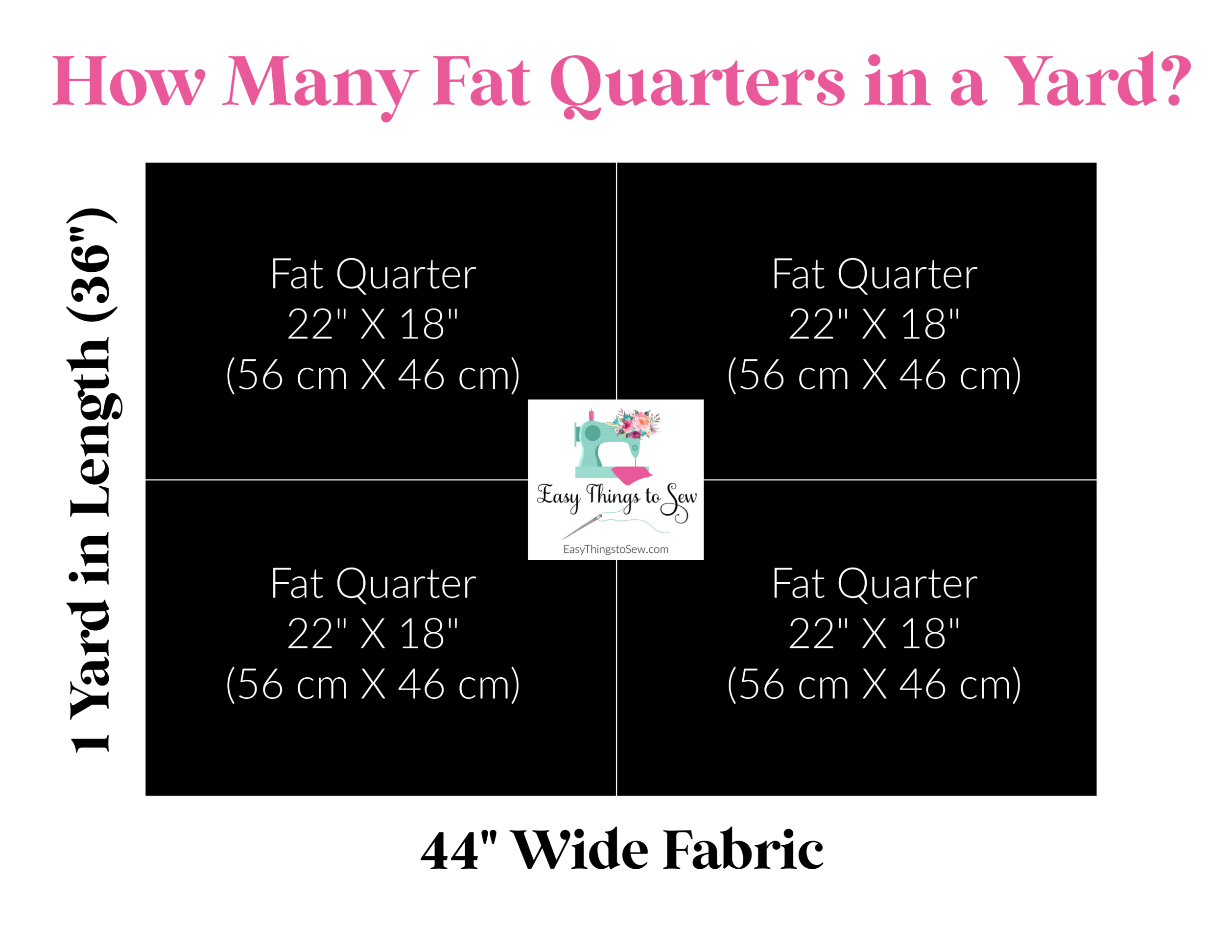
Image Source: easythingstosew.com
Deciphering Fat Quarter Dimensions
Fat quarters are a popular precut size in the quilting world, offering a convenient way to collect a variety of fabrics without committing to large yardage. But what exactly constitutes a fat quarter?
The Standard Fat Quarter Size
A standard fat quarter is cut from a yard of fabric that is 44-45 inches wide. The yard of fabric is cut in half lengthwise, creating two pieces that are 44-45 inches wide by 18 inches long. Then, each of these pieces is cut in half crosswise.
This results in four pieces, each measuring approximately 22 inches by 18 inches. This is the key to the “fat” aspect. A traditional “skinny” quarter cut from the same yard would be 11 inches wide by 36 inches long. The fat quarter offers a more usable and versatile shape for quilting blocks.
Why the “Fat” Matters
The difference in shape between a fat quarter and a skinny quarter is significant for quilters. The wider dimension of the fat quarter means you can often cut larger pieces or more pieces from it without resorting to piecing smaller scraps together. This is especially beneficial when you need larger squares or rectangles for your quilt blocks.
Fathoming Fabric Width Yard
When we talk about fabric, the width is a critical factor in fabric calculations quilting and determining fat quarter yardage. Most quilting cottons come off the bolt at a standard width.
Standard Fabric Widths
- 44-45 inches: This is the most common width for quilting cottons.
- 54-60 inches: Wider fabrics are also available and are great for backing quilts or larger projects.
- 108 inches: Extra-wide fabrics are typically used for quilt backings.
The fabric width yard dictates how the fabric is cut. For fat quarters, we are primarily concerned with the 44-45 inch width.
Calculating Yardage to Fat Quarters
Let’s break down the math to confirm how many fat quarters you get from a yard.
The Simple Division
Imagine a yard of fabric that is 45 inches wide and 36 inches long.
- First Cut: You cut the yard in half lengthwise. This gives you two pieces, each 45 inches wide by 18 inches long.
- Second Cut: You take each of those 18-inch long pieces and cut them in half widthwise. This means cutting them at the 22.5-inch mark (45 inches / 2).
This yields four pieces, each roughly 22.5 inches by 18 inches. These are your four fat quarters. This is a fundamental fat quarter conversion.
Visualizing the Cuts
Think of it like this:
- You have a rectangle that is 45 inches by 36 inches.
- You fold it in half along the 36-inch side, bringing the two 45-inch edges together. You now have a piece that is 45 inches by 18 inches.
- You then cut this folded piece in half across the 45-inch width. This cut goes through both layers.
- When you unfold, you have four pieces that are each 22.5 inches by 18 inches.
This method ensures that you maximize the usability of the fabric, hence the “fat” quarter.
How Much Fabric for Quilting?
Understanding how much fabric for quilting you need is essential for project planning. Fat quarters are excellent for building a stash of various prints without buying large amounts of each.
Stash Building with Fat Quarters
Many quilters love to buy fat quarters because they can get a wide variety of colors and patterns for their projects. If a pattern calls for, say, 1/4 yard of 10 different fabrics, buying 10 fat quarters is often a more economical and practical way to achieve this than buying 1/4 yard of each individually.
Converting Fat Quarters to Yardage
Sometimes, you might have a stash of fat quarters and need to figure out how much total yardage you have.
- Each fat quarter is essentially 1/4 yard of fabric, just cut differently.
- So, if you have 4 fat quarters, you have 1 yard of fabric (4 x 0.25 yard = 1 yard).
- If you have 8 fat quarters, you have 2 yards of fabric (8 x 0.25 yard = 2 yards).
This yardage to fat quarters conversion is straightforward.
Quilting Measurements and Calculations
Precise quilting measurements are the backbone of successful quilt making. Knowing how your fabric is cut and what you can get from it is crucial.
Standard Fat Quarter Size vs. Other Cuts
Let’s compare the fat quarter to other common fabric cuts:
| Cut | Dimensions (Approximate) | Relationship to a Yard |
|---|---|---|
| Fat Quarter | 22″ x 18″ | 1/4 yard (by area) |
| Skinny Quarter | 11″ x 36″ | 1/4 yard (by length) |
| 1/4 Yard | 9″ x 44″ | 1/4 yard (by length) |
| 1/2 Yard | 18″ x 44″ | 1/2 yard (by length) |
| Full Yard | 36″ x 44″ | 1 yard (by length) |
As you can see, while all the cuts represent a quarter of a yard in total area, the fat quarter dimensions offer a wider usable piece.
Piecing Smaller Scraps
Sometimes, you might have a project that requires a specific size piece, and your fat quarters don’t yield that size directly without some piecing. For example, if you need a 20-inch long strip and your fat quarter is only 18 inches long, you would need to join two pieces together to achieve the desired length. This is where stash management and creative cutting come into play.
The Benefits of Fat Quarters
Beyond their convenience for stash building, fat quarters offer several advantages:
- Variety: Easily collect a wide range of prints and colors for a single project.
- Usability: The wider dimension often allows for cutting larger quilt blocks or specific shapes without as much piecing.
- Pre-cut Friendly: Many quilt patterns are specifically designed for fat quarters, simplifying the cutting process.
- Less Waste: When using fat quarters for smaller projects or blocks, you might find you have less unusable “skinny” scraps.
Planning Projects with Fat Quarters
When a pattern calls for a specific amount of quilting fabric yardage, you can often substitute fat quarters. Here’s a general guideline for fat quarter yardage calculations when substituting:
- 1 Fat Quarter ≈ 1/4 Yard: As established, four fat quarters generally equal one yard.
- Project with 1/4 Yard Cuts: If a pattern calls for 1/4 yard of 12 different fabrics, you would need 12 fat quarters. This will give you a bit extra from each, which is always a bonus.
- Project with 1/2 Yard Cuts: If a pattern calls for 1/2 yard of 8 different fabrics, you would need 16 fat quarters (8 fabrics x 2 fat quarters per fabric).
- Project with Full Yard Cuts: If a pattern calls for 1 yard of 5 different fabrics, you would need 20 fat quarters (5 fabrics x 4 fat quarters per fabric).
It’s always a good idea to check the specific cutting requirements of your pattern and the dimensions of your fat quarters, especially if you need precise long strips.
Working with Wider Fabrics
While fat quarters are cut from standard 44-45 inch wide fabric, you might encounter projects that benefit from wider cuts, especially for quilt backs. If you’re backing a quilt that is wider than 45 inches, you’ll need to purchase fabric by the yard, possibly in wider widths (60″ or 108″). The same fabric calculations quilting apply, but you’ll be working with larger dimensions. For example, a 108-inch wide fabric can often back a queen-sized quilt without any seams.
Considerations for Different Fabric Types
While we’ve focused on quilting cottons, it’s worth noting that other fabrics might have different standard widths. However, the concept of the fat quarter is most prevalent in the quilting cotton industry. If you are working with linen, rayon, or other fibers, always check the fabric width yard to ensure your calculations are accurate.
Frequently Asked Questions (FAQ)
Here are some common questions quilters have about fat quarters:
Q: What is the exact measurement of a fat quarter?
A: A standard fat quarter measures approximately 18 inches by 22 inches.
Q: Can I get fat quarters from fabric that is wider than 45 inches?
A: Yes, you can cut fat quarters from wider fabric. If you start with 60-inch wide fabric, you would cut it in half lengthwise (30 inches wide by 36 inches long), then cut each of those pieces in half crosswise. This would result in fat quarters that are approximately 30 inches by 18 inches – even bigger!
Q: Do all fat quarters measure exactly 18″ x 22″?
A: While this is the standard, there can be slight variations due to the cutting process. It’s always a good idea to measure your fabric after cutting, especially if your pattern requires very precise dimensions.
Q: How many fat quarters do I need for a quilt?
A: This depends entirely on the size of the quilt and the block size used in the pattern. Many modern quilt patterns are designed to be fat quarter friendly. Always consult your pattern’s fabric requirements.
Q: What is the difference between a fat quarter and a 1/4 yard cut?
A: A 1/4 yard cut is typically a long, skinny piece measuring 9 inches by the full width of the fabric (usually 44-45 inches). A fat quarter is a wider piece measuring 18 inches by 22 inches (approximately). The fat quarter is generally more versatile for cutting larger quilt pieces.
Q: Where can I buy fat quarters?
A: Fat quarters are widely available at local quilt shops, online fabric retailers, and craft stores. They are often sold in pre-packaged bundles based on color themes or fabric collections.
Q: Is it better to buy fabric by the yard or fat quarters?
A: It depends on your project and preference. For large projects requiring a lot of a single fabric, buying by the yard is usually more economical. For smaller projects or when you want a wide variety of prints, fat quarters are an excellent choice.
Q: How do I convert yardage to fat quarters for a specific project?
A: If a pattern calls for, say, 1/2 yard of a particular fabric, you would generally need 2 fat quarters of that fabric. Remember that each fat quarter provides about 1/4 yard of fabric area. Always double-check your cutting needs against the fat quarter dimensions.
By mastering these basic quilting measurements and fabric calculations quilting, you can confidently plan your projects and make the most of your beautiful quilting fabric yardage. Happy quilting!