
A yard hydrant is a water source found on many properties, especially in rural areas, that allows you to access water outdoors. How does a yard hydrant work? A yard hydrant works by connecting to an underground water line and uses a rod and handle to operate a shut-off mechanism and a drain valve. This system allows water to flow to an above-ground spout for use, and then drains the hydrant when it’s turned off to prevent freezing.
Yard hydrants, often called frost-proof hydrants, are a valuable addition to any property with a need for outdoor water access. They provide a reliable and convenient way to water gardens, wash vehicles, fill livestock troughs, or even for general cleaning. Unlike a simple spigot, a yard hydrant is designed to be used year-round, even in climates prone to freezing temperatures.
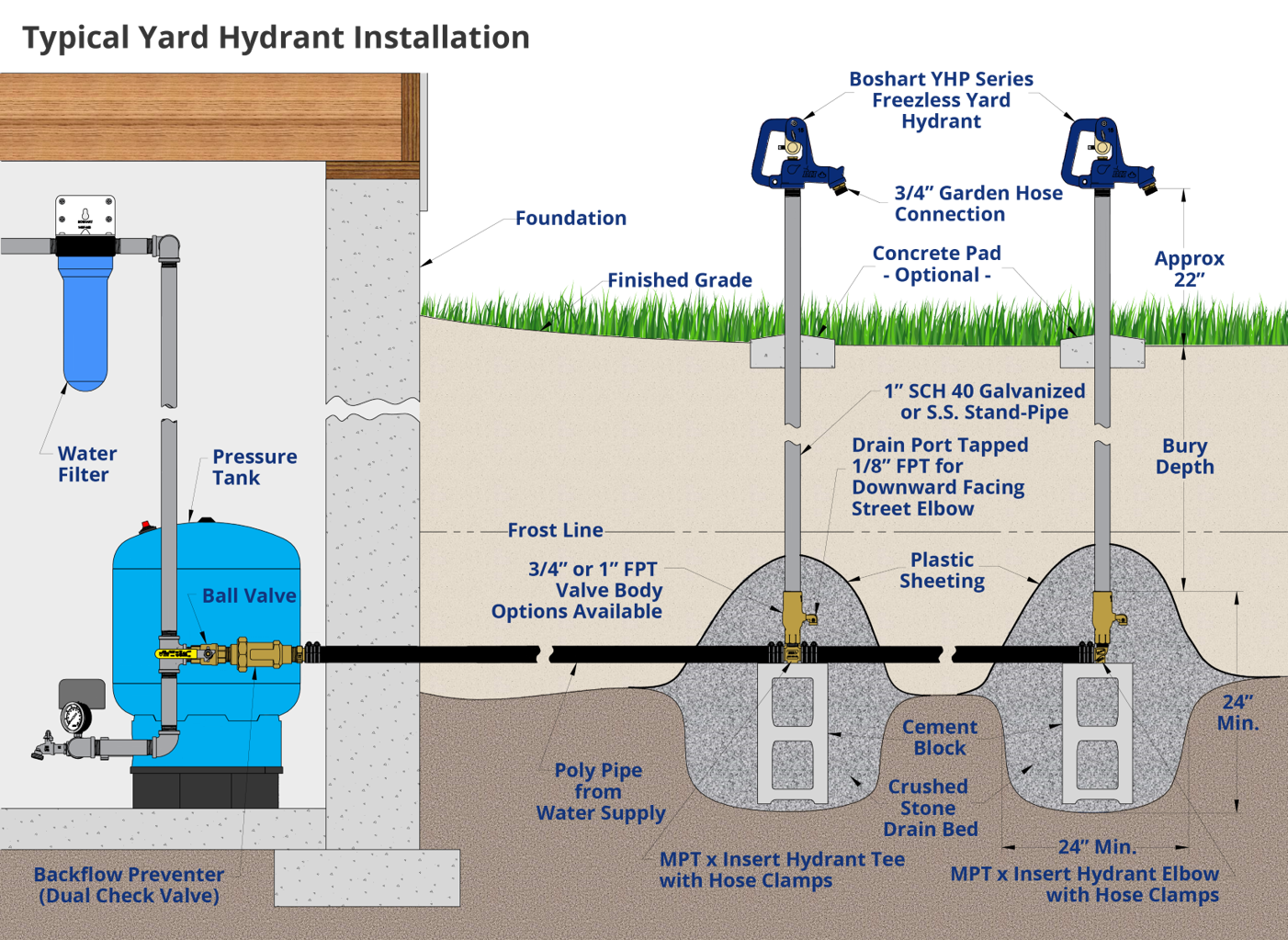
Image Source: blog.boshart.com
The Core Components of a Yard Hydrant
To truly grasp how a yard hydrant functions, we must first examine its individual parts. Each component plays a crucial role in delivering water and ensuring its longevity.
The Underground Water Line Connection
The journey of water to your yard hydrant begins with the underground water line. This is typically an extension of your main water supply system. It’s buried deep enough to be below the frost line, which is the depth to which the ground freezes in your region. This depth is critical for the hydrant’s frost-proof capabilities. The pipe is usually made of durable materials like PVC or copper.
- Material: PVC, copper, or PEX are common choices for underground water lines.
- Depth: The depth is determined by the local frost line to prevent freezing.
- Connection: The underground line connects to the base of the yard hydrant, usually via a threaded fitting or a specialized coupling.
The Vertical Rod and Handle
The most visible part of a yard hydrant, apart from the spout, is the vertical rod and the manual operation handle at the top. This assembly is the primary interface for the user. When you lift or lower the handle, you are directly controlling the internal workings of the hydrant.
- Handle: Usually a sturdy metal lever, designed for easy grip and leverage.
- Rod: A long metal shaft that extends from the handle down into the hydrant body. It’s what transmits the force from the handle to the valve assembly.
The Valve Assembly
The heart of the yard hydrant’s operation lies within its valve assembly. This is where the flow of water is controlled. When the handle is operated, it moves the vertical rod, which in turn opens or closes a valve that allows water from the underground supply to reach the spout.
- Seals: High-quality rubber or neoprene seals are essential to prevent leaks when the hydrant is off.
- Valve Seat: The point where the valve closes to stop water flow.
- Plunger/Disc: The component that moves to open or close the valve.
The Piston Mechanism
The piston mechanism is intimately linked with the valve assembly. As the vertical rod is moved, it actuates a piston. This piston’s movement either pushes open a valve to allow water flow or closes it. The piston is often designed to create a watertight seal when the hydrant is in the off position.
- Movement: The piston moves up and down within a cylinder.
- Force Transfer: It efficiently transfers the force from the rod to the valve components.
The Drain Valve
This is the key to the “frost-proof” designation. When the hydrant is shut off (handle lowered), the drain valve automatically opens. As the main valve closes, it also lifts the drain valve, allowing any water remaining in the standpipe (the part of the hydrant above the main valve) to drain out onto the surrounding soil. This prevents water from being trapped and freezing, which could burst the hydrant.
- Automatic Operation: The drain valve opens when the main valve closes.
- Location: Typically situated at the bottom of the standpipe, below the frost line.
- Purpose: To expel water from the upper portion of the hydrant, preventing freeze damage.
The Above Ground Spout
This is where the water emerges for use. The above ground spout is connected to the main body of the hydrant and is accessible for attaching hoses or filling containers. It’s designed to be robust and withstand the elements.
- Design: Varies, but usually features a threaded connection for hoses.
- Durability: Constructed from strong materials to resist impact and weather.
The Shut-Off Mechanism
The entire system culminates in the shut-off mechanism. This is the integrated system of rod, piston, valve, and seals that controls the flow of water. By turning the handle, you precisely control whether the valve is open or closed.
- Functionality: Controls the water supply to the spout.
- Reliability: Dependent on the quality of the seals and valve components.
How a Yard Hydrant Operates: Step-by-Step
Let’s trace the path of water and the sequence of events when you use a yard hydrant.
1. Turning the Hydrant On (Water Flowing)
- Lifting the Handle: You grasp the handle at the top of the yard hydrant and begin to lift it.
- Raising the Rod: As you lift the handle, the vertical rod is pulled upwards.
- Operating the Piston: The upward movement of the rod pushes on the piston mechanism.
- Closing the Drain Valve: The piston, as it rises, also pushes down on a mechanism that closes the drain valve. This is crucial: the drain valve must be sealed before the main water valve opens to prevent water from escaping prematurely.
- Opening the Main Valve: Further upward movement of the rod opens the main valve assembly, allowing pressurized water from the underground water line to flow into the hydrant’s standpipe.
- Water Reaches the Spout: The water travels up the standpipe and out of the above ground spout, ready for use.
2. Turning the Hydrant Off (Water Stops)
- Lowering the Handle: You push the handle downwards.
- Lowering the Rod: The vertical rod moves downwards.
- Operating the Piston: The downward movement of the rod pulls the piston upwards, away from the main valve.
- Closing the Main Valve: As the piston moves up, it disengages from the main valve, allowing it to close. This stops the flow of water from the underground line.
- Opening the Drain Valve: Crucially, as the piston moves to its lowest position, it simultaneously lifts a mechanism that opens the drain valve. This allows any remaining water in the standpipe, above the level of the main valve, to drain out.
- Water Drains: The water exits through the drain port, usually located near the base of the hydrant, below the frost line.
Why Yard Hydrants Are Frost-Proof
The design of a yard hydrant is ingeniously simple yet highly effective at preventing freeze damage. The key is the placement of the main shut-off mechanism below the frost line.
- Main Valve Location: The primary valve that controls water flow is situated deep underground, below the level where the ground typically freezes.
- Drainage: When the hydrant is turned off, the water in the portion of the pipe above the main valve is allowed to drain out. This means only the underground water line and the very bottom portion of the hydrant remain filled with water, which is generally protected from freezing by the surrounding earth.
- No Standing Water Above Ground: The above-ground spout and the standpipe above the drain valve are designed to be empty of water when the hydrant is not in use.
This strategic design makes yard hydrants an ideal solution for areas with harsh winters.
Different Types of Yard Hydrants
While the basic principle remains the same, there are variations in yard hydrant designs and features.
Manual vs. Automatic Drain Valves
Most modern yard hydrants feature automatic drain valves, as described above. However, some older or more basic models might have manual drain valves that require a separate operation.
Built-in Pressure Regulators
Some higher-end yard hydrants may include built-in pressure regulators to ensure a consistent and manageable water flow, protecting hoses and connected equipment from high water pressure.
Materials and Durability
Yard hydrants are constructed from various materials, impacting their durability and cost. Cast iron, brass, and robust plastics are commonly used for the body and internal components.
Common Yard Hydrant Problems and Hydrant Maintenance
While built for durability, yard hydrants can encounter issues that require attention. Regular hydrant maintenance can prevent many common problems.
Leaks
Leaks can occur at the spout, around the handle, or from the base.
- Spout Leaks: Often caused by worn-out seals in the valve assembly. Replacing the packing or the entire valve seal kit usually resolves this.
- Handle Leaks: Typically due to worn packing around the vertical rod. Tightening the packing nut or replacing the packing material will help.
- Base Leaks: If water is leaking from the base of the hydrant when it’s off, it could indicate a problem with the main valve seat or seals, or that the drain valve isn’t opening properly.
Freezing
Although designed to be frost-proof, improper use or damage can lead to freezing.
- Cause: If the drain valve is blocked or not opening, water can remain in the standpipe and freeze.
- Solution: Ensure the drain valve is clear of debris. If frozen, the hydrant may need to be thawed carefully using a heat source, but this can be risky. It’s often better to replace a frozen hydrant.
Difficulty Operating
Sometimes the handle can be stiff or difficult to move.
- Cause: Corrosion, mineral buildup, or a worn piston mechanism.
- Solution: Lubrication of the rod and piston can help. For significant stiffness, the hydrant may need to be disassembled for cleaning and repair.
Erosion Around the Base
The constant drainage from the drain valve can sometimes cause erosion around the hydrant’s base over time.
- Solution: Ensure the ground around the hydrant is graded to allow water to drain away effectively without pooling. Adding gravel can help with drainage.
Hydrant Maintenance Tips:
- Inspect Regularly: Visually check for leaks or damage.
- Operate Periodically: Even in seasons when you don’t need water, operate the hydrant a few times to keep internal parts moving and prevent seizing.
- Check Packing: If you notice leaks around the rod, tighten the packing nut. If that doesn’t work, replace the packing.
- Clean the Spout: Keep the spout area free of debris.
- Winterization (If Necessary): While designed to be frost-proof, if you’re in an area with extremely harsh winters or suspect a problem, ensure the hydrant is functioning correctly and draining properly.
- Replace Worn Parts: Seals, O-rings, and valve seats are wear items and may need replacement over time. Having a repair kit on hand is advisable.
Frequently Asked Questions (FAQ)
Q1: What is the typical depth a yard hydrant is buried?
A1: Yard hydrants are typically installed so that the main valve assembly and the drain valve are below the local frost line. This depth varies significantly by region but can range from 2 to 6 feet or more.
Q2: Can I connect a yard hydrant to a well system?
A2: Yes, you can connect a yard hydrant to a well system, provided the well has sufficient pressure and flow rate. The well’s pump system will provide the necessary water pressure.
Q3: How do I know if my yard hydrant is frost-proof?
A3: A frost-proof yard hydrant is designed with its primary shut-off valve below the frost line and includes an automatic drain valve that empties the upper portion of the hydrant when it’s turned off. If you see a spout that drains when you turn it off, it’s likely frost-proof.
Q4: Who is responsible for repairing a yard hydrant?
A4: If the hydrant is on private property, the property owner is typically responsible for its repair and maintenance. If it’s a municipal hydrant, the local water department or municipality is responsible.
Q5: How do I stop a yard hydrant from freezing?
A5: The primary way to prevent freezing is to ensure the hydrant is properly installed with the valve below the frost line and that the drain valve is functioning correctly to empty the standpipe when the hydrant is shut off.
Q6: Can I use a yard hydrant in freezing temperatures?
A6: Yes, that’s their primary advantage. As long as the hydrant is functioning correctly, especially the drain valve, you can use it in freezing temperatures without the risk of it freezing and bursting.
Q7: What is the lifespan of a yard hydrant?
A7: With proper installation and regular hydrant maintenance, a yard hydrant can last for many years, often 20-30 years or even longer, depending on the quality of the materials and the operating conditions.
Q8: What happens if my yard hydrant freezes?
A8: If your yard hydrant freezes, it’s likely due to water remaining in the standpipe, meaning the drain valve isn’t working properly or is blocked. Freezing can cause cracks or damage to the hydrant body, leading to leaks. In most cases, a frozen hydrant needs to be replaced.