
So, how big is a yard of mulch? A yard of mulch is a unit of volume that measures 3 feet by 3 feet by 3 feet, which equals 27 cubic feet. This is the standard way mulch is sold in bulk.
Figuring out how much mulch you need for your garden beds can feel a bit like a math puzzle. But don’t worry, it’s simpler than it sounds! Knowing the size of a yard of mulch is the first step to making sure you buy just enough to beautify your landscape without overspending or running short. Whether you’re a seasoned gardener or just starting out, this guide will help you navigate the world of mulch quantities. We’ll cover everything from understanding mulch volume to estimating your mulch coverage, and even explain how mulch delivery works.
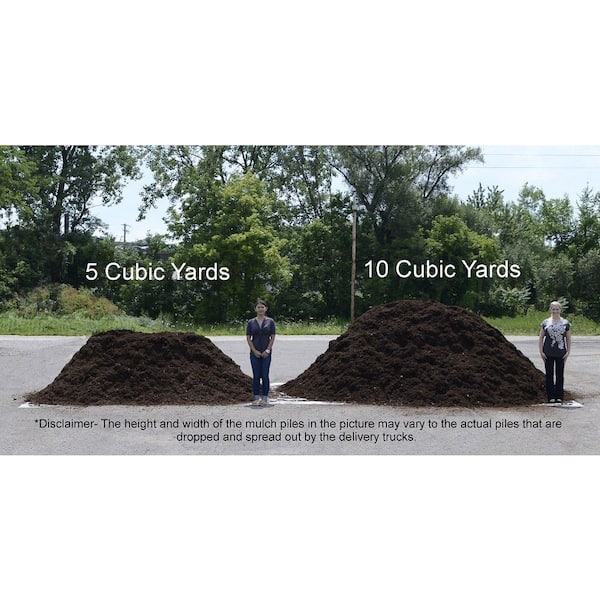
Image Source: images.thdstatic.com
Deciphering Mulch Volume: The Cubic Yard
The term “yard of mulch” refers to a cubic yard mulch. This is a standard measurement for bulk landscaping materials. Think of it as a cube, with each side measuring one yard (or three feet) in length.
- Dimensions: 1 yard x 1 yard x 1 yard
- In Feet: 3 feet x 3 feet x 3 feet
- Total Cubic Feet: 27 cubic feet
This measurement is crucial because when you buy mulch in bulk, it’s almost always sold by the cubic yard. This is different from buying mulch in bags, which have their own specific sizes and coverage estimates.
Why Cubic Yards Matter
Using cubic yards provides a consistent way to measure and purchase large quantities of mulch. It helps landscapers, nurseries, and customers communicate effectively about how much material is needed. When you get a quote for mulch delivery, the price will usually be per cubic yard.
Estimating Your Mulch Needs: The Coverage Equation
The biggest question most people have is, ” how much mulch do I need?” This depends on several factors, primarily the area you want to cover and the desired depth of the mulch layer.
Recommended Mulch Depth
For most mulch for garden beds, a depth of 2 to 4 inches is ideal.
- 2 inches: Good for suppressing weeds and retaining moisture, especially in areas with established plants.
- 3 inches: A common and effective depth for most garden beds, offering good weed suppression, moisture retention, and aesthetic appeal.
- 4 inches: Best for areas with aggressive weeds or for new plantings where extra soil protection is beneficial. However, avoid piling mulch too high against plant stems or tree trunks, as this can lead to rot and disease.
Calculating Coverage
Here’s where the mulch coverage comes into play. A single cubic yard of mulch can cover a surprising amount of ground, depending on the depth you choose.
- 1 cubic yard of mulch spread at 2 inches deep will cover approximately 162 square feet.
- 1 cubic yard of mulch spread at 3 inches deep will cover approximately 108 square feet.
- 1 cubic yard of mulch spread at 4 inches deep will cover approximately 81 square feet.
These are estimates, and the actual coverage can vary slightly based on the type of mulch (some compact more than others) and how evenly you spread it.
Using a Mulch Calculator
To make this process even easier, many landscaping supply companies offer a mulch calculator on their websites. These tools are designed to help you determine exactly how many cubic yards you need. You’ll typically input:
- The length and width of the area you want to mulch (in feet).
- The desired depth of the mulch (in inches).
The calculator will then do the math for you and tell you the total cubic yards required. It’s a fantastic tool for ensuring accuracy and avoiding waste.
Manual Calculation Steps
If you prefer to do it yourself, here’s the general process:
- Measure Your Area:
- For rectangular or square areas: Length (ft) x Width (ft) = Total Square Feet.
- For irregularly shaped areas: Break them down into smaller, manageable shapes (rectangles, squares, circles, triangles), calculate the area of each, and add them together.
- Convert Depth to Feet: Since cubic yards are measured in feet, you need to convert your desired depth from inches to feet.
- Desired Depth (inches) / 12 inches/foot = Desired Depth (feet)
- Example: 3 inches / 12 = 0.25 feet
- Calculate Cubic Feet Needed:
- Total Square Feet x Desired Depth (feet) = Total Cubic Feet Needed
- Convert Cubic Feet to Cubic Yards:
- Total Cubic Feet Needed / 27 cubic feet/cubic yard = Total Cubic Yards Needed
Let’s work through an example:
You want to mulch a flower bed that is 20 feet long and 5 feet wide, with a desired depth of 3 inches.
- Area: 20 ft x 5 ft = 100 square feet.
- Depth in Feet: 3 inches / 12 = 0.25 feet.
- Cubic Feet: 100 sq ft x 0.25 ft = 25 cubic feet.
- Cubic Yards: 25 cubic feet / 27 cubic feet/cubic yard = 0.93 cubic yards.
Since you can’t usually buy fractions of a cubic yard in bulk, you would round up and order 1 cubic yard.
Mulch Bag Size vs. Bulk Mulch
Many people are familiar with buying mulch by the bag. It’s convenient for smaller projects. However, understanding the difference between mulch bag size and bulk purchases is important.
Bagged Mulch
Bagged mulch is typically sold in bags that contain 2 or 3 cubic feet of material. This is a much smaller quantity than a cubic yard.
- Coverage per Bag:
- A 2 cubic foot bag spread at 3 inches deep will cover about 1 square foot (2 cu ft / 0.25 ft depth = 8 sq ft coverage).
- A 3 cubic foot bag spread at 3 inches deep will cover about 1.5 square feet (3 cu ft / 0.25 ft depth = 12 sq ft coverage).
To put this into perspective:
- To cover 100 square feet at 3 inches deep, you would need approximately 100 bags of 2 cubic foot mulch, or about 67 bags of 3 cubic foot mulch.
- Alternatively, since 1 cubic yard = 27 cubic feet, you would need about 13-14 bags of 2 cubic foot mulch, or about 9-10 bags of 3 cubic foot mulch to equal 1 cubic yard.
Buying in bulk is often more cost-effective for larger projects.
Bulk Mulch
Buying mulch in bulk means you’re purchasing it by the cubic yard directly from a landscaping supplier, nursery, or quarry. This usually involves a minimum order, and the mulch is delivered to your home in a large truck.
Pros of Bulk Mulch:
- Cost-Effective: Generally cheaper per cubic yard than bagged mulch.
- Less Waste: No plastic bags to dispose of.
- Convenience for Large Projects: Saves time and effort compared to hauling many bags.
- Wider Variety: Often available in a greater selection of types and colors.
Cons of Bulk Mulch:
- Minimum Order: You might need to purchase a minimum quantity.
- Delivery Fees: There might be a charge for delivery.
- Storage: You need a place to store the bulk material if it’s delivered before you’re ready to spread it.
- Spreading Effort: Requires a wheelbarrow and shovels to move from the delivery pile to your garden beds.
Understanding Mulch Spread: Achieving the Right Depth
The term “mulch spread” refers to how you distribute the mulch evenly across your desired area to achieve the correct depth. Even mulch spread is key to effective weed suppression, moisture retention, and creating an attractive landscape.
Tools for Spreading
- Wheelbarrow: Essential for transporting bulk mulch from the delivery point to your garden beds.
- Shovel: Used to load the wheelbarrow and to move mulch from the wheelbarrow into the beds.
- Garden Rake: A sturdy garden rake is your best friend for spreading the mulch evenly and creating a smooth, consistent layer.
- Hard Rake (Leaf Rake): Can be used for lighter spreading or to achieve a finer finish.
Spreading Techniques
- Start at the Farthest Point: Begin spreading from the back of your garden bed and work your way towards the front or edge. This way, you won’t have to step on the newly spread mulch.
- Work in Sections: Don’t try to spread all the mulch at once. Fill your wheelbarrow, spread that section, then refill.
- Aim for Uniformity: Use your rake to spread the mulch evenly. Visually check your depth as you go. You can use a ruler or a designated depth gauge if you want to be very precise.
- Avoid Plant Stems: Crucially, keep mulch a few inches away from the base of trees, shrubs, and perennials. Piling mulch against stems can cause rot, disease, and pest problems.
Mulch Delivery: What to Expect
If you’re ordering a significant amount of mulch, mulch delivery is often the most practical option. Here’s what you can expect:
Ordering and Scheduling
- Contact Suppliers: Reach out to local landscaping supply yards, nurseries, or garden centers that offer bulk mulch.
- Specify Quantity: Be ready to tell them how many cubic yards you need. If you’re unsure, provide them with your measurements, and they can help you calculate.
- Delivery Address and Access: Provide a clear delivery address and any specific instructions for the driver (e.g., “leave near the back gate”). Ensure the delivery area is accessible for a large truck.
- Scheduling: They will schedule a delivery window. Be aware that delivery times can sometimes be flexible, especially during peak seasons.
The Delivery Process
- Dump Site: The mulch will typically be dumped from the back of a dump truck onto your driveway, lawn, or a designated spot. Discuss with the supplier where you’d prefer it dumped if you have concerns about access or potential damage.
- Material Quality: While they aim to deliver good quality mulch, it’s a good idea to briefly inspect the load when it arrives if possible.
Delivery Fees and Pricing
Mulch pricing is usually quoted per cubic yard. This price will vary depending on the type of mulch (e.g., hardwood bark, pine bark, dyed mulches) and the supplier.
- Base Price: The cost of the mulch itself per cubic yard.
- Delivery Fee: This can be a flat rate, a per-mile charge, or sometimes included if you order a certain quantity.
- Minimum Order: Some suppliers have a minimum quantity for delivery.
Example Mulch Pricing (Illustrative – actual prices vary widely by region and supplier):
| Mulch Type | Price Per Cubic Yard (Bulk) | Approximate Bagged Equivalent (3 cu ft bags) |
|---|---|---|
| Hardwood Bark | $35 – $60 | $4 – $6 per bag |
| Pine Bark | $40 – $70 | $5 – $7 per bag |
| Dyed Mulch (Red, Brown, Black) | $45 – $80 | $6 – $9 per bag |
| Cedar Mulch | $50 – $90 | $7 – $12 per bag |
Note: Bagged mulch prices are estimates and can vary significantly.
Always get a clear quote that includes the mulch cost and any delivery fees before confirming your order.
Choosing the Right Mulch for Your Garden Beds
The type of mulch you choose impacts its longevity, appearance, and benefits to your plants.
Popular Mulch Types
- Hardwood Bark: A very common and versatile option. It breaks down slowly and provides good weed suppression. It comes in various textures, from shredded to chunkier pieces.
- Pine Bark: Often available in shredded or nugget forms. It has a pleasant aroma and is slightly acidic, which can be beneficial for acid-loving plants like azaleas and blueberries. It tends to float away in heavy rain more easily than hardwood.
- Cedar Mulch: Known for its aromatic properties and natural insect-repellent qualities. It is also quite durable and breaks down slowly.
- Dyed Mulch (Red, Brown, Black): Made from wood products that are dyed to achieve a consistent, vibrant color. It offers a uniform look but can fade over time. The dyes are generally considered safe for the environment and plants.
- Compost: While not strictly a mulch, compost can be used as a top dressing. It adds nutrients to the soil as it breaks down but is not as effective at weed suppression or moisture retention as wood-based mulches.
- Straw/Hay: Good for vegetable gardens and can be very cost-effective. However, hay can introduce weed seeds, and both break down relatively quickly.
- Pine Needles (Pine Straw): Excellent for acid-loving plants, provides good coverage, and breaks down slowly.
Factors to Consider When Choosing
- Aesthetics: What color and texture will best complement your landscape?
- Longevity: How often do you want to replenish the mulch? Shredded mulches generally last longer than nuggets.
- Cost: Mulch pricing varies by type.
- Plant Needs: Do you have plants that prefer acidic soil?
- Weed Pressure: Heavily weeded areas might benefit from a thicker layer of a denser mulch.
Frequently Asked Questions (FAQ)
Q: How much mulch do I need for a 10×10 garden bed?
A: For a 10×10 foot garden bed (100 sq ft), if you want a 3-inch deep layer:
You need 100 sq ft * (3/12) ft = 25 cubic feet.
Since 1 cubic yard = 27 cubic feet, you would need approximately 0.93 cubic yards. You should round up and order 1 cubic yard of mulch.
Q: Can I just use one cubic yard for a very large area?
A: One cubic yard of mulch covers about 81 to 162 square feet, depending on the depth. For larger areas, you will need to calculate based on the total square footage and your desired depth.
Q: What is the difference between mulch coverage and mulch volume?
A: Mulch volume refers to the actual amount of mulch you buy, typically measured in cubic yards or cubic feet. Mulch coverage refers to the area (in square feet) that a certain volume of mulch can cover at a specific depth.
Q: How do I know if the mulch from the bag is the same as bulk mulch?
A: Both bag and bulk mulch are measured in cubic feet or cubic yards. The main difference is the packaging and how they are sold. The quality and type of mulch can vary between brands and suppliers, so it’s always good to check the product description.
Q: Is it better to buy mulch in bags or in bulk?
A: For small projects (like a few small garden beds or a single tree), bagged mulch is convenient. For larger areas, bulk mulch is usually more cost-effective and environmentally friendly due to less packaging waste.
Q: How thick should I spread mulch around trees?
A: Aim for a depth of 2-4 inches, but always keep the mulch at least 2-3 inches away from the tree trunk itself to prevent rot and disease. This is often referred to as the “mulch donut” or “mulch volcano” – avoid the volcano!
By taking the time to calculate your needs and understanding what a cubic yard of mulch represents, you can ensure your mulch for garden beds project is a success, leading to a beautiful and healthy landscape.