
A yard of fabric is 36 inches long. This foundational piece of knowledge is crucial for anyone involved in sewing, quilting, crafting, or even just understanding textile measurements. The width of the fabric can vary greatly, but the length of a standard fabric yard is always 36 inches.
When you’re looking at fabric, especially for projects, you’ll often see it sold by the yard. This means you’re buying a length of fabric that is 36 inches long, regardless of its width. Think of it like buying lumber; you might buy a “foot” of wood, but the width and thickness of that piece can differ. With fabric, it’s the length that is standardized when you purchase “a yard.” This article will dive deep into fabric yardage measurements, helping you convert fabric yard to inches and master other fabric dimensions yard.
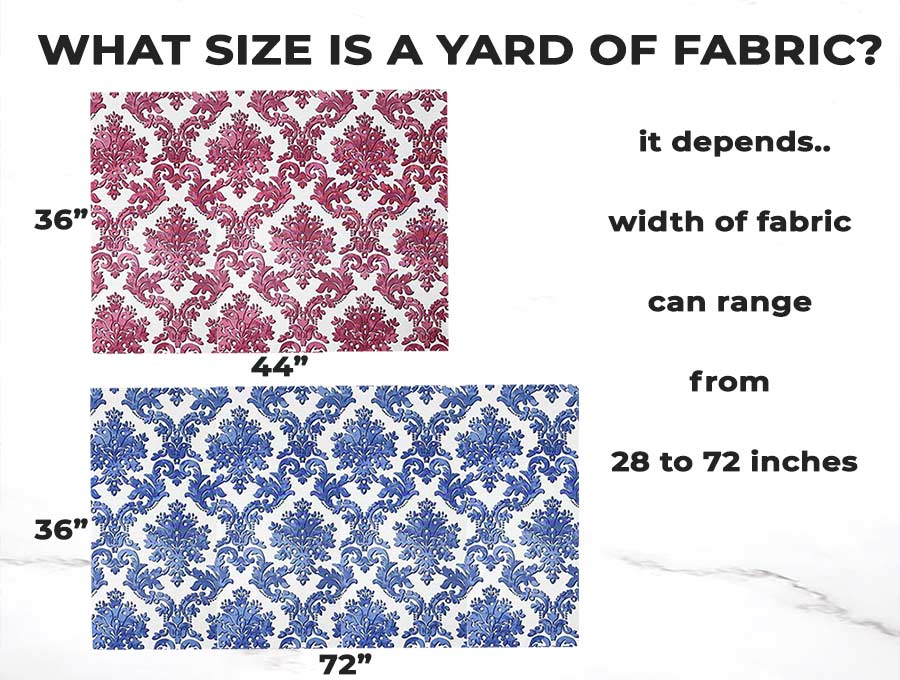
Image Source: hellosewing.com
Deciphering Yardage Fabric Measurements
Fabric measurements can sometimes feel like a secret code, but once you learn the basics, it becomes quite straightforward. The primary unit of measurement for fabric in the United States and other imperial-using countries is the yard. This is a fundamental aspect of imperial fabric measurements.
The Standard Fabric Yard: A Closer Look
What exactly constitutes a standard fabric yard? At its core, it’s a length measurement. This length is universally recognized as 36 inches. So, when a pattern calls for “2 yards of fabric,” it means you need a total length of 72 inches (2 yards x 36 inches/yard).
Why Yards?
The use of yards for fabric stems from historical trade practices and the way fabric was traditionally manufactured and sold. Large bolts of fabric were, and still are, produced in long, continuous lengths. Measuring this in yards became a practical and widely accepted method.
Fabric Width Yardage: The Other Dimension
While the length of a yard is fixed, the fabric width yardage is not. This is where things can get a bit more varied. Fabric manufacturers produce fabric in different widths to suit various needs and types of projects. Common fabric widths include:
- 36 inches (91.44 cm): Often found in flannel, some quilting cottons, and children’s fabrics.
- 44-45 inches (111.76-114.3 cm): This is a very common width for quilting cottons and general apparel fabrics.
- 54 inches (137.16 cm): Frequently used for home decor fabrics, upholstery, and some apparel.
- 60 inches (152.4 cm): Common for apparel fabrics, knits, and home decor, offering more fabric for wider projects.
- 72 inches (182.88 cm) and wider: Typically for drapery, upholstery, and specific home furnishings.
So, when you buy “a yard of fabric,” you get 36 inches in length, and the width is whatever the bolt specified. For example, you might buy “a yard of 45-inch wide quilting cotton,” meaning you receive a piece that is 36 inches long by 45 inches wide.
Calculating Fabric Needs: Converting Fabric Yard to Inches
Knowing how many inches in a yard of fabric is essential for accurate fabric yardage calculations. If a pattern requires a specific amount of fabric in inches or feet, you’ll need to perform a conversion.
The Simple Conversion: Fabric Yard to Inches
The most basic conversion is to understand how big is a yard of fabric in inches. As we’ve established, it’s 36 inches.
Here’s a simple way to think about it:
- 1 yard = 36 inches
- 2 yards = 2 x 36 inches = 72 inches
- 3 yards = 3 x 36 inches = 108 inches
And so on. This basic formula allows you to convert fabric yard to inches for any quantity.
Example:
Let’s say a project requires 1.5 yards of fabric. To find out how many inches that is:
1.5 yards * 36 inches/yard = 54 inches.
So, you need 54 inches of fabric length.
Working with Feet and Yards
Sometimes fabric requirements might be listed in feet. Since there are 3 feet in a yard, and each foot has 12 inches:
- 1 yard = 3 feet
- 1 foot = 12 inches
Therefore, 1 yard = 3 feet * 12 inches/foot = 36 inches. This reinforces our core understanding of how many inches in a yard of fabric.
If a pattern calls for 6 feet of fabric:
- Convert feet to yards: 6 feet / 3 feet/yard = 2 yards.
- Convert yards to inches: 2 yards * 36 inches/yard = 72 inches.
Or, directly convert feet to inches:
6 feet * 12 inches/foot = 72 inches.
This illustrates how to work with different imperial fabric measurements.
Visualizing Fabric Dimensions: Fabric Dimensions Yard
To truly grasp how big is a yard of fabric in inches, it helps to visualize it. Imagine a standard ruler. A yard of fabric is equivalent to three of these rulers laid end-to-end.
The Unfolded Yard: A Visual Aid
Consider a single yard of fabric. It’s a rectangle. One dimension is its fixed length of 36 inches. The other dimension is its width, which, as mentioned, can vary.
Let’s look at common scenarios:
| Fabric Width | Length (1 Yard) | Dimensions of 1 Yard of Fabric |
|---|---|---|
| 36 inches | 36 inches | 36 inches x 36 inches |
| 45 inches | 36 inches | 36 inches x 45 inches |
| 54 inches | 36 inches | 36 inches x 54 inches |
| 60 inches | 36 inches | 36 inches x 60 inches |
These are the fabric dimensions yard you’ll typically encounter. The 36 inches in length is constant, representing the “yard.”
Area Considerations
While we focus on length, it’s worth noting that the area you get from a yard of fabric depends on its width.
- A yard of 36-inch wide fabric gives you 36 inches x 36 inches = 1296 square inches.
- A yard of 45-inch wide fabric gives you 36 inches x 45 inches = 1620 square inches.
- A yard of 60-inch wide fabric gives you 36 inches x 60 inches = 2160 square inches.
This is important for projects where you need a certain amount of usable fabric area, not just length. Understanding fabric yardage calculations often involves considering both length and width.
Mastering Fabric Yardage Calculations
Accurate fabric yardage calculations are key to avoiding waste and ensuring you have enough material for your projects. This involves more than just knowing how many inches in a yard of fabric; it requires planning and foresight.
Reading Patterns
Sewing patterns are your best friend when it comes to determining fabric needs. They will typically specify the amount of fabric required for different sizes and widths of fabric. For example, a pattern might say:
- “View A, Size Medium, 45″ wide fabric: 2 yards”
- “View A, Size Medium, 60″ wide fabric: 1.75 yards”
This highlights the importance of checking the fabric width yardage listed on the pattern, as wider fabric often means you can buy less length.
Nesting and Layouts
Pattern designers create cutting layouts to show you the most efficient way to place your pattern pieces on the fabric. This is especially important when you have narrower fabric or complex shapes. Good fabric yardage calculations factor in these layouts to minimize waste.
When you have a specific fabric dimensions yard in mind, consider how your pattern pieces will fit. If you’re using a 36-inch wide fabric for a project that would normally use 45-inch wide fabric, you’ll likely need more length.
Example:
Suppose a pattern calls for 2 yards of 45-inch wide fabric. If you only have 36-inch wide fabric available:
- Visualize the 45-inch fabric: You can typically lay out pattern pieces across the 45-inch width.
- Visualize the 36-inch fabric: The 36-inch width is more restrictive. You might need to arrange pieces differently, potentially requiring more lengthwise cuts from the bolt.
In such cases, you might need to calculate how many 36-inch widths you’ll need to cover the requirements of the 45-inch width. This is a more advanced aspect of fabric yardage calculations but is crucial for advanced sewers. Generally, for a pattern designed for 45″ fabric, you might need to buy approximately 1.25 times the yardage if using 36″ fabric, but this is a rough estimate and the pattern layout is the ultimate guide.
Cutting Your Own Fabric
If you’re a quilter or a crafter, you might be cutting fabric into smaller pieces. Knowing that a yard is 36 inches long is still fundamental. For example, if you need 12-inch squares of fabric, you can get three 12-inch lengths from a single yard of fabric, provided the fabric width is sufficient.
- From a 36-inch x 45-inch piece: You can cut three 12-inch x 45-inch strips. From each strip, you can then cut three 12-inch x 15-inch pieces, giving you a total of nine 12-inch pieces (from the width). Or, you can cut three 12-inch x 36-inch pieces from the length. The possibilities depend on how you orient your cuts relative to the fabric’s grain and width.
The “Selvage to Selvage” Measurement
Fabric is typically sold from a continuous bolt. The two finished edges that run along the length of the fabric are called selvages. When fabric is measured for width, it’s usually from one selvage edge to the other. This means the stated fabric width yardage is the usable width from selvage to selvage.
Common Conversions and Quick Reference
To help with your projects, here’s a quick reference for common fabric yard to inches conversions:
Length Conversions
- 1 yard = 36 inches
- 2 yards = 72 inches
- 3 yards = 108 inches
- 1.5 yards = 54 inches
- 0.5 yards (half a yard) = 18 inches
- 0.25 yards (a quarter yard) = 9 inches
Feet to Yards and Inches
- 1 foot = 12 inches
- 2 feet = 24 inches
- 3 feet = 36 inches (which is 1 yard)
- 4 feet = 48 inches
- 5 feet = 60 inches
- 6 feet = 72 inches (which is 2 yards)
These conversions are vital for accurate fabric yardage calculations and ensuring you purchase the correct amount of material.
Why Precision Matters in Fabric Measurements
Whether you’re a hobbyist or a professional, precision in imperial fabric measurements is paramount. Miscalculating your fabric needs can lead to:
- Running out of fabric: This is the most common problem, forcing you to make a second trip to the store, potentially for a fabric that has changed dye lots or is no longer in stock.
- Excessive waste: Buying too much fabric can be costly and lead to materials going unused.
- Project delays: Incorrect measurements can halt your progress and impact deadlines.
Knowing how many inches in a yard of fabric is just the first step. Applying this knowledge to fabric dimensions yard and making accurate fabric yardage calculations is what makes you a savvy crafter.
The Importance of the Grainline
Fabric has a grainline, which is determined by the direction of the warp threads (threads that run parallel to the selvages). Most patterns indicate where the grainline should be placed on each pattern piece. This is typically parallel to the selvage edge, meaning along the length of the fabric. The length of a yard (36 inches) follows this grainline. Cutting fabric off-grain can distort the drape and shape of your finished item. This is another reason why accurate fabric yardage calculations are tied to the way fabric is presented on the bolt.
Consider Shrinkage
Many fabrics, especially natural fibers like cotton and linen, will shrink when washed. It’s a good practice to pre-wash your fabric before cutting. If you pre-wash, ensure you account for potential shrinkage in your fabric yardage calculations. For example, if you need 2 yards of a fabric that you know shrinks by 10%, you might want to buy a little extra, perhaps 2.25 yards, to compensate.
Frequently Asked Questions (FAQ)
Q1: What is the standard width of fabric?
A1: There isn’t a single standard width for all fabric. Common widths include 36 inches, 44-45 inches, 54 inches, and 60 inches, with variations existing for specialized fabrics.
Q2: If I buy 1 yard of fabric, how much fabric do I get in total?
A2: You get a piece of fabric that is 36 inches long and as wide as the fabric bolt (e.g., 45 inches, 60 inches).
Q3: How do I convert yards to inches for fabric?
A3: To convert yards to inches, multiply the number of yards by 36, because there are 36 inches in a yard of fabric. For example, 2 yards * 36 inches/yard = 72 inches.
Q4: Does the width of the fabric change how long a yard is?
A4: No, the length of a yard of fabric is always 36 inches, regardless of its width. The width is a separate measurement.
Q5: What does “yardage” mean in sewing?
A5: Yardage refers to the amount of fabric measured in yards that is needed for a sewing project. It’s a common way fabric is sold and described.
Q6: Can I use fabric with a different width than what my pattern suggests?
A6: Yes, you can often use fabric with a different width, but you will need to adjust your fabric yardage calculations and potentially the pattern layout. Wider fabric usually means you need less yardage, while narrower fabric may require more.
Q7: What are selvages?
A7: Selvages are the finished edges of fabric that run parallel to the grainline, along the length of the bolt. They prevent the fabric from unraveling.
Q8: Do I need to account for shrinkage when calculating fabric yardage?
A8: Yes, it is highly recommended to account for shrinkage, especially with natural fibers, by pre-washing fabric and potentially buying slightly more than the pattern recommends.
By thoroughly grasping how big is a yard of fabric in inches, and how to use this information for accurate fabric yardage calculations, you’ll be well-equipped to tackle any sewing or crafting project with confidence. Remember that the 36 inches in a fabric yard is your constant, while the width is your variable. Happy creating!