
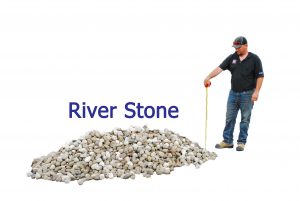
Image Source: greelysand.com
How Much Does 1 Yard Of River Rock Weigh?
A yard of river rock typically weighs between 2,000 and 2,800 pounds. This weight can vary based on the type of rock, its size, and how densely it’s packed.
When planning a landscaping project, knowing the weight of your materials is crucial. This is especially true for river rock, a popular choice for its natural beauty and durability. Whether you’re building a garden bed, a drainage system, or a decorative pathway, understanding how much does 1 yard of river rock weigh will help you order the correct amount, plan for delivery, and estimate the labor involved. This guide will delve deep into the factors affecting river rock weight per cubic yard, providing you with the knowledge to make informed decisions for your next project. We’ll explore how much does a yard of gravel weigh in general, the weight of landscape rock per yard, and specifics about bulk river rock weight. We’ll also touch upon resources like a gravel weight calculator and the fundamental concept of river rock density.
Deciphering River Rock Weight: Key Influencing Factors
The simple answer to “how much does 1 yard of river rock weigh?” isn’t a single number because rocks aren’t uniform. Several elements contribute to the final weight of a cubic yard of river rock. Let’s break these down.
Rock Type and Composition
Different types of rocks have different densities. River rocks are typically smooth, rounded stones found in riverbeds. They can be composed of various minerals, including granite, quartzite, basalt, and limestone.
- Granite: A hard, igneous rock, granite tends to be denser than many other types.
- Quartzite: Another very dense and hard rock, formed from sandstone.
- Basalt: A volcanic rock, often dense and heavy.
- Limestone: While still substantial, limestone can sometimes be less dense than igneous rocks like granite.
The specific mineral makeup of the river rocks in your chosen location will directly impact their stone weight per cubic yard. Rocks with higher specific gravity will naturally weigh more.
Size and Shape of Rocks
While river rocks are generally rounded, their size can vary significantly, from small pebbles to larger stones.
- Smaller Rocks: Tend to pack more densely because there are fewer air gaps between them.
- Larger Rocks: May have more void space, potentially reducing the overall weight per cubic yard.
- Shape: Even within the “rounded” category, slight variations in shape can affect how tightly the rocks settle. Irregular shapes might create more void space than perfectly spherical ones.
This is why when considering landscaping stone weight, size is a significant variable.
Moisture Content
This is a crucial but often overlooked factor. Rocks, especially porous ones, can absorb water.
- Dry River Rock: Will be lighter.
- Wet River Rock: Will be heavier.
The amount of moisture absorbed depends on the rock’s porosity and how long it has been exposed to water. If you purchase river rock that has recently been washed or has sat in rain, it will weigh more than dry rock. This is a key consideration when thinking about natural stone weight per yard.
Compaction and Void Space
How the rocks are loaded and transported impacts the final weight.
- Loose Load: If the rock is simply shoveled into a truck or bin, there will be more air space between the individual stones.
- Vibrated or Compacted Load: If the rock is vibrated or settled during loading, it will pack more tightly, reducing the void space and increasing the weight per cubic yard.
The way a quarry rock weight per yard is measured can also be affected by this; quarry operations might have more controlled loading methods.
Estimating the Weight: A Practical Approach
Given the variables, arriving at a precise weight requires an estimate. Most suppliers use standard figures based on common rock types and typical packing densities.
Average Weight Ranges
For landscaping purposes, you’ll often see the following general weight estimates:
- Small River Rock (1-2 inches): Approximately 2,200 – 2,500 pounds per cubic yard.
- Medium River Rock (2-4 inches): Approximately 2,400 – 2,700 pounds per cubic yard.
- Large River Rock (4-6 inches): Approximately 2,500 – 2,800 pounds per cubic yard.
These are general figures, and it’s always best to confirm with your supplier if you need a precise number for heavy-duty applications or strict weight limits. When comparing how much does a yard of gravel weigh, river rock often falls within a similar but slightly higher range due to its denser composition compared to some crushed gravels.
The Role of Density
River rock density is the fundamental property that dictates its weight. Density is defined as mass per unit volume. For rocks, this is often expressed in pounds per cubic foot or kilograms per cubic meter.
- Typical Rock Density: Most common rock types have a density between 150 to 170 pounds per cubic foot.
- Calculating Cubic Yard Weight:
- There are 27 cubic feet in 1 cubic yard (3 ft x 3 ft x 3 ft).
- If a rock has a density of 160 lbs/cubic foot, then one cubic yard would weigh: 160 lbs/cubic foot * 27 cubic feet = 4,320 pounds.
However, this calculation assumes the rock fills the entire volume without any air gaps. Since rocks are discrete units, there will always be void space. The percentage of void space in a pile of river rock can range from 30% to 40%.
- Adjusted Weight Calculation:
- If we assume 35% void space, then the solid rock volume is 100% – 35% = 65%.
- Weight = 4,320 lbs/cubic yard (theoretical full volume) * 0.65 (solid rock portion) = 2,808 pounds per cubic yard.
This shows how the presence of air gaps significantly reduces the actual weight compared to a solid block of the same material. This is why the practical bulk river rock weight figures are lower than theoretical calculations.
Using a Gravel Weight Calculator
To simplify estimations, many online resources offer a gravel weight calculator. These calculators typically ask for:
- Type of Material: You select “river rock,” “crushed gravel,” “pea gravel,” etc.
- Size of Gravel: Often a range, like “1-2 inch,” “2-3 inch,” etc.
- Coverage Area: The square footage you need to cover.
- Depth of Coverage: How many inches or feet thick the layer will be.
The calculator then uses pre-programmed density figures for different materials and sizes to estimate the total weight and volume needed. This is incredibly useful for ensuring you order enough material without over-ordering. When using these tools, remember they often provide an average weight for gravel, and river rock might have slightly different figures, as discussed.
Comparing River Rock to Other Landscape Materials
Understanding the weight of landscape rock per yard is best done in comparison to other common landscaping aggregates.
Gravel vs. River Rock
- Gravel: Typically refers to crushed stone, which has angular shapes and sharp edges. This angularity allows gravel to lock together more effectively, leading to a very dense and stable base for driveways and pathways. The quarry rock weight per yard for crushed gravel can be quite high due to this interlocking quality.
- River Rock: Smoother, rounded stones. While beautiful, they don’t interlock as tightly as crushed gravel, resulting in slightly more void space and thus a generally lower weight per cubic yard for the same volume.
Other Landscape Rocks
- Pea Gravel: Very small, rounded stones. Similar to river rock, it has void space, but the smaller size can sometimes lead to denser packing, affecting the overall weight.
- Decomposed Granite: A fine aggregate, often used for pathways. Its weight can vary greatly depending on the mineral content and how finely it’s processed, but it’s generally lighter than larger rock.
- Lava Rock: Known for its porous structure, lava rock is significantly lighter than traditional stone, often weighing half as much per cubic yard.
Practical Applications and Weight Considerations
Knowing the weight of river rock is not just academic; it has direct implications for your project.
Ordering and Delivery
- Truck Capacity: Delivery trucks have weight limits. A standard dump truck can typically carry 10-14 cubic yards of gravel or rock. If a cubic yard of river rock weighs 2,500 lbs, then 10 cubic yards would be 25,000 lbs (12.5 tons). Knowing the weight helps ensure you don’t exceed delivery vehicle capacity.
- Palletized Bags: River rock is often sold in bags, typically weighing 40-50 lbs each. A cubic yard might contain 40-50 bags, meaning 1,600-2,500 lbs, which aligns with our earlier estimates. This is useful for smaller projects.
Site Preparation and Installation
- Ground Stability: For pathways or patios, a substantial amount of rock can add significant weight to the sub-base. Consider the load-bearing capacity of your soil.
- Manual Handling: While you’ll likely use shovels and wheelbarrows, understanding the weight of a single shovelful or a loaded wheelbarrow is important for estimating labor. A loaded wheelbarrow might hold 100-150 lbs of river rock, meaning you’ll be moving a lot of weight!
Sourcing Your River Rock: What to Ask Your Supplier
When you’re ready to purchase, don’t hesitate to ask your landscaping supply company for specific details.
Key Questions to Ask:
- “What is the typical river rock weight per cubic yard for the size and type I’m interested in?”
- “Can you provide the bulk river rock weight for your products?”
- “Is the rock typically sold dry or does it often contain significant moisture?”
- “What is the average size range of the rocks in a cubic yard?”
- “Do you have a gravel weight calculator or a chart that shows estimated weights for different materials?”
Good suppliers will be knowledgeable and transparent about their products. They understand that customers need this information for planning. They may also have specific figures for landscaping stone weight based on their sourcing.
Common Pitfalls to Avoid
- Underestimating Weight: The most common mistake is assuming rocks are lighter than they are. This can lead to ordering too little material, requiring additional deliveries and potentially higher costs.
- Ignoring Moisture: If you’re comparing prices based on weight, be mindful of the moisture content. Rock sold from a very dry yard will weigh less than rock from a yard that has recently experienced rain.
- Confusing Cubic Feet with Cubic Yards: Always ensure you’re working with consistent units. A cubic foot is a much smaller volume than a cubic yard.
Frequently Asked Questions (FAQ)
Q1: How much does a cubic yard of washed river rock weigh?
A1: Washed river rock may be slightly lighter if some of the finer particles and clay are removed. However, the difference is usually minimal. It will still fall within the 2,000 to 2,800-pound range, perhaps leaning towards the lower end if it’s thoroughly dried after washing.
Q2: What is the weight of 1 yard of decorative landscape rock?
A2: Decorative landscape rock encompasses many types. If it’s a denser stone like granite or quartzite, the weight of landscape rock per yard could be higher, potentially up to 3,000 pounds. If it’s a lighter material like lava rock, it could be significantly less, perhaps around 1,000-1,500 pounds. Always specify the type of rock.
Q3: Can I use a general gravel weight calculator for river rock?
A3: Yes, you can use a general gravel weight calculator, but be aware that it might provide an average that doesn’t perfectly reflect the specific density of your chosen river rock. Look for calculators that allow you to specify “river rock” or provide density ranges for different stone types.
Q4: How does river rock compare in weight to crushed stone?
A4: Generally, river rock is slightly lighter than comparable sizes of crushed stone. This is because crushed stone’s angularity allows for tighter packing and less void space, increasing its density and overall stone weight per cubic yard.
Q5: What is the density of typical river rock?
A5: The river rock density varies by mineral composition but generally falls between 150 to 170 pounds per cubic foot for the solid rock material itself. However, due to void space, the bulk density (how much a yard actually weighs) is much lower.
Q6: How much does a ton of river rock cover?
A6: This depends on the desired depth. If a cubic yard weighs 2,500 pounds (1.25 tons), then one ton of river rock would cover approximately 0.8 cubic yards. To calculate coverage area, you’d then divide the volume by the desired depth. For example, one ton spread 3 inches (0.25 feet) deep would cover about 0.8 cubic yards / 0.25 feet = 3.2 square feet.
By considering these factors and asking the right questions, you can confidently estimate the weight of river rock for your landscaping projects, ensuring efficiency and accuracy from planning to completion.