
If you’re wondering how many wheelbarrows are in a yard of mulch, the answer generally ranges from 10 to 20 wheelbarrows. This guide will delve into the factors that influence this number and provide you with the tools to accurately estimate your mulch needs. We’ll cover the crucial wheelbarrow mulch conversion, helping you translate your project from wheelbarrow loads to cubic yards.
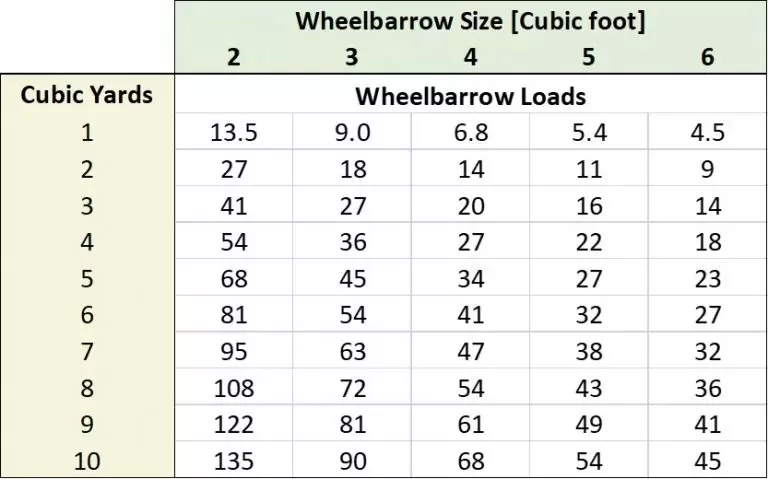
Image Source: www.appletreenursery.net
Fathoming Mulch Volumes: Wheelbarrows vs. Cubic Yards
When you’re preparing to tackle a landscaping project, like mulching your garden beds, understanding how much material you need is key. Often, mulch is sold by the cubic yard, but you’ll likely be moving it with your trusty wheelbarrow. This naturally leads to the question: how many wheelbarrows of mulch make a cubic yard?
The main challenge in giving a precise number is that not all wheelbarrows are created equal, nor is the way people load them. However, by grasping a few key concepts and using some simple calculations, you can get a very good estimate. We’ll explore the wheelbarrow to cubic yard mulch ratio and provide practical advice for estimating mulch with wheelbarrows.
The Typical Wheelbarrow: A Standard Measure?
To begin our mulch volume wheelbarrow exploration, let’s consider the common garden wheelbarrow. These are the workhorses of many DIY landscaping projects.
What is a Typical Wheelbarrow Volume Mulch?
A typical contractor-grade or garden wheelbarrow has a capacity ranging from 4 to 6 cubic feet. However, this is the total volume, not necessarily the volume of loose material like mulch it can comfortably and practically hold. When you’re shoveling mulch, you’re unlikely to fill it to the brim in a perfectly level way.
- Common Wheelbarrow Capacities:
- Small Garden Wheelbarrow: Approximately 3-4 cubic feet.
- Standard Contractor Wheelbarrow: Approximately 4-6 cubic feet.
- Heavy-Duty Wheelbarrow: Can exceed 6 cubic feet.
How Much Mulch Fits in a Wheelbarrow?
The actual amount of mulch you can fit into a wheelbarrow depends on several factors:
- Wheelbarrow Size: As mentioned, larger wheelbarrows hold more.
- Mulch Type: Denser mulches (like bark or compacted wood chips) might fill a wheelbarrow with less overall volume compared to lighter, fluffier mulches (like shredded cedar).
- How You Load It:
- Level Load: Filling the wheelbarrow to the rim with a flat shovel or rake.
- Heaped Load: Filling it slightly above the rim, which is common in practice.
- Light Packing: While not recommended to tightly pack, some settling occurs naturally.
For practical purposes, let’s assume a typical wheelbarrow volume mulch is around 4 to 5 cubic feet when reasonably, but not aggressively, loaded. This is a good starting point for our calculations.
The Math: Converting Cubic Feet to Cubic Yards
The core of our wheelbarrow to cubic yard mulch conversion lies in understanding the relationship between cubic feet and cubic yards.
Cubic Feet to Cubic Yards Conversion
There are 27 cubic feet in 1 cubic yard. This is a fundamental conversion:
$$ 1 \text{ cubic yard} = 3 \text{ feet} \times 3 \text{ feet} \times 3 \text{ feet} = 27 \text{ cubic feet} $$
So, if your wheelbarrow holds 4 cubic feet of mulch, you’ll need 27 cubic feet / 4 cubic feet/wheelbarrow = 6.75 wheelbarrows. If it holds 5 cubic feet, you’ll need 27 cubic feet / 5 cubic feet/wheelbarrow = 5.4 wheelbarrows.
Calculating Wheelbarrow Loads for a Cubic Yard
Let’s use our estimated wheelbarrow volumes to see how many wheelbarrow loads of mulch constitute a cubic yard:
| Wheelbarrow Capacity (Cubic Feet) | Number of Wheelbarrows per Cubic Yard |
|---|---|
| 3 cubic feet | 9 wheelbarrows (27 / 3) |
| 4 cubic feet | 6.75 wheelbarrows (27 / 4) |
| 5 cubic feet | 5.4 wheelbarrows (27 / 5) |
| 6 cubic feet | 4.5 wheelbarrows (27 / 6) |
As you can see, the number can vary significantly. This is why the initial estimate of 10-20 wheelbarrows per cubic yard is so broad. It often accounts for less than perfectly full loads or smaller wheelbarrows.
Practical Application: Estimating Mulch with Wheelbarrows
Now, let’s put this knowledge into practice. You’ve ordered your mulch by the cubic yard, and you want to know how many trips you’ll be making.
Using a Mulch Calculator Wheelbarrow Approach
While dedicated mulch calculators exist online, you can easily adapt the principle for your wheelbarrow.
Steps:
- Determine your wheelbarrow’s capacity in cubic feet. If you don’t know, measure the internal dimensions (length, width, depth) and multiply them. For example, a wheelbarrow that is 4 feet long, 2.5 feet wide, and 1 foot deep has a total volume of 10 cubic feet. However, you won’t fill it that full. A more realistic “usable” volume might be 4-5 cubic feet.
- Know your mulch order in cubic yards. This is usually stated on your receipt or order form.
- Convert cubic yards to cubic feet. Multiply your cubic yardage by 27.
- Example: 3 cubic yards of mulch = 3 * 27 = 81 cubic feet.
- Divide the total cubic feet needed by your wheelbarrow’s estimated cubic feet per load.
- Example (continued): If your wheelbarrow holds 4.5 cubic feet of mulch per load, then 81 cubic feet / 4.5 cubic feet/wheelbarrow = 18 wheelbarrows.
This method provides a more precise wheelbarrow mulch conversion for your specific situation.
What if my Wheelbarrow Capacity is in Cubic Yards?
Some heavy-duty or specialized wheelbarrows might have their capacity listed in cubic yards. This simplifies things immensely.
- Wheelbarrow Capacity Cubic Yards: If a wheelbarrow is rated at 0.125 cubic yards (which is 3.375 cubic feet, a common size for a smaller, deeper wheelbarrow), then 1 cubic yard would require 8 wheelbarrow loads (1 cubic yard / 0.125 cubic yards/wheelbarrow).
However, most standard garden or contractor wheelbarrows are measured in cubic feet.
Factors Influencing Wheelbarrow Mulch Volume
Beyond the basic dimensions, other elements affect how much mulch fits in a wheelbarrow.
Mulch Density and Compaction
- Wood Chips: Tend to be lighter and fluffier, allowing for more volume per pound. They may also compact less.
- Bark Mulch: Can be denser, especially shredded bark.
- Composted Organic Matter: Often heavier due to moisture content.
When you’re shoveling, you might be tempted to push down on the mulch. While this can fit more, it’s not ideal for the mulch’s aeration and can make the wheelbarrow heavier and harder to push. Aim for a generous, but not densely packed, load.
Moisture Content
Wet mulch is significantly heavier than dry mulch. If your mulch has been sitting out in the rain, each wheelbarrow load will contain more weight and potentially more volume due to the water. This might slightly alter the mulch volume wheelbarrow calculation if you’re trying to be extremely precise with weight, but for volume estimation, it’s usually a minor factor unless the mulch is waterlogged.
The Art of Loading
Estimating mulch with wheelbarrows involves a bit of an art. Experienced landscapers develop a feel for a “full” wheelbarrow.
- Shoveling Technique: A good, swift shovelful will fill the scoop of your shovel efficiently.
- Leveling: A quick sweep with the shovel or rake to create a relatively flat top makes estimating easier and more consistent.
- Avoid Overfilling: Piling mulch too high makes it unstable, prone to spilling, and difficult to maneuver.
Simplifying the Process: Ready Reckoner Tables
To make the wheelbarrow to cubic yard mulch conversion even easier, here’s a quick reference table based on common wheelbarrow volumes.
How Many Wheelbarrows in a Cubic Yard?
| Assumed Wheelbarrow Load (Cubic Feet) | Equivalent Cubic Yards per Load | Number of Wheelbarrow Loads per Cubic Yard |
|---|---|---|
| 3.0 | 0.111 | 9 |
| 3.5 | 0.130 | ~ 8.5 |
| 4.0 | 0.148 | 6.75 |
| 4.5 | 0.167 | ~ 6 |
| 5.0 | 0.185 | 5.4 |
| 5.5 | 0.204 | ~ 4.9 |
| 6.0 | 0.222 | 4.5 |
Note: Fractions of wheelbarrows are rounded for practical purposes. You’ll always end up with a full or slightly less than full last load.
Planning Your Mulch Project: Tips for Success
Knowing how many wheelbarrows are in a yard of mulch is just one piece of the puzzle. Here’s how to ensure your project goes smoothly.
Calculating Your Total Mulch Needs
Before you even think about wheelbarrows, you need to know how much mulch your garden beds require.
- Measure Your Areas: For rectangular beds, measure length and width. For irregular shapes, break them down into simpler geometric forms.
- Determine Desired Depth: A common mulch depth is 2-3 inches. For new beds, you might go deeper; for refreshing existing beds, 2 inches might be enough.
- Convert Inches to Feet: Divide your desired depth in inches by 12. (e.g., 3 inches / 12 = 0.25 feet).
- Calculate Volume in Cubic Feet:
- For a rectangle: Length (ft) x Width (ft) x Depth (ft) = Cubic Feet.
- For multiple areas, calculate each and add them up.
- Convert Total Cubic Feet to Cubic Yards: Divide the total cubic feet by 27.
Example Calculation:
You have a garden bed that is 20 feet long and 5 feet wide. You want to apply mulch 3 inches deep.
- Desired depth in feet: 3 inches / 12 = 0.25 feet.
- Volume in cubic feet: 20 ft * 5 ft * 0.25 ft = 25 cubic feet.
- Volume in cubic yards: 25 cubic feet / 27 cubic feet/yard = 0.93 cubic yards.
In this scenario, you’d likely round up and order 1 cubic yard of mulch.
Estimating Wheelbarrow Loads for Your Project
Once you know your total cubic yardage, use the table or your calculation method to figure out the number of trips.
- Continuing the Example: You ordered 1 cubic yard of mulch.
- If your wheelbarrow holds 4.5 cubic feet: 1 cubic yard = 27 cubic feet. Number of loads = 27 / 4.5 = 6 wheelbarrows.
- If your wheelbarrow holds 5.5 cubic feet: 1 cubic yard = 27 cubic feet. Number of loads = 27 / 5.5 = ~4.9 wheelbarrows (so, 5 loads).
This gives you a clear target for how many wheelbarrow loads of mulch you’ll be moving.
The Mulch Calculator Wheelbarrow Advantage
While manual calculation is straightforward, using a dedicated online mulch calculator wheelbarrow feature can be helpful. You input your bed dimensions and desired depth, and it often provides both cubic yards and an estimated number of wheelbarrow loads based on typical wheelbarrow sizes. This can be a great way to double-check your work or quickly get an estimate.
Beyond the Number: Efficiency and Ergonomics
While knowing how many wheelbarrows are in a yard of mulch is useful, focusing solely on the quantity might lead to strain.
Pacing Yourself
Mulching can be physically demanding. Break the task into manageable chunks.
- Work in Shifts: Mulch for an hour, then take a break.
- Hydrate: Drink plenty of water, especially on warm days.
- Wear Appropriate Gear: Gloves, sturdy shoes, and sunscreen are essential.
Wheelbarrow Maintenance
A well-maintained wheelbarrow makes the job easier.
- Tire Pressure: Ensure the tire is properly inflated for smooth rolling.
- Lubrication: A little grease on the wheel axle can help.
- Cleanliness: Keeping the bin clean prevents mulch from sticking excessively.
Frequently Asked Questions About Mulch and Wheelbarrows
Here are answers to common questions:
Q1: What is the most common wheelbarrow capacity for mulch?
A1: The most common wheelbarrow capacity is typically between 4 to 6 cubic feet for standard garden and contractor models. However, the usable volume for mulch, without overfilling or excessive compaction, is often closer to 4-5 cubic feet.
Q2: Can I estimate mulch needs by weight?
A2: While mulch has weight, it’s less reliable for estimation because the density and moisture content vary greatly between mulch types and conditions. Volume (cubic feet or cubic yards) is the standard and most accurate way to measure mulch.
Q3: Who sells mulch by the wheelbarrow load?
A3: Most landscape supply companies and garden centers sell mulch by the cubic yard or in pre-bagged quantities (which are much smaller, typically 2-3 cubic feet). They generally do not sell mulch by the “wheelbarrow load” as it’s not a standardized unit. You’ll need to calculate your needs and order by volume.
Q4: How deep should I lay mulch?
A4: A general rule of thumb is 2 to 3 inches of mulch. For new plantings or to suppress weeds effectively, you might go up to 4 inches in some areas, but avoid piling mulch directly against the base of plant stems or tree trunks, as this can lead to rot and pest problems.
Q5: Will my wheelbarrow hold a full cubic yard of mulch?
A5: No, a single wheelbarrow cannot hold a full cubic yard of mulch. As established, it takes approximately 5 to 9 wheelbarrow loads to equal one cubic yard, depending on the wheelbarrow’s size and how it’s loaded.
Q6: What’s the easiest way to calculate mulch needs?
A6: The easiest way is to measure the length, width, and desired depth of your mulching areas, convert these to feet, multiply them together to get cubic feet, and then divide by 27 to get cubic yards. Many online mulch calculators can also do this for you.
Conclusion: Mastering Your Mulch Mission
In summary, while there isn’t a single definitive answer to how many wheelbarrows are in a yard of mulch, a well-informed estimate is achievable. By factoring in your typical wheelbarrow volume mulch (around 4-5 cubic feet) and the conversion of 27 cubic feet per cubic yard, you can accurately gauge the number of trips. This knowledge, combined with proper project planning and pacing, will transform the task of mulching from a guessing game into a successful and satisfying landscaping endeavor. Happy mulching!