
So, you’re wondering, “How much is compost per yard?” The cost of compost per cubic yard can vary significantly, typically ranging from $20 to $70 per cubic yard when purchased in bulk, but this is just a general guideline. This blog post will delve into the factors influencing compost cost, provide a detailed cost breakdown, and help you navigate the world of buying compost in bulk to get the best value for your gardening needs. We’ll cover everything from the different types of compost available to the often-overlooked compost delivery cost.
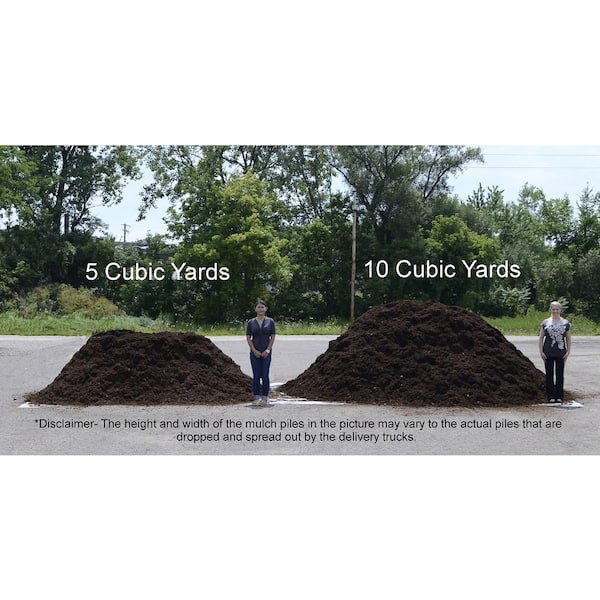
Image Source: images.thdstatic.com
Deciphering Compost Pricing: What Drives the Cost?
The price you pay for compost isn’t arbitrary. Several key elements contribute to the final compost yardage cost. Understanding these will empower you to make informed purchasing decisions.
Key Factors Affecting Compost Prices
-
Type of Compost: Not all compost is created equal. The source materials and the composting process itself heavily influence the price.
- Mushroom Compost: Often a byproduct of the mushroom farming industry, this compost is typically rich in nutrients. Its availability can fluctuate, impacting its price.
- Leaf Mold: Decomposed leaves, leaf mold is excellent for soil structure and moisture retention but can be more labor-intensive to produce in large quantities, potentially increasing its cost.
- Mushroom and Manure Blend: A popular choice for gardeners, this blend combines the benefits of both mushroom compost and aged animal manure. The specific type of manure used (e.g., cow, chicken, horse) and its age can affect the price.
- High-Quality Organic Compost: This refers to compost made from a carefully balanced mix of organic materials, often including kitchen scraps, yard waste, and sometimes agricultural byproducts. The certification and meticulous processing can lead to a higher bulk compost price.
- Commercial vs. DIY Compost: Compost made commercially is usually more expensive due to labor, processing, and quality control. While DIY compost is free in terms of materials, it requires your time and effort.
-
Source of Materials: The origin of the compost feedstock matters.
- Municipal Composting Facilities: These often produce large volumes of compost from yard waste and sometimes food scraps. Prices can be competitive due to economies of scale.
- Private Landscaping and Garden Centers: These businesses source their compost from various suppliers or produce it themselves. Their pricing often includes overhead, retail markup, and branding.
- Farms and Agricultural Operations: Some farms offer compost made from animal manure or crop residues, which can be an affordable option, especially if you can pick it up directly.
-
Composting Method: The method used to create compost can influence its quality and cost.
- Aerobic Composting: This method, which involves turning the compost pile regularly to introduce oxygen, produces higher-quality compost faster but requires more labor.
- Anaerobic Composting: This method, lacking oxygen, is slower and can produce a less desirable odor. It might be cheaper to produce but is less common for commercial sales due to quality concerns.
- Vermicomposting (Worm Composting): Using worms to break down organic matter produces a nutrient-rich compost, but scaling this up for bulk sales can be costly.
-
Quality and Nutrient Content:
- Finished vs. Unfinished Compost: Properly aged and finished compost is more valuable than partially decomposed material.
- Nutrient Analysis: Compost that has been tested for its nutrient content and free from weed seeds or pathogens will command a higher price.
-
Location:
- Proximity to Source: If you live near a composting facility or farm, you might save on compost delivery cost.
- Regional Demand: Areas with high demand for gardening supplies might see higher prices.
-
Volume Purchased:
- Bulk vs. Bagged: This is a crucial differentiator. Buying compost in bulk is almost always more cost-effective per cubic yard than buying bagged compost. We’ll explore this in more detail.
Comprehending Compost Yardage Costs: Bulk vs. Bagged
The most significant factor influencing how much you pay for compost is whether you buy it in bulk or in bags. Let’s break down the typical compost bag price vs bulk differences.
Buying Compost in Bulk
When you buy compost in bulk, you are typically purchasing it by the cubic yard or half-cubic yard. This is the most economical way to purchase large quantities for significant landscaping projects, large gardens, or commercial use.
Typical Bulk Compost Prices (per cubic yard):
| Compost Type | Average Price Range (per Cubic Yard) | Notes |
|---|---|---|
| Standard Topsoil/Compost Blend | $20 – $40 | Often a mix of compost and topsoil, good for general landscaping and filling beds. |
| Mushroom Compost | $30 – $50 | Rich in nutrients, great for vegetable gardens and flower beds. |
| High-Quality Organic Compost | $40 – $70 | Made from premium organic materials, screened for quality, often with a nutrient analysis. Ideal for sensitive plantings and high-value crops. |
| Manure-Based Compost (Aged) | $25 – $45 | Varies depending on the type of manure and how well it’s composted. Excellent for boosting soil fertility. |
| Leaf Mold | $35 – $55 | Primarily decomposed leaves, excellent for improving soil structure and water retention. |
| Specialty Blends (e.g., worm castings) | $60 – $100+ | These are highly concentrated and nutrient-dense, typically sold in smaller volumes even when considered “bulk” for their potency. |
Key Considerations for Bulk Purchases:
- Minimum Order Quantities: Many suppliers have minimum order requirements for bulk deliveries.
- Delivery Fees: Compost delivery cost is a significant factor. This fee can vary based on distance, the amount being delivered, and the delivery truck used.
- Pick-Up Option: If you have a suitable vehicle (truck or trailer), picking up the compost yourself can save on delivery fees.
Buying Compost in Bags
Bagged compost is readily available at garden centers and big-box stores. It’s convenient for smaller projects, container gardening, or when you only need a few bags.
Typical Bagged Compost Prices:
- Bag Size: Bags typically contain 1 to 2 cubic feet of compost.
- Price Range: A single bag can cost anywhere from $3 to $15, depending on the brand, type of compost, and store.
Comparing Bagged vs. Bulk Costs:
Let’s do a quick calculation to illustrate the compost bag price vs bulk savings.
- There are 27 cubic feet in one cubic yard.
- If a bag is 1.5 cubic feet and costs $5:
- To get one cubic yard, you’d need 27 / 1.5 = 18 bags.
- The total cost for 18 bags would be 18 * $5 = $90.
Compare this $90 to the average bulk price of $20-$70 per cubic yard, and the savings of buying in bulk become very clear. This is why for anything more than a small patch of garden, buying compost in bulk is the way to go.
Calculating Your Compost Needs: Using a Compost Calculator
Before you order, it’s essential to know how much compost you actually need. Over-ordering can lead to wasted product, and under-ordering means extra trips or deliveries. This is where a compost calculator comes in handy.
How to Use a Compost Calculator
Most online compost calculators work by asking for a few key pieces of information about your project:
- Area Dimensions: The length and width of the area you want to cover with compost.
- Desired Depth: How thick you want the compost layer to be. Common depths are 2-6 inches for garden beds, top-dressing lawns, or filling containers.
Example Calculation:
Let’s say you want to add a 3-inch layer of compost to a rectangular garden bed that is 10 feet long and 5 feet wide.
- Area: 10 feet * 5 feet = 50 square feet.
- Depth: 3 inches. To convert this to feet, divide by 12: 3 inches / 12 inches/foot = 0.25 feet.
Now, to find the volume in cubic feet:
- Volume (cubic feet): Area (square feet) * Depth (feet)
- Volume = 50 sq ft * 0.25 ft = 12.5 cubic feet.
To convert cubic feet to cubic yards, divide by 27 (since there are 27 cubic feet in a cubic yard):
- Volume (cubic yards): 12.5 cubic feet / 27 cubic feet/yard ≈ 0.46 cubic yards.
For a project like this, you might round up to 0.5 cubic yards to be safe, or if your supplier offers half-yard increments.
Pro Tip: Always add a little extra (5-10%) to your calculation to account for settling and potential spillage during handling.
Getting the Best Value: Tips for Purchasing Compost
To ensure you’re getting the most bang for your buck when pricing compost by the yard, follow these tips:
Tips for Savvy Compost Buyers
- Shop Around: Get quotes from multiple suppliers in your area. Prices can vary significantly.
- Check for Sales and Promotions: Especially during the spring gardening season, many garden centers and landscape suppliers offer deals on bulk materials.
- Consider Pick-Up: If you have a truck or trailer, picking up the compost yourself can significantly reduce the overall compost delivery cost. Factor in the cost of fuel and your time.
- Ask About Quality: Don’t be afraid to ask suppliers about the source of their materials, how the compost was made, and if it’s been tested.
- Look for “Finished” Compost: Ensure the compost is fully decomposed. You shouldn’t see recognizable food scraps or plant matter, and it shouldn’t have a strong, unpleasant odor.
- Understand Delivery Fees: Clarify the compost delivery cost before you order. Ask if there are extra charges for difficult-to-access locations or specific delivery times. Some suppliers might offer free delivery for larger orders or within a certain radius.
- Consider a Compost Mix: If you’re unsure which type of compost is best for your needs, ask for advice from the supplier. They might offer blends specifically formulated for vegetable gardens, flower beds, or lawn top-dressing.
Common Cost Breakdowns for Compost Projects
Let’s look at how the cost might break down for a couple of typical gardening scenarios.
Scenario 1: Revitalizing a Vegetable Garden
- Project: Adding a 4-inch layer of high-quality organic compost to a 100 sq ft vegetable garden bed.
- Compost Needed:
- Area: 100 sq ft
- Depth: 4 inches = 0.33 feet
- Volume: 100 sq ft * 0.33 ft = 33 cubic feet
- Volume in Yards: 33 cubic feet / 27 cubic feet/yard ≈ 1.22 cubic yards. Round up to 1.5 cubic yards.
- Estimated Cost:
- Assuming a high-quality organic compost at $50 per cubic yard.
- Compost Cost: 1.5 yards * $50/yard = $75.
- Delivery Cost: Let’s assume a flat fee of $50 for delivery within a 10-mile radius.
- Total Estimated Cost: $75 (compost) + $50 (delivery) = $125.
Scenario 2: Top-Dressing a Lawn
- Project: Adding a 1-inch layer of compost blend to a 500 sq ft lawn.
- Compost Needed:
- Area: 500 sq ft
- Depth: 1 inch = 0.083 feet
- Volume: 500 sq ft * 0.083 ft = 41.5 cubic feet
- Volume in Yards: 41.5 cubic feet / 27 cubic feet/yard ≈ 1.54 cubic yards. Round up to 1.75 or 2 cubic yards if the supplier offers half-yard increments. Let’s use 2 cubic yards for ease.
- Estimated Cost:
- Assuming a standard compost/topsoil blend at $30 per cubic yard.
- Compost Cost: 2 yards * $30/yard = $60.
- Delivery Cost: Let’s assume a similar $50 delivery fee.
- Total Estimated Cost: $60 (compost) + $50 (delivery) = $110.
These are just estimates, and actual costs will vary based on your specific location and the suppliers you choose.
Frequently Asked Questions (FAQ)
Q1: What is the typical price range for a cubic yard of compost?
A1: The typical price range for a cubic yard of compost when bought in bulk is between $20 and $70. This can be higher for specialty composts and lower for basic blends.
Q2: Is it cheaper to buy compost by the bag or in bulk?
A2: Yes, it is significantly cheaper to buy compost in bulk. The compost bag price vs bulk shows substantial savings per cubic yard when purchasing larger quantities.
Q3: What factors influence the cost of compost?
A3: The compost cost is influenced by the type of compost, the source materials, the composting method, its quality and nutrient content, the volume purchased, and your geographical location.
Q4: How do I calculate how much compost I need?
A4: You can use a compost calculator available online. Generally, you’ll need the dimensions of the area (length and width) and the desired depth of the compost layer. The calculator will convert these measurements into cubic yards.
Q5: Does compost delivery cost more if I live further away?
A5: Yes, compost delivery cost is often based on distance. Suppliers usually have a delivery radius, and charges may increase for locations outside that radius or for longer distances.
Q6: Can I pick up compost myself?
A6: Yes, many suppliers allow you to pick up compost yourself if you have a truck or trailer. This can save you the compost delivery cost and often gives you more flexibility.
Q7: What is the difference between bagged compost and bulk compost?
A7: Bagged compost is pre-packaged in smaller quantities (usually 1-2 cubic feet) and is more expensive per unit due to packaging and handling. Bulk compost is sold by the cubic yard, is more economical for larger projects, and is usually delivered by a truck or available for pick-up.
Q8: What is the best type of compost for vegetable gardens?
A8: For vegetable gardens, nutrient-rich composts like mushroom compost, aged manure-based compost, or high-quality organic compost blends are excellent choices. They improve soil fertility and structure.
By arming yourself with this knowledge, you can confidently navigate the marketplace and acquire the best compost for your gardening endeavors at a fair price. Happy gardening!